
.avif)
Top 5 LCA Software Tools in 2026
Explore the top LCA software tools of 2026 and compare their features, strengths, and use cases for lifecycle assessment, carbon footprinting, and sustainability reporting.

SBTi FLAG Guidance v1.2: What Changed and What to Do Next
Learn what's new in SBTi FLAG Guidance v1.2, including updated deadlines, mandatory commodities, no-deforestation requirements, and practical steps for businesses.

Primary vs Secondary Emissions Data: Key Differences and When to Use Each
Learn the key differences between primary and secondary emissions data, when to use each, and how better data quality supports more accurate carbon accounting and Scope 3 reporting.
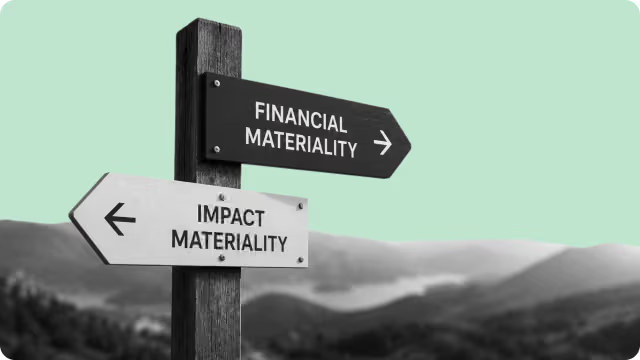
How to conduct a double materiality assessment: A practical step-by-step guide (2026)
Learn how to conduct a Double Materiality Assessment with this practical step-by-step guide covering impact and financial materiality, IROs, stakeholder engagement, scoring, materiality matrices, and ESG reporting.
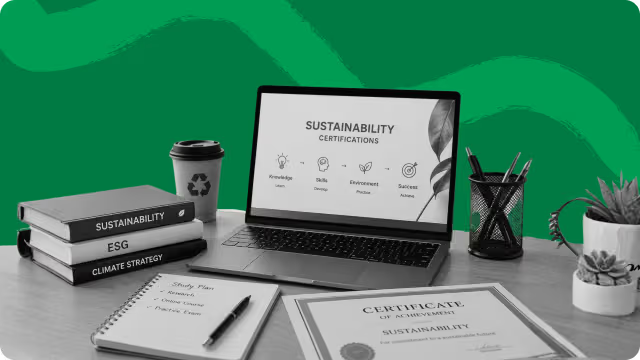
How to Get a Job in Sustainability in 2026: Careers, Salaries, Skills & Certifications
A complete guide to sustainability careers in 2026, covering career paths, salaries, essential skills, certifications, and leading learning programmes for aspiring sustainability professionals.
.png)
SBTi Corporate Net-Zero Standard V2.0
Understand the key changes in SBTi Corporate Net-Zero Standard V2.0 and what they mean for your company's future climate targets and net-zero strategy.
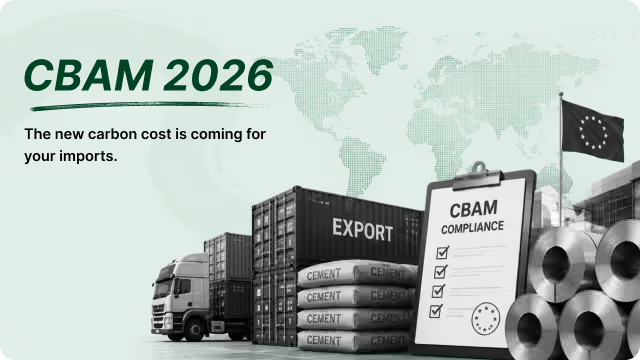
CBAM in 2026: The Cost Is Small Today. Here Is Exactly How It Compounds
CBAM costs may seem small today, but they increase significantly over time. Discover how the phase-in schedule, default values, and compliance obligations affect exporters through 2034.

Netflix, Binge-Watching & the Hidden Carbon Footprint of Streaming Culture
Streaming feels effortless, but every Netflix session relies on data centres, networks, and devices that consume energy continuously. Discover the hidden carbon footprint of streaming culture and learn simple ways to reduce your digital impact.
Introduction to Carbon Border Taxes
Carbon border taxes are transforming global trade by assigning a carbon cost to imported goods based on embedded emissions. Learn how CBAM works, its impact on supply chains, and how businesses can prepare for evolving compliance requirements.

LEED v5, Embodied Carbon, and the Whole-Lifecycle Mandate: What Project Developers and Asset Owners Need to Know
LEED v5 introduces a whole-life carbon approach to building certification, making embodied carbon assessment a key requirement for project developers, asset owners, designers, and investors.
.avif)
Understanding Secondary Data in Life Cycle Assessment (LCA): Role, Challenges, and Best Practices
Learn how secondary data is used in Life Cycle Assessment (LCA), its benefits, limitations, and best practices for improving sustainability reporting and carbon footprint accuracy.
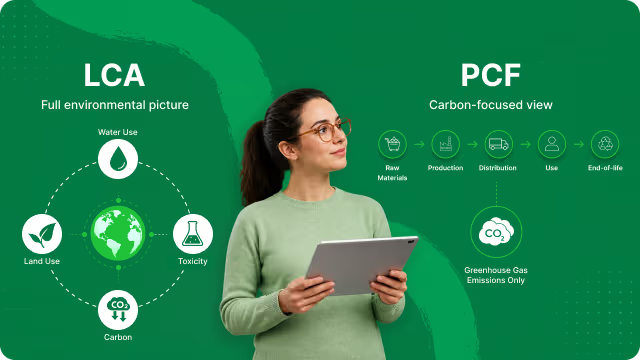
LCA vs Product Carbon Footprint: Key Differences, Use Cases, and When to Use Each
Learn the differences between LCA and Product Carbon Footprint (PCF), including methodologies, ESG relevance, standards, and practical business use cases.
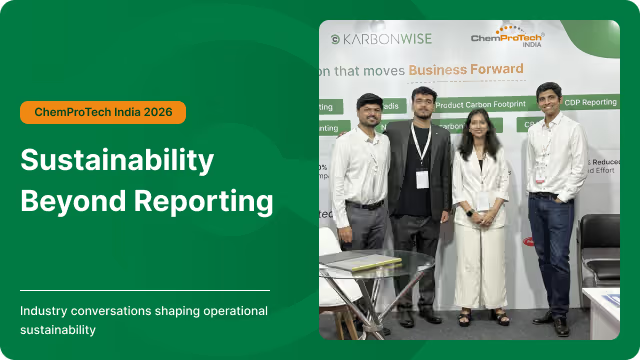
Inside ChemPro Tech India 2026: Where Sustainability Became Operational
Insights from ChemPro Tech India 2026 on Product Carbon Footprints, Scope 3 visibility, EcoVadis, and operational sustainability across the chemical sector.
.avif)
Sixes, Stadiums & Sustainability: Measuring What Matters in the IPL
A sharp look at how the IPL can evolve into a sustainable, high-performance system by rethinking energy, water, mobility, and waste through better measurement and smarter operations.

The 5 Best Carbon Accounting Software Platforms in 2026
A quick guide to the top carbon accounting platforms in 2026, comparing features, use cases, and how to choose the right tool for reporting, Scope 3, and decarbonisation.

UAE Climate Law: 30 May Is Around the Corner - Are You Ready?
With 30 May 2026 approaching, UAE Climate Law compliance is no longer optional. Understand what businesses need to do and how to prepare.
.avif)
AI and Sustainability: What It Actually Does Across Carbon Accounting, ESG and LCA
AI is reshaping sustainability workflows across carbon accounting, ESG, and LCA, but not in the way it’s often portrayed. This blog breaks down what AI actually does, where it adds real value, and why human judgement remains critical for reliable, audit-ready outcomes.
%20(1).avif)
Why ESG Reporting Is Critical for Enterprises
Learn why ESG reporting is essential for enterprises to manage risk, meet regulations, and drive long-term value.

Importance of Carbon Accounting in Net-Zero Strategy
Carbon accounting enables businesses to measure emissions, set targets, and drive effective net-zero strategies through data-driven decision-making.
%20(1).avif)
Life Cycle Assessment Stages: The Four Stages of LCA Explained
Life Cycle Assessment (LCA) evaluates environmental impacts across a product’s full life cycle. This guide explains the four LCA stages and how organisations use them for sustainability strategy and ESG reporting.
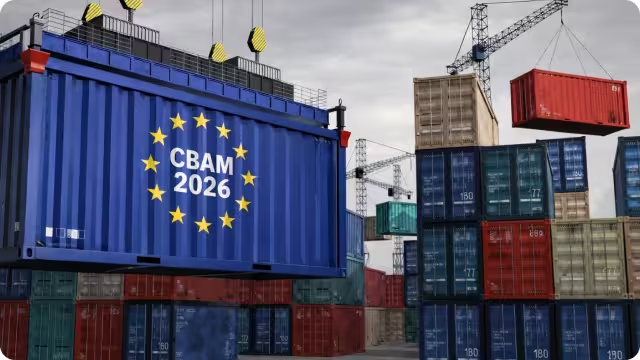
CBAM 2026: Why Emissions Data Will Decide EU Market Access
From 2026, CBAM becomes a financial obligation. Verified emissions data will directly determine carbon costs, pricing competitiveness, and continued EU market access for exporters.
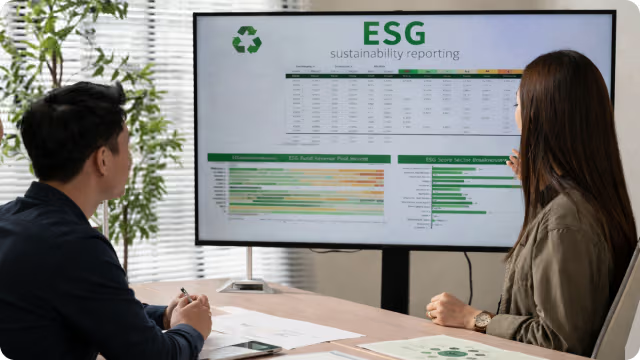
Understanding the Connection Between Carbon Accounting and ESG
Learn how carbon accounting enables accurate ESG reporting by providing structured emissions data for compliance, risk assessment, and decision-making.
.avif)
ESG reporting software vs manual ESG reporting
Compare ESG reporting software and manual ESG reporting. Learn the key differences, benefits, risks, and when businesses should move to automated ESG reporting

Why Data Is Critical for Carbon Footprint Reduction
Accurate data enables businesses to measure emissions precisely, identify key hotspots, and implement targeted actions that drive real and measurable carbon reduction.
.avif)
What KPIs Every Businesses Should Track
Learn which ESG KPIs every business should track to manage risk, improve performance and meet growing regulatory and investor expectations.

Carbon Accounting vs Carbon Footprint
Understand the difference between carbon footprint and carbon accounting, and how each helps businesses measure, manage, and report greenhouse gas emissions.
%20(2).avif)
ESG Reporting Software: Features, Benefits, and How to Choose the Right Platform
Understand what ESG reporting software is, how it works, and how it helps organisations manage ESG data, ensure compliance, and make better strategic decisions.
.avif)
What is carbon accounting and how does it work? A practical guide for businesses
Carbon accounting is the foundation of a credible net-zero strategy, enabling organisations to measure emissions, set targets, and drive data-led decarbonisation.

ESG Compliance Explained: Requirements, Challenges, and How Businesses Stay Compliant
A practical guide to ESG compliance, covering requirements, challenges, and how businesses stay audit-ready.

Carbon Footprinting Explained: How Businesses Measure and Reduce Emissions
A practical guide to carbon footprinting, explaining how businesses measure emissions, manage Scope 1, 2 and 3 data, and turn carbon insights into meaningful action.

What Is Life Cycle Assessment (LCA) and How Does It Work? A Practical Guide for Businesses
Life cycle assessment (LCA) helps businesses measure environmental impacts across the full product life cycle. This guide explains how LCA works, why it matters for ESG and Net Zero, and how organisations apply it at scale to improve design, procurement, and sustainability decisions.

ESDD: A Practical Framework for Understanding Real-World Impacts Across the Value Chain
ESDD helps organisations identify supply-chain risks early, strengthen accountability and build resilient, responsible value chains.
.avif)
EUDR: What it Means for Supply Chains Entering a New Era of Accountability
A practical overview of what the EU Deforestation Regulation means for supply-chain traceability, risk management, and EU market access.

The Year the Conversation Changed: Notes from IGBC Green Building Congress 2025
A concise reflection on how IGBC 2025 marked a shift toward practical, data driven sustainability in India’s built environment.
.avif)
SRS Explained: Making Sense of the UK Sustainability Reporting Standards
A practical explanation of the difference between carbon accounting and carbon footprint, and how each approach supports business measurement, reporting, and climate strategy.

ISO 14067: Turning Product Carbon Footprints into a Business Tool
A practical guide to ISO 14067 and how product carbon footprints support better design, procurement and credible sustainability reporting.

UAE Climate Law: A New Framework for Accountability and Low-Carbon Growth
The UAE Climate Law introduces mandatory emissions measurement, reporting and accountability for organisations operating in the UAE.

Digital Product Passports: Turning Product Information into Circular Value
Digital Product Passports give products a digital identity across their lifecycle, supporting transparency, circularity and compliance through reliable, structured product data.
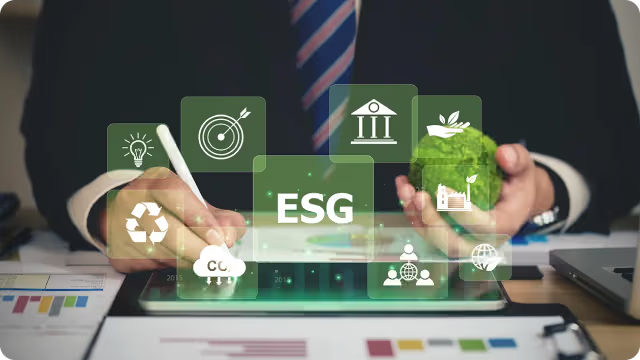
What is BRSR?
BRSR is India’s SEBI-mandated ESG reporting framework, shaping how businesses disclose sustainability performance and prepare for future compliance.

EU Taxonomy: Turning Sustainability Data into Financial Confidence
The EU Taxonomy is redefining how sustainability performance connects to financial reporting, helping organisations assess, report, and improve the environmental impact of their economic activities.
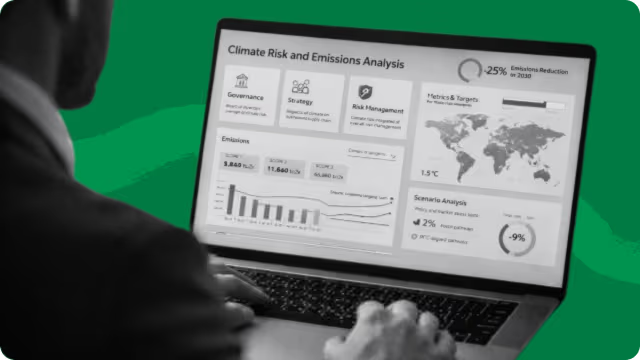
TCFD: A Framework Helping Businesses Look Further Than the Next Quarter
TCFD helps organisations integrate climate risk into financial and strategic decision-making, strengthening resilience, transparency and long-term business planning.

SECR: Why Streamlined Energy and Carbon Reporting Still Matters for UK Organisations
SECR remains a key UK reporting requirement. This article explores why it still matters and how organisations can use it to strengthen emissions insight and climate strategy.

Is Your EcoVadis Score Telling the Full Story of Your Supply Chain?
EcoVadis has become a key reference for assessing supplier ESG performance, but a single score does not always reflect the full reality of a supply chain. This article explores what EcoVadis measures, why it matters, and how organisations can use it more effectively to strengthen sustainability and risk management.
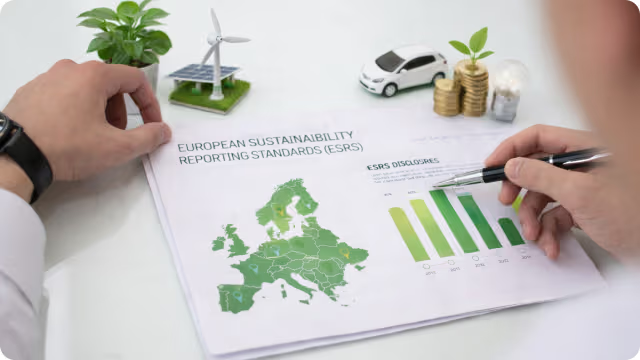
What is ESRS?
An overview of ESRS, double materiality, and how evolving EU sustainability reporting rules affect businesses globally.
.avif)
What is the Role of Carbon Offsetting in Sustainability?
Carbon offsetting allows organisations to balance unavoidable emissions by supporting projects that remove or prevent carbon release, such as reforestation, renewable energy, or methane capture. Its credibility depends on third-party verification, which protects against greenwashing and ensures real climate impact. Offsetting works best when aligned with broader sustainability goals and used alongside genuine emission reduction efforts. High-quality offsets, transparency, and careful project selection are essential for responsible climate action.

Why Gen Z is the Greenest Generation yet
Gen Z is driving sustainability through conscious choices, green careers, and digital activism, turning climate concern into everyday action.
.avif)
Closing the Loop: Why Circularity is no Longer Optional
Circularity is no longer optional. Explore how Reduce, Reuse, and Recycle strategies help organisations cut costs, minimise waste, and build long-term competitive advantage in a resource-constrained world.
Understanding GRI
GRI gives organisations a clear structure for reporting their environmental, social, and economic impacts in a credible, comparable way. It helps companies identify what matters most, choose relevant standards, and disclose information that builds trust with stakeholders. By using GRI, businesses strengthen transparency, improve decision making, and stay prepared for evolving global reporting requirements.

What Is CDP: Understanding the World’s Most Influential Environmental Scoring System
CDP is the world’s leading environmental disclosure system, helping organisations measure, score, and manage climate, water, and forest impacts.
.avif)
Understanding the GHG Protocol
The GHG Protocol is the global framework that helps organisations measure and report their emissions clearly and consistently. It defines Scope 1, 2, and 3 so companies can understand where their emissions come from and how to reduce them. It supports transparency, comparability, and better decision making, and it underpins major disclosure systems worldwide. Although using it can be complex, especially for Scope 3, it remains essential for credible climate action and future-ready business strategy.

Breaking Down the Sustainable Finance Disclosure Regulation (SFDR)
The Sustainable Finance Disclosure Regulation is an EU framework that increases transparency in sustainable investing. It requires financial participants to show how they consider ESG risks and to classify their products based on sustainability ambition. Although non-financial companies are not directly regulated, they are expected to provide accurate ESG data so investors can meet their own reporting obligations. SFDR works together with CSRD and the EU Taxonomy to create a standardised approach to sustainability, improve investor trust, and reduce greenwashing. For companies, aligning with SFDR strengthens credibility and supports access to sustainable finance.

Green Tech Companies Leading the Way in 2026
Green technology is entering a decisive phase in 2026, shifting from experimental solutions to real-world deployment across energy, mobility, agriculture, and industry. Driven by policy pressure, investor confidence, and rising climate awareness, green tech companies are delivering practical tools that cut emissions, improve efficiency, and support long-term growth. In India, this momentum is especially strong, with startups and established players building scalable solutions that respond directly to local climate and economic challenges while contributing to global sustainability goals.
.avif)
Top 5 Green Jobs That Defined 2025
Green jobs played a defining role in 2025 as demand rose for careers in renewable energy, ESG, carbon analysis, circular economy, and clean mobility. These roles reflect a broader shift towards sustainability becoming central to the global workforce.
.avif)
Innovations in Carbon Capture and Storage
Carbon Capture and Storage (CCS) removes and stores CO₂ emissions that cannot be eliminated through renewables alone. This article explores how CCS works, its role in hard-to-abate industries, and the latest innovations shaping its future.

The Difference between Carbon Emissions vs Greenhouse Gas Emissions
Carbon emissions refer specifically to carbon dioxide (CO₂), while greenhouse gas emissions include CO₂ plus other heat-trapping gases like methane and nitrous oxide. Understanding the difference is essential for accurate climate reporting, effective policy, and meaningful sustainability action.

Why Carbon Emissions are the New Benchmark for Building Materials
Carbon emissions are fast becoming the new benchmark for building materials. As regulations tighten and net-zero goals gain pace, embodied carbon is now as critical as cost or performance in construction decisions. From architects designing within carbon budgets to developers demanding verified EPDs, the shift towards low-carbon materials is reshaping procurement, finance, and sustainability standards across the built environment.
.avif)
From Compliance to Credibility: How to Elevate Your ESG Reporting
Learn how to strengthen your ESG reporting with accurate data, clear communication, and credible verification to build trust, meet regulations, and gain a lasting competitive edge.

The Rise of EPDs: Why Green Buildings Need Transparent Materials
A practical overview of how Environmental Product Declarations are reshaping green construction by improving material transparency, reducing embodied carbon and supporting LEED, BREEAM, IGBC and GRIHA compliance.

What the CSRD Means for Non-EU Suppliers Exporting to Europe – An Indian Perspective
The EU’s new Corporate Sustainability Reporting Directive (CSRD) is reshaping how European companies assess their global supply chains, and Indian exporters are feeling the ripple effects. This blog explores how CSRD requirements extend beyond Europe’s borders, what they mean for Indian suppliers across key sectors, and why early alignment with ESG and Scope 3 reporting standards is becoming a competitive advantage rather than a compliance burden.

Is Greenwashing Dead? Welcome to the Age of Greenhushing
Greenwashing is fading under stricter regulation while a new challenge is rising. Greenhushing. Companies are choosing silence over scrutiny even when real progress is being made. This blog explains why greenhushing is growing, the risks it creates for trust and transparency, and how organisations can communicate sustainability with clarity, honesty, and credible data.

What is Scope 3 and Why it’s the Toughest (and Most Critical) to Measure
A clear, practical guide to Scope 3 emissions, why they dominate corporate carbon footprints, and how businesses can start measuring and managing value-chain impact.
CBAM Compliance for Indian Exporters: What you need to know about CBAM and EU Carbon Tariffs
A practical guide for Indian exporters on understanding and complying with the EU’s Carbon Border Adjustment Mechanism (CBAM). Learn how carbon tariffs impact key sectors like steel and aluminium, what emissions data must be reported, and how exporters can prepare through accurate measurement, verification, and decarbonisation strategies.

What is Net Zero: The Essential Roadmap for Businesses Targeting Net Zero by 2030
This guide breaks down what Net Zero really means, why it matters, and how businesses can achieve it. From understanding emissions and setting science-based targets to implementing reduction strategies and navigating challenges, it offers a practical roadmap for organisations aiming to reach Net Zero by 2030.

Scope 1, 2, and 3 Emissions: What Every Business Needs to Know
A clear and practical guide to understanding Scope 1, 2 and 3 emissions, why they matter for modern businesses, and how organisations can measure, manage and reduce their total carbon footprint. This blog breaks down the emission scopes with real examples, challenges, and strategies, helping companies build a smarter path towards net zero.

Decoding SASB: Turning Sustainability into Strategy
SASB helps companies identify and report the sustainability issues that are financially material to their business. This article explains how SASB works, why investors rely on it, and how organisations can use it to align ESG reporting with long-term financial performance and emerging IFRS standards.

What SBTi’s New Net-Zero Standard Means for your Business
A clear and practical breakdown of the SBTi Corporate Net-Zero Standard v2.0, how it differs from the previous framework, and what the updated requirements mean for businesses. This article explains the new rules for Scope 1, 2 and 3 targets, zero-carbon electricity, supplier engagement, carbon removals and accountability, along with how companies can stay compliant, credible and competitive under the revised standard.
Mid-Market India and the Sustainability Dilemma: Time to Move or Be Left Behind
India’s mid-market businesses stand at a crossroads. With limited regulation today but fast-rising global and domestic expectations, companies that delay sustainability risk higher costs and lost opportunities. This article explores why early action matters, how government schemes and global trends are reshaping the landscape, and why sustainability must shift from compliance to strategy for India’s mid-sized firms to stay competitive.
The Role of Science-Based Target Initiatives (SBTi) in Corporate Climate Action
The Science Based Targets initiative provides a trusted framework for companies to set credible, science-aligned emissions reduction targets. As scrutiny of corporate climate claims grows, SBTi helps businesses prove their commitments are real and aligned with global climate goals. SBTi is becoming essential for large corporations, suppliers in major value chains, and sustainability-focused businesses. KarbonWise supports companies at every stage of the SBTi journey, from building leadership buy-in and preparing submissions to creating net-zero pathways and tracking progress with real-time data and tailored reporting. Overall, SBTi strengthens corporate climate action, and KarbonWise helps organisations turn these commitments into measurable, long-term results.


.avif)








.svg)
.svg)