Top 5 Green Jobs That Defined 2025
Green jobs played a defining role in 2025 as demand rose for careers in renewable energy, ESG, carbon analysis, circular economy, and clean mobility. These roles reflect a broader shift towards sustainability becoming central to the global workforce.
.avif)

.svg)
Table of Contents


Introduction
Lately, most conversations about the future of work seem to circle around artificial intelligence and how it might disrupt industries or even replace jobs. Yet, what often gets overlooked is the rapid rise of another powerful force reshaping employment: green jobs.
As awareness of climate change grows, people have become more conscious of the impact of industrialisation and urbanisation. This awareness is prompting a collective shift inward, where individuals, businesses, and governments are examining their environmental footprint more carefully.
Out of this shift has emerged a growing demand for roles that support sustainability, reduce emissions, and protect the planet. By the end of 2025, it has become clear that green jobs are not just relevant, but essential in the global economy.
How Green Jobs came to be
The idea of “green jobs” didn’t appear overnight, it has been decades in the making, born out of a series of global wake-up calls.
.avif)
It all began with Rachel Carson’s 1962 book Silent Spring, which revealed the environmental dangers of widespread pesticide use. The book ignited public concern and helped launch the modern environmental movement. Then came the discovery of the ozone hole in 1985, which led to the Montreal Protocol in 1987, one of the most effective environmental treaties ever implemented. From the 1990s to the 2000s, IPCC reports brought climate change into the global spotlight, paving the way for the Kyoto Protocol in 1997. Finally, in 2015, the Paris Agreement set emissions-reduction targets for countries worldwide, sparking huge investments in clean energy and marking the real acceleration of the green jobs sector we see today.
A Closer Look at Green Careers
.avif)
The green job market is far from uniform. It is a diverse landscape, with roles that demand different skills and capabilities. Some positions require technical expertise, others strategic thinking, and some a blend of creativity and problem-solving. What unites them all is a common purpose.
Renewable Energy Specialists
Renewable energy comes from sources like sunlight, wind, and water. It’s the sort of power that keeps replenishing itself. Unlike coal or oil, it generates electricity without harming the environment. With growing awareness of the environment, the world is steadily shifting towards renewable energy.
As of early 2025, the renewable energy sector employed over 16 million people worldwide. Massive global investment in clean energy, combined with net-zero targets, is driving unprecedented demand for both skilled installers and specialised engineers.
The demand spans a range of expertise. In the field, solar PV installers and wind turbine technicians ensure systems are installed and maintained efficiently. Meanwhile, engineers and designers work behind the scenes, optimising power generation.
Growth is strong not just in developed nations but also in emerging economies, expanding opportunities worldwide.
According to the International Renewable Energy Agency (IRENA), renewable energy jobs are projected to reach 38 million globally by 2030, making this one of the most secure sustainability careers.
Sustainability & ESG Specialists
Sustainability and ESG specialists help organisations understand their impact on the environment and follow the rules. They also advise on cutting emissions, making supply chains more responsible.
The global ESG job market has exploded, from approximately 25,000 roles in 2018 to roughly 75,000 in 2025, tripling in size over seven years. With tougher sustainability rules and investors paying closer attention, companies are bringing ESG expertise into the heart of their operations, which is driving strong growth in these roles.
Within this category, there’s a variety of roles. Analysts track carbon footprints and prepare ESG reports, while consultants advise companies on meeting regulatory standards. Managers work to integrate sustainability goals into the overall business strategy, ensuring that environmental action is built into the way organisations operate.
These professionals connect the dots between rules, investor expectations, and the practical steps companies need to take.
Circular Economy & Waste Management Experts
Waste is one of humanity’s biggest challenges, piling up in landfills and polluting our planet. The circular economy offers a solution by focusing on products that last, can be reused, and recycled, rather than following the usual “take-make-dispose” approach.
According to a 2024 survey by the World Economic Forum, approximately 75% of businesses now consider circularity to be important or extremely important, up from around 40% just three years ago. This number is expected to reach 95% within the next three years.
Circular practices are spreading fast because companies are realising that circular strategies not only reduce waste but also create new revenue streams, making these roles increasingly critical for long-term business resilience.
Professionals in this category include:
.avif)
Together, these roles help businesses minimise waste.
Carbon & Climate Analysts
While Sustainability and ESG Specialists focus on broader corporate responsibility, Carbon & Climate Analysts specialise in measuring, monitoring, and reducing greenhouse gas emissions. They provide the precise analysis that organisations need to comply with climate regulations.
This category covers a range of specialists. Carbon footprint analysts measure emissions across Scope 1, 2, and 3. Climate strategy advisors design pathways to cut greenhouse gases, while data analysts and modellers track progress, simulate future scenarios, and provide insights that guide decarbonisation efforts.
These roles combine technical expertise with strategic thinking to help organisations meet ambitious climate targets.
Looking to measure and reduce your company’s carbon footprint? KarbunWise provides the tools and insights you need to track emissions, optimise sustainability strategies, and achieve your net-zero goals.
Electric Vehicle (EV) & Clean Mobility Specialists
Demand for electric vehicles and clean mobility rose sharply in 2025 as younger generations prioritised sustainability. This shift is creating new opportunities for specialists who can design, maintain and manage the technology needed for a cleaner transport future.
In 2024, global electric vehicle (EV) sales surged to over 17 million units, accounting for more than 20% of all new car sales. It’s a significant increase from just 2.5% in 2019. This trend underscored the growing consumer demand for sustainable transportation options.
Professionals in this category include:
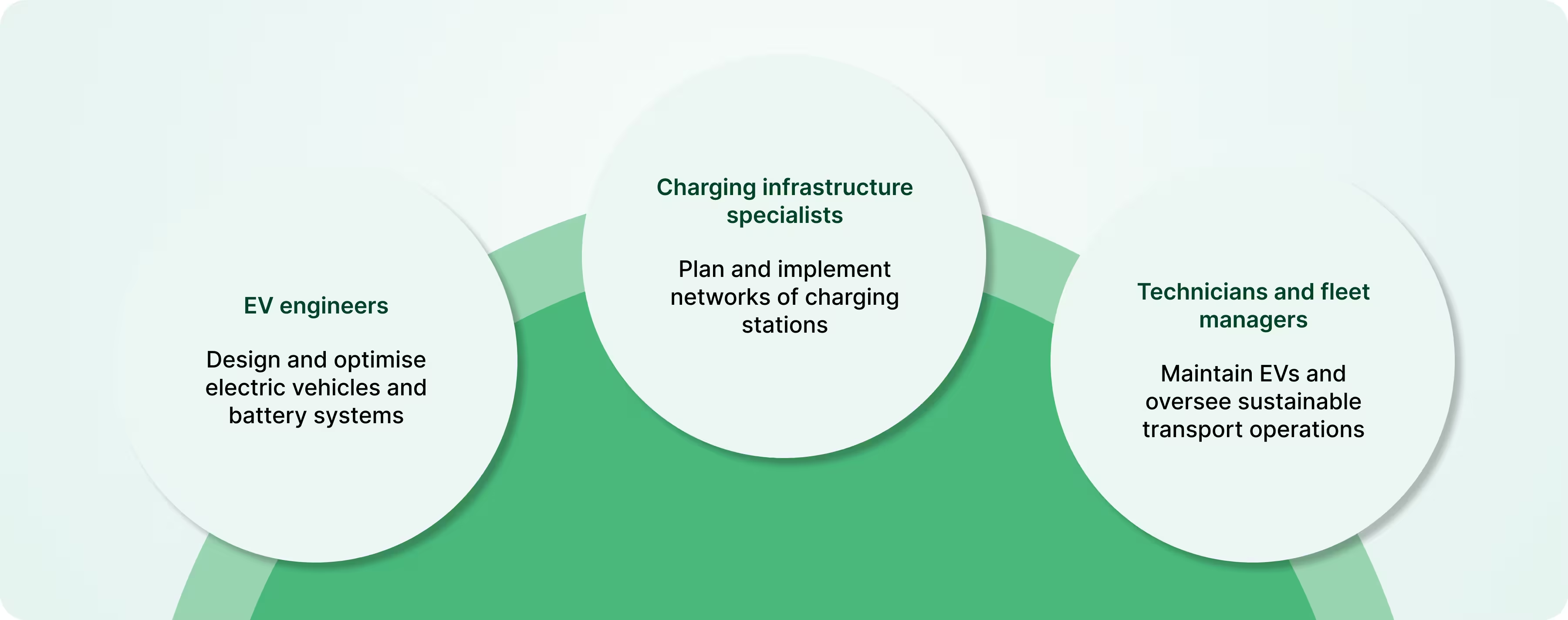
Together, these roles support the growing transition to clean mobility.
Where to Find Them:
Confused about where to start your search for green jobs? You’re not alone. Landing a role in the sustainability sector isn’t just about sending out resumes, it’s about showing your interest in the field and keeping up with trends and regulations. Make sure your CV highlights any sustainability-related experience or skills and keep yourself updated on the latest developments.
Start by checking mainstream job boards and company career pages, where many organisations post their sustainability roles. Beyond that, there are specialised platforms dedicated entirely to green jobs. A few examples include:
With the right approach, you can turn your passion for sustainability into a meaningful career.
What’s Driving the Growth of Green Jobs:
According to LinkedIn's Economic Graph, the demand for green talent surged by 5.9% annually between 2021 and 2024, with countries like the United Kingdom and Portugal leading the charge.
While many see this as a trend, we see it as a global shift. Several factors are driving the growth of green jobs worldwide. Environmental awareness is rising. Stricter regulations on emissions and sustainability reporting are pushing companies to act. At the same time, technological innovations are creating new roles. Consumer and investor demand for greener products and practices is also encouraging organisations to put sustainability at the heart of their operations.
Who Green Jobs are for
While many green jobs require expertise in technology and science, the sector is far from limited to specialists. There are also roles for technicians, installers, sanitation workers, and other hands-on workers who are crucial to making sustainable projects a reality. From planting trees to maintaining solar panels, these roles involve practical skills that keep the green economy running.
In truth, all of us are contributing in some way, whether through our work, choices, or ideas, to building a more sustainable world.
Conclusion:
According to the Economic Times’ Energy Section, India’s green job market has experienced a remarkable surge, with demand increasing by over 965% in the past five years.
Generation Z is at the forefront of this transformation, making up 63% of applicants aged 21 to 30, particularly in Tier 2 and Tier 3 cities such as Indore, Kochi, and Jaipur, where green job activity has risen by 50% year-on-year.
This upward trend in green jobs is set to continue in the coming years as sustainability becomes a central focus across industries. Emerging sectors such as green finance, sustainable construction, and carbon removal technologies are likely to create new career opportunities, ensuring that the green job market remains dynamic for the next generation of professionals.
For those stepping into this world, it’s more than a career, it’s a chance to leave a lasting mark on the planet.
{{cta}}
{{accordion}}
{{sources}}

Continue Reading
.avif)
Sixes, Stadiums & Sustainability: Measuring What Matters in the IPL
A sharp look at how the IPL can evolve into a sustainable, high-performance system by rethinking energy, water, mobility, and waste through better measurement and smarter operations.
.avif)
AI and Sustainability: What It Actually Does Across Carbon Accounting, ESG and LCA
AI is reshaping sustainability workflows across carbon accounting, ESG, and LCA, but not in the way it’s often portrayed. This blog breaks down what AI actually does, where it adds real value, and why human judgement remains critical for reliable, audit-ready outcomes.
.avif)


.avif)








.svg)
.svg)