What is Scope 3 and Why it’s the Toughest (and Most Critical) to Measure
A clear, practical guide to Scope 3 emissions, why they dominate corporate carbon footprints, and how businesses can start measuring and managing value-chain impact.

.svg)
Table of Contents


Earlier this year, we were in conversation with a pharma-focused laboratory equipment manufacturer, eager to embark on their sustainability journey. While they were enthusiastic about tackling their Scope 1 and 2 emissions, they hesitated when it came to making a Scope 3 commitment. Without a dedicated sustainability division, their strategy was to first get their direct (Scope 1) and energy-related (Scope 2) emissions in order, before deciding how to approach the far more complex world of Scope 3. Their rationale was clear: by understanding their own emissions footprint, they could better serve their end clients and build a robust sustainability strategy. However, GHG Protocol Scope 3 emissions is the largest contributor – the other two scopes are merely the tip of the iceberg.
Scope 3 Reporting in India and Globally: What’s the Status?
.avif)
In 2025, the push for deeper climate transparency continued to intensify, yet Scope 3 reporting remains the biggest gap to close. The latest assessments show that globally, only about 15 percent of companies disclose their Scope 3 emissions, reflecting the ongoing difficulty of gathering reliable value-chain data.
India is showing stronger momentum. Under the BRSR framework, 27 percent of the top 1,000 listed companies voluntarily reported their Scope 3 emissions for FY2024, placing India among the early movers toward fuller emissions transparency in 2025.
At the same time, there are signs of growing corporate intent. The Science Based Targets initiative (SBTi) shows that a very high proportion of companies with approved climate targets now include Scope 3 within those commitments. This indicates that although disclosure levels remain low globally, companies increasingly recognise that value-chain emissions must be part of credible climate action.
Together, these 2025 insights reflect a world where ambition is rising, India is accelerating, and global reporting frameworks continue to evolve toward fuller value-chain accountability.
Decoding Scope 1, Scope 2, and Scope 3
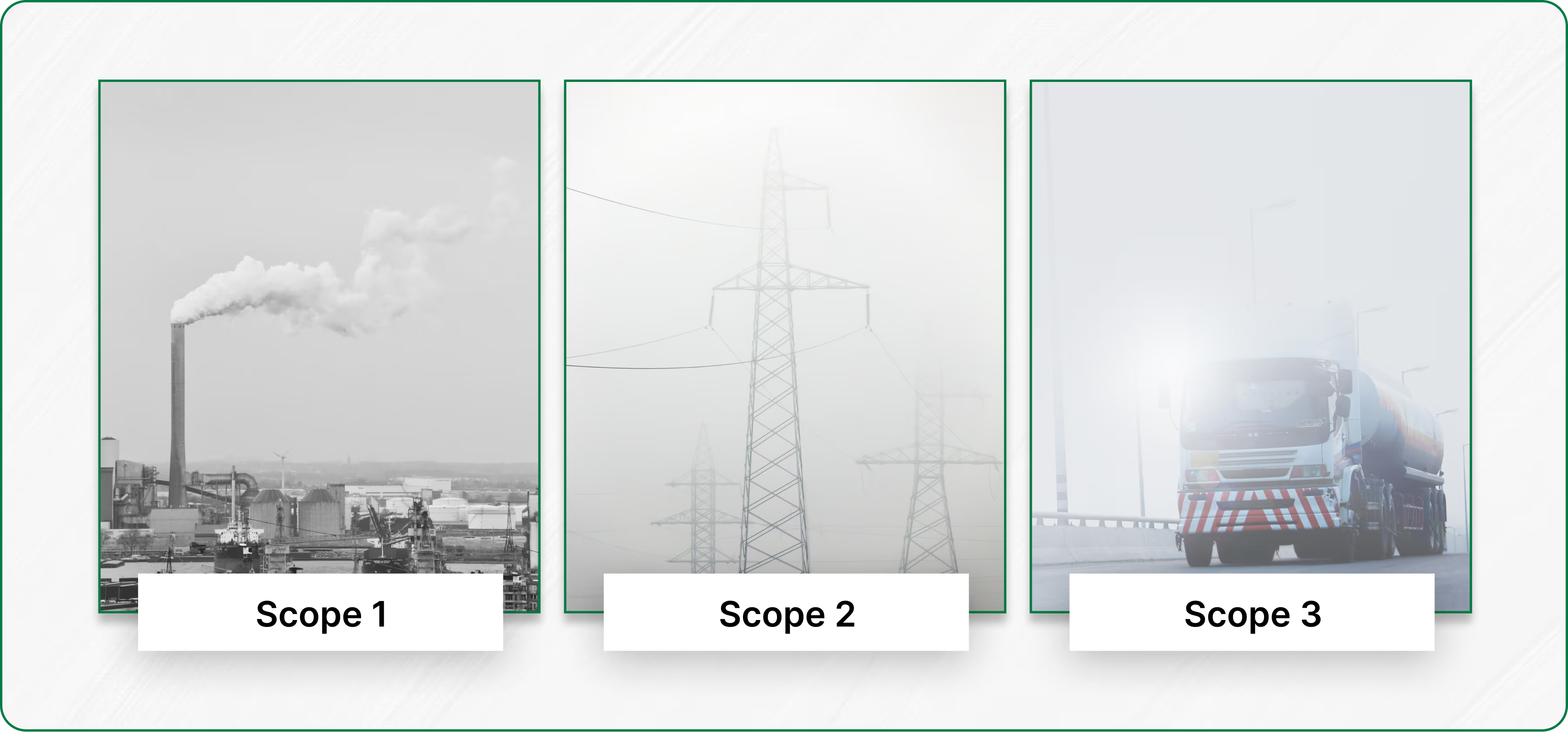
When we talk about a company’s environmental impact, we often hear the term carbon footprint. But behind that buzzword lies a complex web of greenhouse gas emissions, forming an invisible heat-trapping blanket around Earth. Without the blanket, earth would be a cold uninhabitable place to live in. They’re naturally present in our atmosphere, but human activities, especially from businesses and industries, have been releasing them in excess, throwing Earth’s balance off. The emissions are classified into three categories – Scope 1, 2, and 3 emissions, based on a framework created by the Greenhouse Gas Protocol.
Christiana Figueres, former Executive Secretary of the UNFCCC, has emphasized that effectively reducing emissions requires companies to address all three scopes – direct emissions, energy-related emissions, and those across the value chain.
Examples of Scope 1, 2, and 3: Meet John, who runs a small bakery. Every day, his Scope 1 emissions come directly from the ovens and the delivery van he owns. Then there are Scope 2 emissions, which come from the electricity John buys to power his shop’s lights, refrigerators, and ovens; although he doesn’t produce these emissions himself, they result from the power plant supplying his electricity. Finally, John’s Scope 3 emissions include the carbon footprint of the flour and sugar he buys from suppliers, the waste his customers generate, and even the emissions from his staff commuting to work. Together, these three scopes make up the full picture of John’s bakery’s impact on the planet.
Read more about Scope 1, 2, and 3 emissions.
What Exactly are Scope 3 Emissions?
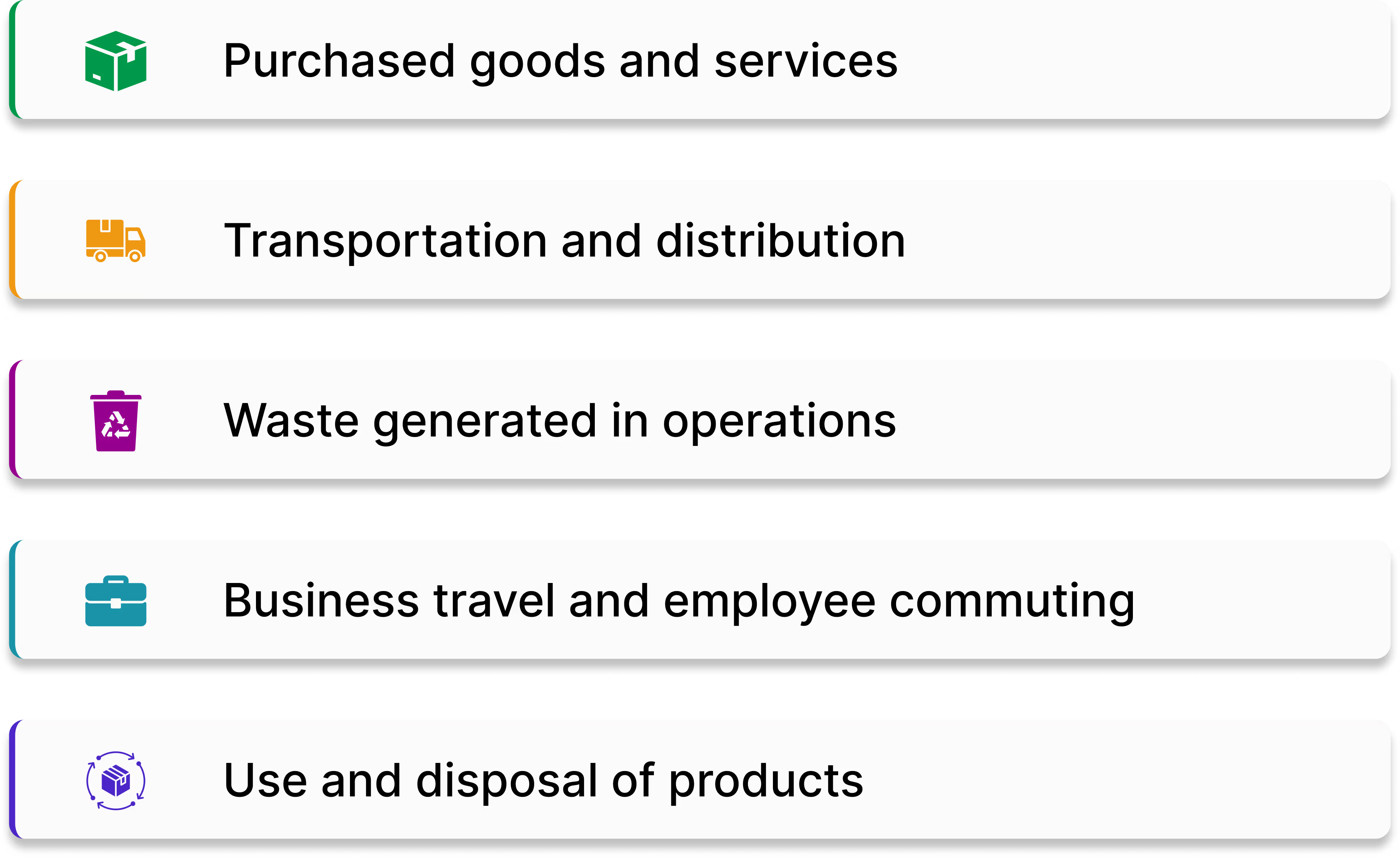
Scope 3 emissions are the indirect greenhouse gas emissions that occur up and down a company’s value chain, both upstream and downstream. For many businesses, Scope 3 accounts for the lion’s share of their total carbon footprint – often over 75% and, in some sectors, more than 90%. This includes emissions from:
Why Measuring Scope 3 Emissions is so Hard (but Necessary)
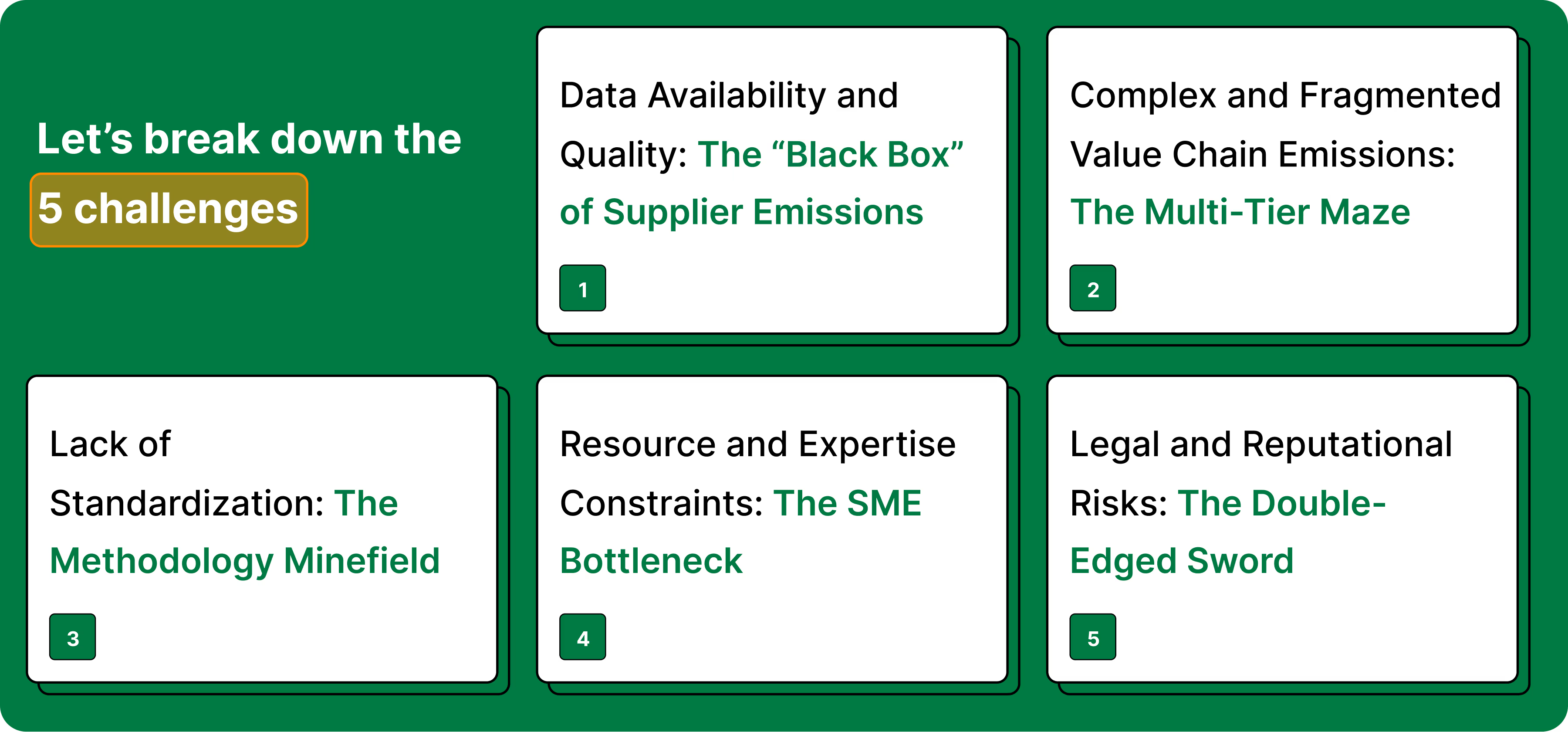
1. Data Availability and Quality: The “Black Box” of Supplier Emissions
Most suppliers lack granular emissions data, forcing companies to rely on estimates or industry averages. For instance, a food processing company sourcing crops from farmers might face:
Tiered data gaps: Farmers use fertilizers produced by a manufacturer that sources raw materials from mines. Each tier lacks measurement tools, resulting in emissions calculations based on outdated emission factors or spend-based proxies.
Real-world impact: If a fertilizer manufacturer overestimates its energy efficiency, say by 20%, that error cascades throughout the supply chain, distorting the food processor’s Scope 3 footprint by thousands of metric tons of CO₂ – which can end up having serious business implications.
2. Complex and Fragmented Value Chain Emissions: The Multi-Tier Maze
Scope 3 spans activities far beyond a company’s direct control. Consider a leading Indian exporter sourcing turmeric from small farms:
.avif)
Unseen emission sources, such as methane released from decomposing organic waste, often remain unaccounted for within the value chain. Collaboration gaps also persist. In this case, farmers may lack the tools to track irrigation-related emissions, while fertilizer manufacturers often withhold production data. Without standardized data-sharing or coordinated decarbonization efforts beyond tier 1 suppliers, Scope 3 estimates are forced to rely on outdated emission factors – introducing significant uncertainty and margin of error.
3. Lack of Standardization: The Methodology Minefield
Taking the financial sector as an example, a bank calculating emissions from its investment portfolio might use the Partnership for Carbon Accounting Financials (PCAF) standard, while a tech company assesses cloud infrastructure emissions through the GHG Protocol’s Category 15 guidance. This inconsistency makes cross-industry comparisons challenging.
Chaos can also ensue from supplier reporting as well. For example, one automotive supplier may report emissions using location-based grids, while another may use market-based data. Aggregating these for a company’s Scope 3 inventory creates apples-to-oranges comparison.
4. Resource and Expertise Constraints: The SME Bottleneck
Take the case of a mid-sized garment factory from India wanting to support its EU clients’ Scope 3 goals but it lacks funds for carbon accounting software. Sure, they can manually track energy use in spreadsheets, but there’s the risk of missing out on emissions. There is a substantial knowledge gap on this front. Only 12% of SMEs in developing economies have staff trained in life-cycle assessment (LCA) methodologies, versus 89% of Fortune 500 firms.
5. Legal and Reputational Risks: The Double-Edged Sword
Estimation risks: Companies that rely on outdated or incomplete data to estimate Scope 3 emissions face significant legal problems. Recent high-profile cases have shown that when firms underreport or selectively disclose emissions, whether by using old industry averages or omitting major categories, they can become targets for regulatory investigations and lawsuits alleging greenwashing.
Lululemon is under investigation in Canada for allegedly misleading consumers about its climate impact by selectively excluding certain Scope 3 categories from its reporting, while JBS USA faces legal action in New York for failing to fully account for emissions tied to deforestation and land use change.
Supplier pushback: Obtaining accurate Scope 3 emissions data often requires cooperation from suppliers, which can be challenging. For instance, if an electronics manufacturer requests emissions data from a battery supplier and the supplier refuses – citing competitive or confidentiality concerns, the manufacturer may be unable to fulfil regulatory requirements for comprehensive emissions reporting. Under the EU’s Corporate Sustainability Reporting Directive (CSRD), such gaps can expose companies to regulatory penalties and reputational harm, highlighting the importance of robust supply chain engagement and data transparency.
Why Does it Matter now More than Ever?
Measuring Scope 3 is critical because it provides the full picture of a company’s climate impact. Without it, much of the real climate risk and opportunity for reduction remains invisible. Investors, regulators, and customers are increasingly demanding this transparency.
Regulatory Pressure
Scope 3 emissions, once seen as too complex to measure, are now firmly in the regulatory spotlight. New frameworks like the EU’s Corporate Sustainability Reporting Directive (CSRD), the U.S. SEC’s proposed climate disclosure rules, and the global standards from the International Sustainability Standards Board (ISSB) all call for more detailed, transparent reporting – with a clear emphasis on Scope 3.
Adding further urgency is the Carbon Border Adjustment Mechanism (CBAM), which places a carbon price on certain imports into the EU. This means companies can no longer ignore the emissions from suppliers, transport, or production in other regions – those indirect emissions now have a financial cost.
Together, these regulations are turning Scope 3 from a “nice to have” into a regulatory necessity, forcing companies to map, measure, and reduce their value chain emissions – or risk falling behind.
Mark Carney, former Governor of the Bank of England and UN Special Envoy on Climate Action and Finance, has warned that regulatory pressure on climate disclosures is rising, and companies that fail to adapt will face financial and reputational risks.
Investor and Consumer Expectations
Investors and consumers alike are becoming more climate-conscious, and they expect companies to be transparent about their full environmental impact — especially when it comes to Scope 3 emissions. For investors, comprehensive emissions data is now a key factor in assessing risks and long-term value, influencing decisions on funding and stock. Meanwhile, consumers are increasingly choosing brands that demonstrate genuine commitment to sustainability throughout their supply chains, not just in their own operations.
How to Start Measuring Scope 3
Understanding the importance of Scope 3 emissions is straightforward but measuring them is far more challenging.
Mapping your Value Chain: Begin by thoroughly charting your value chain to identify all points where greenhouse gases are emitted indirectly. This means looking beyond your own facilities to include suppliers, logistics, product use, and disposal. Creating this detailed inventory reveals hidden emission sources.
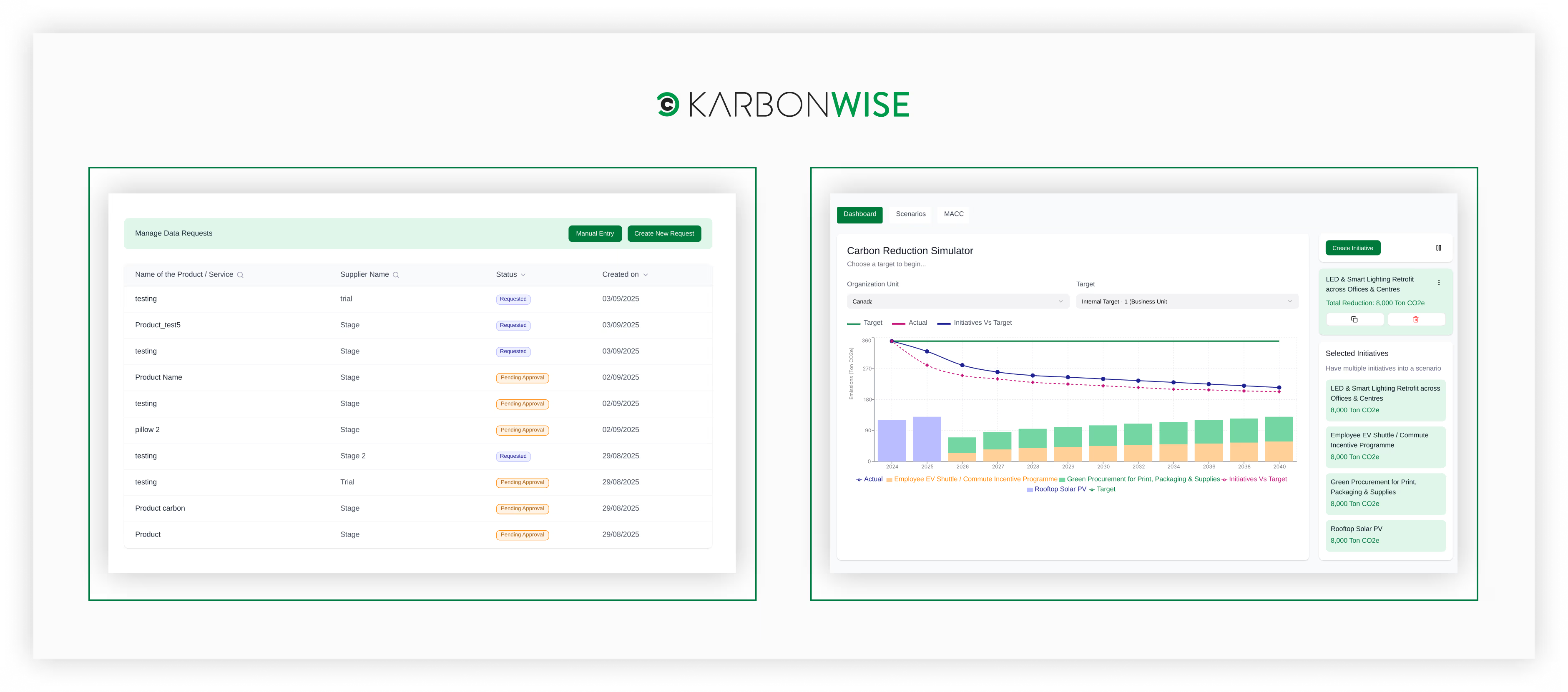
With KarbonWise, you can map your value chain emissions seamlessly and turn complexity into clarity.
Prioritising Hotspots: Once you have a clear overview, it’s important to focus on the most significant emission contributors. These hotspots often account for a major share of your total Scope 3 footprint. Concentrating efforts here allows for more effective resource allocation and quicker impact.
Engaging Suppliers for Data: Gathering reliable Scope 3 data depends largely on working closely with suppliers, as they possess much of the essential information. Developing transparent partnerships and encouraging suppliers to report their emissions not only improves data quality but also builds collective accountability for emissions reduction.
Utilising Tools and Reporting Frameworks: To navigate the complexities of Scope 3, companies should leverage specialised tools and recognised standards. The Greenhouse Gas Protocol’s Scope 3 Standard remains the leading global framework, guiding companies through categorising and quantifying emissions.
In addition, digital platforms like KarbonWise simplify supplier engagement, automate data mapping, and align outputs with CSRD/CBAM reporting.
KarbonWise clients have achieved up to 85% supplier data coverage in under 4 months, accelerating their Scope 3 reporting and compliance processes.
The Hidden Cost of Scope 3 Complexity
These Scope 3 measurement challenges create a multiplier effect:
- A single incomplete dataset from a tier 3 supplier can skew emissions calculations across hundreds of downstream products
- Companies spend more time reconciling Scope 3 data than Scopes 1-2, often requiring dedicated cross-functional teams
- Firms delay Net Zero targets due to Scope 3 uncertainties, risking regulatory non-compliance and investor backlash
While daunting, these hurdles underscore why Scope 3 is a strategic imperative – companies that crack the code on measurement will lead in decarbonization innovation and stakeholder trust.
Conclusion: The Path to Accurate Scope 3 Accounting
For business leaders, the message is clear: Scope 3 is where the real climate impact and opportunity lies. While the road to comprehensive measurement is challenging, starting the journey is essential. Companies that invest early in understanding and managing their Scope 3 emissions will be better positioned to meet regulatory requirements, satisfy investor expectations, and build resilient, future-proof businesses.
At KarbonWise, we believe that embracing the complexity of Scope 3 is not just an obligation – it’s a strategic advantage. By tackling Scope 3 head-on, enterprises can unlock new value, drive innovation, and lead the transition to a sustainable, low-carbon economy.
Ready to take the next step? Discover how KarbonWise can support your Scope 3 journey.
{{cta}}
{{sources}}
{{accordion}}

Continue Reading

Primary vs Secondary Emissions Data: Key Differences and When to Use Each
Learn the key differences between primary and secondary emissions data, when to use each, and how better data quality supports more accurate carbon accounting and Scope 3 reporting.

Netflix, Binge-Watching & the Hidden Carbon Footprint of Streaming Culture
Streaming feels effortless, but every Netflix session relies on data centres, networks, and devices that consume energy continuously. Discover the hidden carbon footprint of streaming culture and learn simple ways to reduce your digital impact.



.avif)








.svg)
.svg)