SECR: Why Streamlined Energy and Carbon Reporting Still Matters for UK Organisations
SECR remains a key UK reporting requirement. This article explores why it still matters and how organisations can use it to strengthen emissions insight and climate strategy.


.svg)
Table of Contents


As annual report drafts come together, energy and carbon disclosures are often one of the last sections to be revisited. Most UK organisations know SECR, but far fewer treat it as a strategic tool. Yet SECR, or Streamlined Energy and Carbon Reporting, continues to shape how companies understand their emissions, build credibility and prepare for the tightening landscape of climate governance.
What began as a compliance requirement has grown into a foundation for environmental reporting across sectors. SECR helps organisations strengthen visibility over energy use, sharpen leadership accountability and establish performance baselines that inform long-term climate decisions. As expectations increase across markets, SECR remains one of the most practical ways for companies to understand their operational footprint and create meaningful pathways for improvement.
Why SECR Still Matters Today
SECR applies to large companies, LLPs and organisations consuming more than 40,000 kWh of energy annually. This criterion ensures that businesses with significant operational impact report their energy use and emissions in a structured way. It affects thousands of UK companies each year and continues to grow in relevance as sustainability and governance expectations rise: SECR qualification insight.
While the regulation has existed for several years, its role is evolving. SECR reporting provides consistency in a space where voluntary disclosures vary widely. It offers executives a clearer map of organisational efficiency, emissions intensity and opportunities for operational improvement. With increasing scrutiny from investors and supply chains, SECR gives businesses a dependable starting point for climate strategy.
Recent guidance highlights that SECR continues to be mandatory for large companies and LLPs, reinforcing its position as a baseline requirement for organisations preparing for future climate regulations. This includes annual reporting of energy consumption, carbon emissions and narrative explanations of reduction measures.
In practice, SECR acts as a bridge between operational data and corporate climate ambition. Organisations that build mature reporting systems early often experience smoother transitions into broader frameworks such as TCFD, CSRD or SBTi.
SECR at a Glance
SECR requires companies to report on:
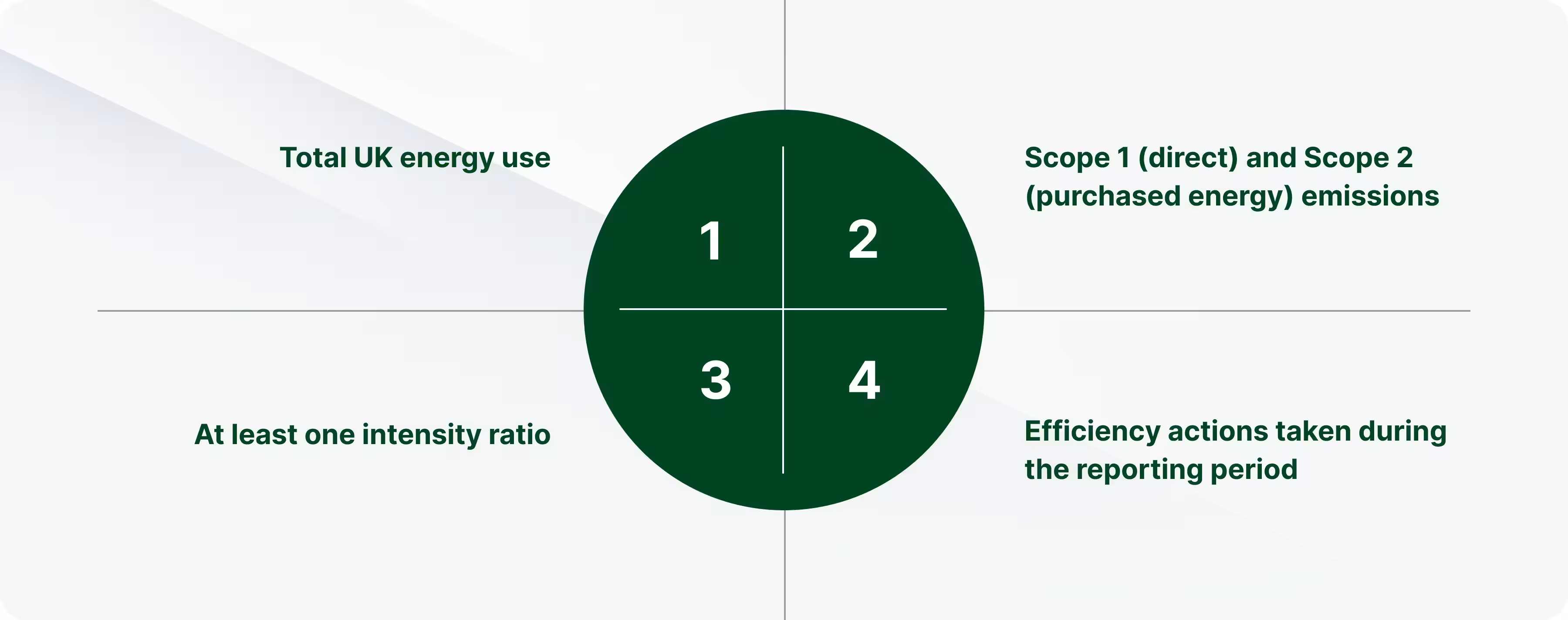
These expectations guide companies to understand how operational choices affect emissions. SECR also encourages transparency, helping stakeholders interpret whether energy efficiency is improving or plateauing.
Insights from business practice show that SECR impacts more than 10,000 organisations, reinforcing its position as one of the UK’s most widely applied sustainability disclosures. It continues to support accountability, especially where climate governance is becoming a corporate expectation rather than an optional exercise.
This scale of reporting helps create comparable datasets across sectors, making it easier for businesses to understand their performance relative to peers.

What SECR Requires in Practice
SECR reporting includes several quantitative and narrative components. Companies must measure emissions consistently, using recognised methodologies. They must provide at least one intensity ratio, such as emissions per unit of production or emissions per employee. They must also describe the efficiency measures they have taken, even when reductions are modest.
Detailed compliance guidance shows that SECR covers Scope 1 and 2 emissions and encourages organisations to disclose relevant Scope 3 data where material. This supports better understanding of value chain impacts and helps organisations prepare for broader climate regulations expected over the coming years.
Through these requirements, SECR fosters behavioural change by encouraging companies to connect data with operational decisions. It invites teams to ask: Where is energy being wasted? What practices can be adjusted? Which processes could be redesigned?
Core Components of Strong SECR Reporting
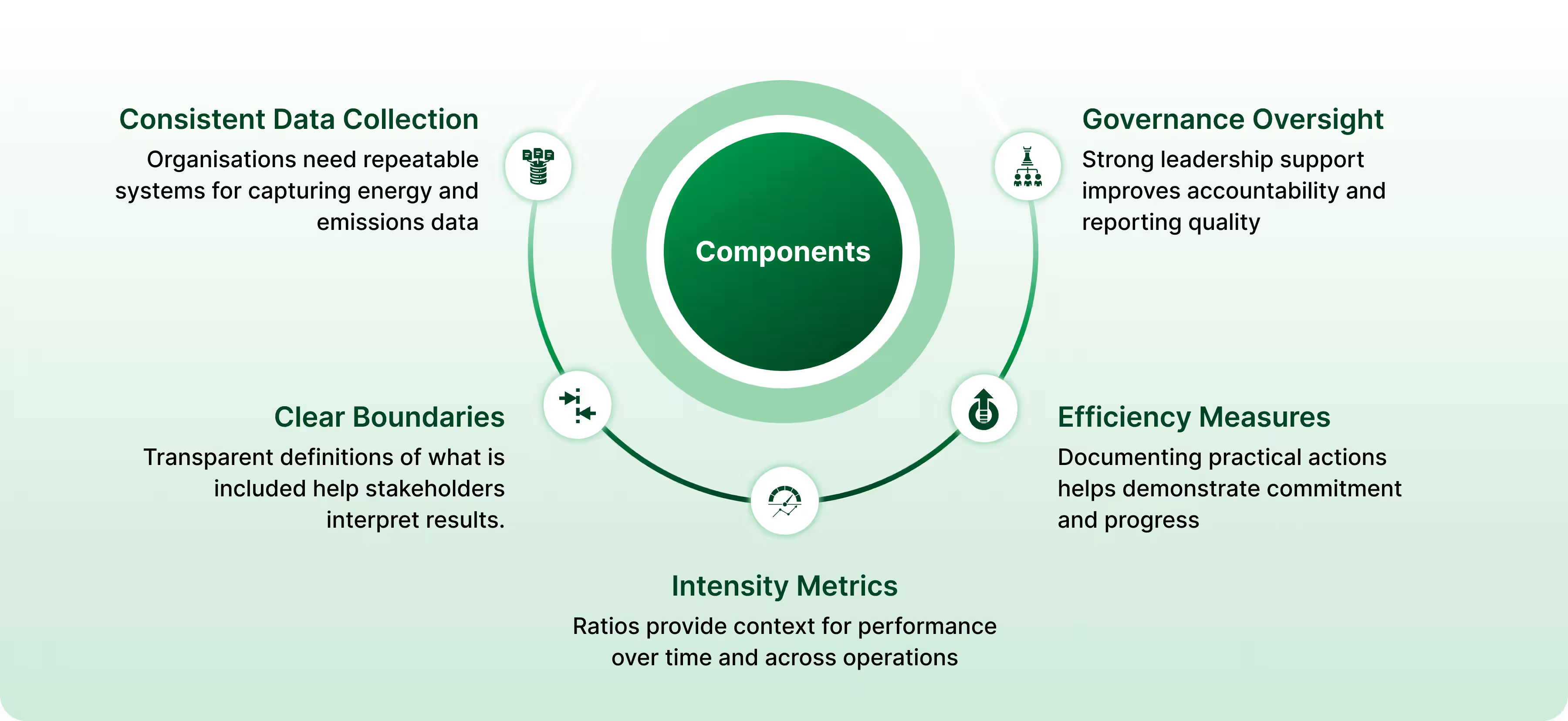
These components support more reliable reporting and help organisations build confidence in their sustainability performance.
Three Foundations for Future-Ready SECR
{{blurb}}
Case Studies: SECR in Real Organisations
Churchill Contract Services Ltd
Churchill Contract Services used SECR reporting to improve energy data collection, enhance transparency and ultimately reduce carbon intensity by approximately 24% year-on-year. Their approach included analysing detailed utility and fleet data and adjusting energy strategies, which helped cut overall carbon footprint and support long-term sustainability goals.
Petty Wood & Co. Limited
Petty Wood worked with consultants to compile and file its SECR report, ensuring regulatory compliance and laying the groundwork for broader carbon measurement and sustainability strategy. This implementation provided a solid foundation for tracking emissions and supporting future reduction plans.
SECR and the Shift Toward Strategic Climate Reporting
SECR provides a structured baseline for companies preparing for wider sustainability reporting frameworks. The familiar process of collecting emissions data, setting boundaries and explaining actions helps organisations build the skills needed for more advanced climate disclosures.
Many companies also use SECR results to identify where further improvements are possible. Energy hotspots can highlight inefficiencies that affect both operational cost and environmental impact. Intensity ratios help teams understand whether growth is decoupled from emissions or whether further intervention is needed. These insights often influence investment decisions, capital planning and supplier management.
Clear thresholds also determine whether organisations must participate. Practical guidance highlights the criteria that bring companies into scope, including turnover, balance sheet size and number of employees. These thresholds help companies understand their obligations and prepare reporting systems accordingly.
As climate expectations grow, organisations that approach SECR strategically will be better positioned to meet future regulatory and market demands.
Where KarbonWise Helps
KarbonWise helps organisations simplify SECR reporting by centralising energy, emissions and operational data in a single system. It supports consistent data capture across business units, aligns emissions information with established frameworks and reduces the reliance on scattered spreadsheets.
Teams can also use KarbonWise to analyse trends, prepare audit-ready reports and coordinate supplier engagement. By turning data into decision-ready insights, the platform helps organisations meet SECR requirements with clarity and confidence.
{{cta}}
{{accordion}}
{{sources}}
.avif)
.avif)
.avif)

Continue Reading

SBTi FLAG Guidance v1.2: What Changed and What to Do Next
Learn what's new in SBTi FLAG Guidance v1.2, including updated deadlines, mandatory commodities, no-deforestation requirements, and practical steps for businesses.
How to conduct a double materiality assessment: A practical step-by-step guide (2026)
Learn how to conduct a Double Materiality Assessment with this practical step-by-step guide covering impact and financial materiality, IROs, stakeholder engagement, scoring, materiality matrices, and ESG reporting.

.avif)






.svg)
.svg)