CBAM 2026: Why Emissions Data Will Decide EU Market Access
From 2026, CBAM becomes a financial obligation. Verified emissions data will directly determine carbon costs, pricing competitiveness, and continued EU market access for exporters.

.svg)
Table of Contents


From 2026, CBAM stops being a reporting exercise and becomes a cost. Emissions data will directly determine the carbon price applied to your exports to the EU.
If your data is incomplete or cannot be verified, EU importers must use conservative default values, increasing your product cost.
In short, emissions accuracy now directly affects your EU market access.
CBAM so Far
The Carbon Border Adjustment Mechanism, or CBAM, is the European Union’s policy to account for the carbon emissions embedded in certain imported goods. Its aim is to align the carbon cost of imports with the cost faced by EU producers under the EU Emissions Trading System.
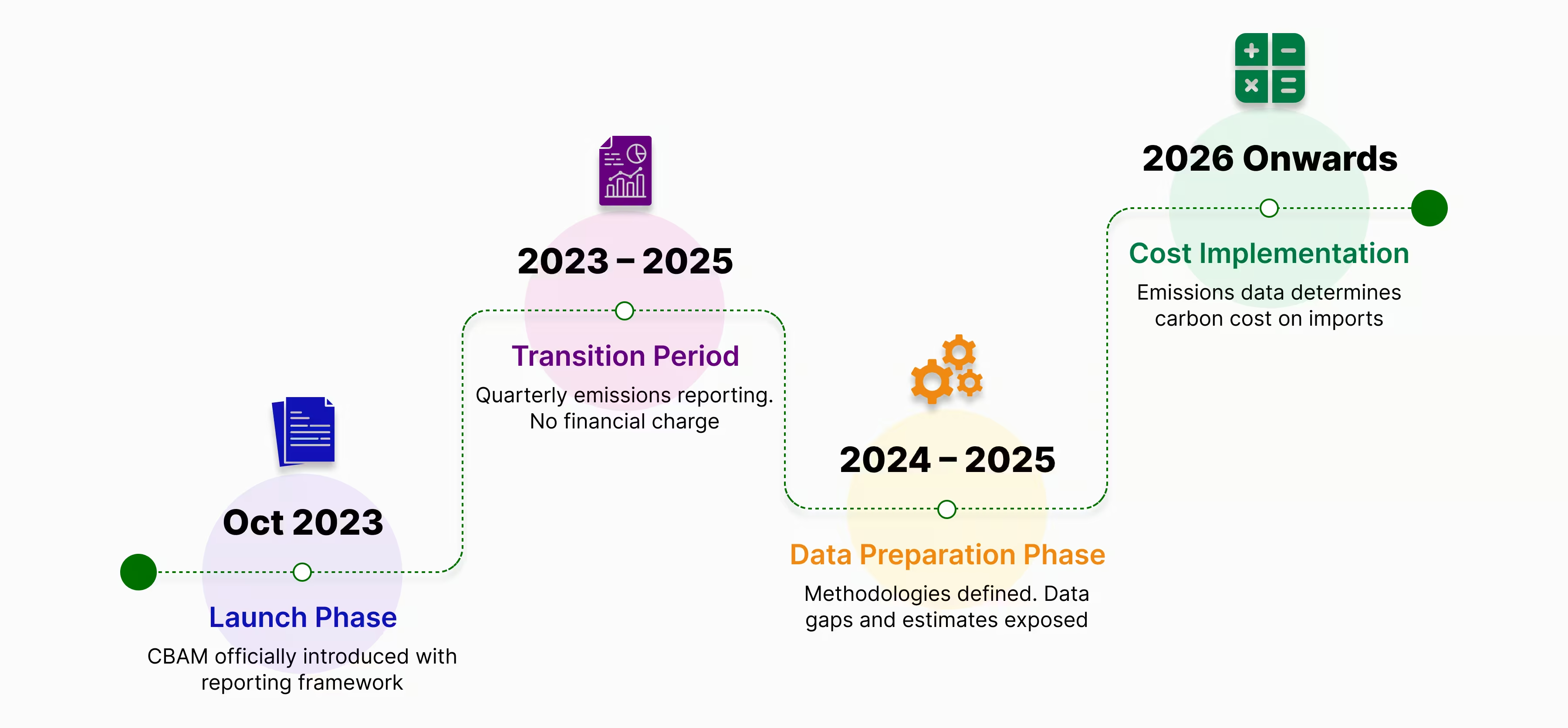
CBAM entered into force on 1 October 2023, beginning with a transitional phase focused solely on emissions reporting. During this period, EU importers have been required to submit quarterly reports detailing the greenhouse gas emissions embedded in covered products. No financial charge applies during this transitional phase.
For exporters, this stage has centred on understanding EU calculation methodologies, system boundaries and documentation requirements, while exposing gaps in data quality, traceability and internal ownership.
From 1 January 2026, CBAM moves from reporting to financial obligation. From this date, importers will be required to purchase and surrender CBAM certificates corresponding to the embedded emissions in their imported goods. Emissions data will directly determine the carbon cost applied to imports, materially affecting the price and competitiveness of exports to the EU.
CBAM Covered Industries and Products
As CBAM enters its definitive phase in 2026, it applies to a limited number of carbon intensive product categories. These are sectors where emissions are high, trade volumes with the EU are significant, and carbon pricing already applies to EU producers.
Based on current scope, CBAM covers the following product groups and levels of exposure for Indian exporters:
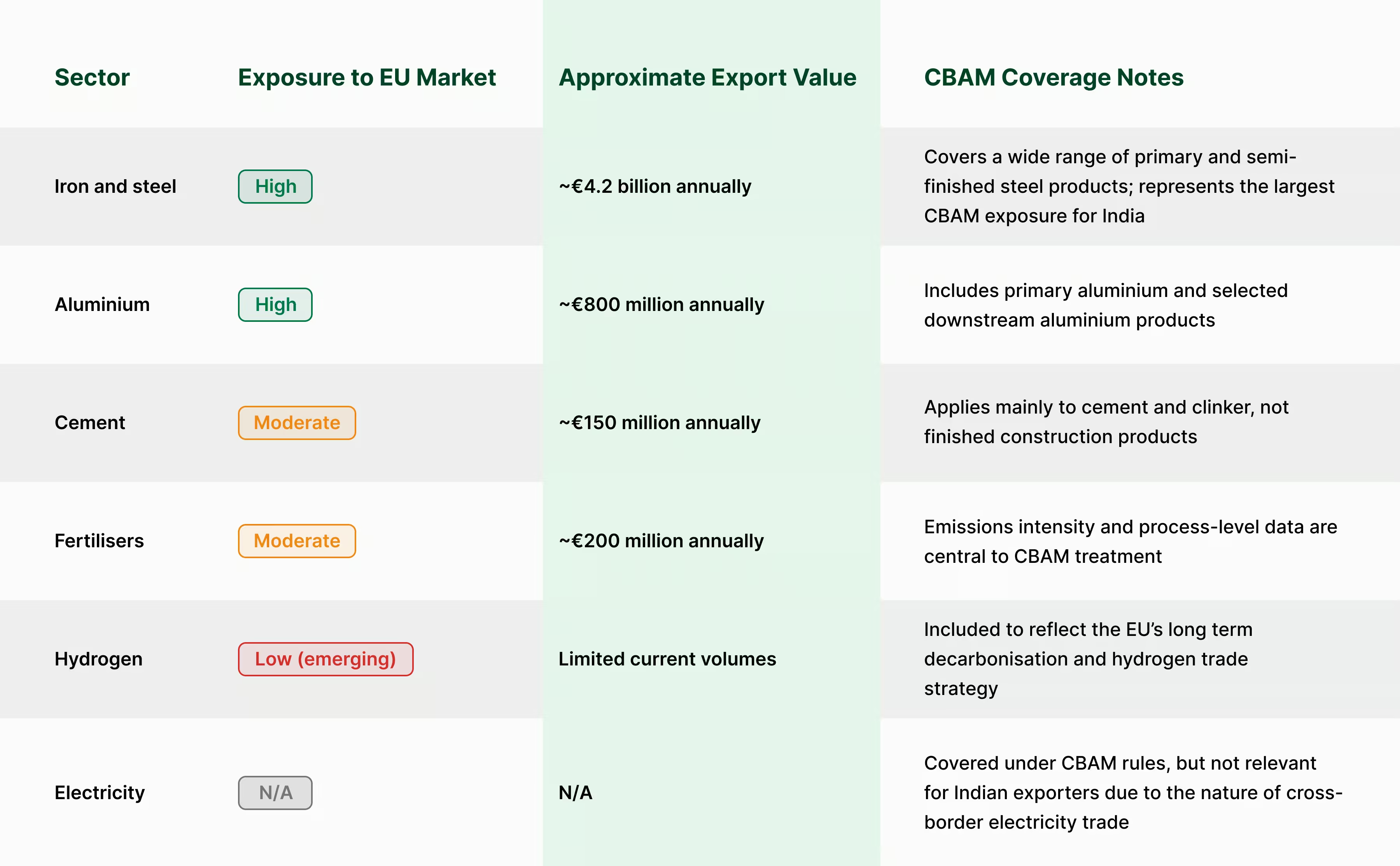
While CBAM currently focuses on these product groups, the EU has indicated that coverage is likely to expand over time. This means exporters supplying materials or components into these value chains may face increasing data requests, even if their products are not directly listed today.
Who it Applies to
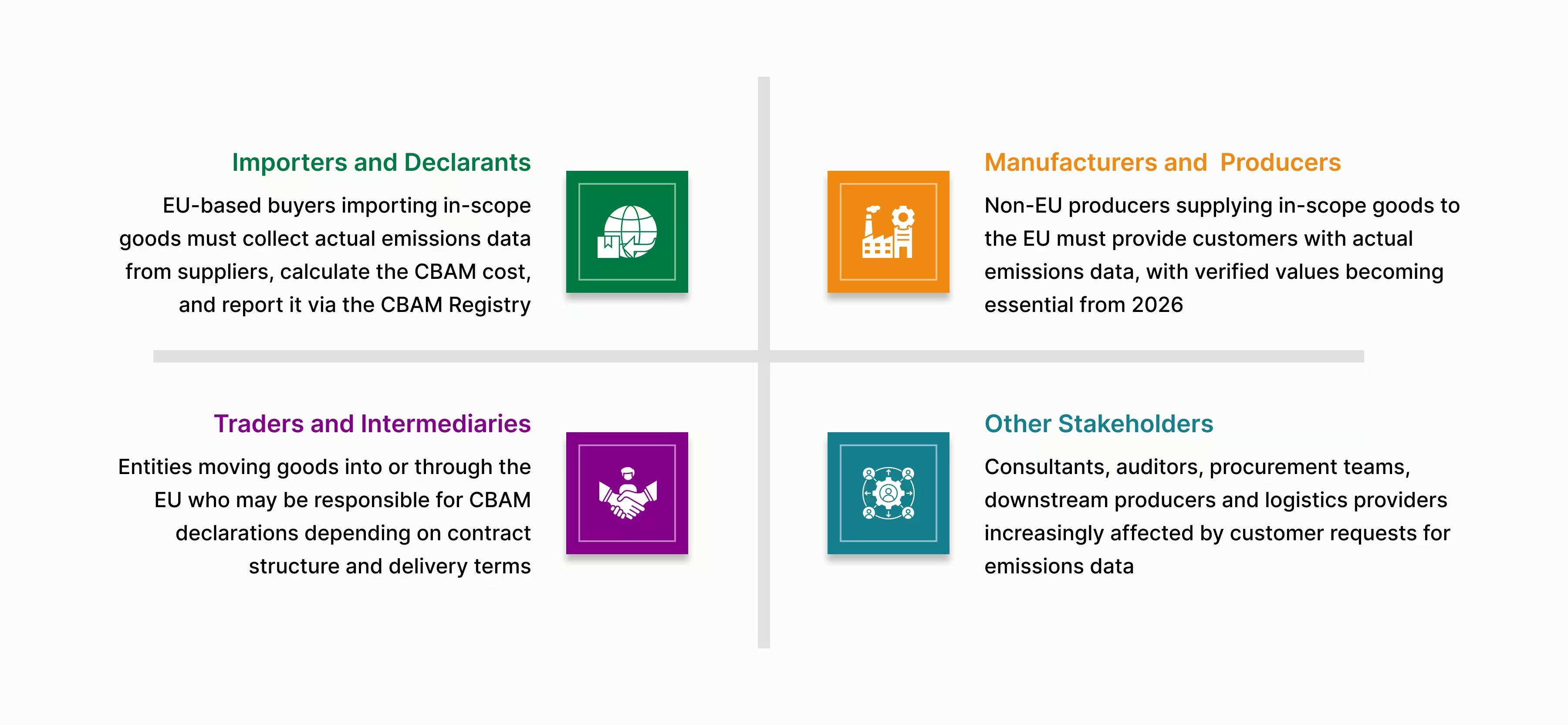
CBAM affects a wider set of actors than just EU importers. While legal reporting obligations sit primarily with EU-based declarants, the accuracy, cost, and compliance of CBAM depend heavily on upstream manufacturers, traders, and supporting stakeholders. From 2026, emissions data responsibilities extend deep into global supply chains, making producers and intermediaries central to CBAM readiness, even when they are located outside the EU.
CBAM in 2026: What Has Actually Changed
From 2026, CBAM shifts from reporting to financial impact. Emissions data will determine how many CBAM certificates EU importers must purchase for each shipment.
For exporters, data accuracy is now commercially critical. If verified, product-specific data is unavailable, importers must use conservative default values, increasing carbon costs.
Emissions data must also be ready in line with production and shipment cycles. As EU buyers push these requirements down the supply chain, emissions readiness becomes essential for pricing, supplier selection and continued EU market access.

What Drives CBAM Cost Exposure for Indian Exporters
CBAM exposure is not determined by location alone. It is driven by the carbon intensity of your production and how that compares to EU benchmarks, combined with your ability to evidence emissions credibly.
In practical terms, exporters face higher CBAM exposure when three factors come together.
Higher carbon intensity than EU averages
For example, a typical Indian integrated steel producer may emit around 2.1 tonnes of CO₂ per tonne of crude steel, compared to an EU average closer to 1.8 tonnes. That gap alone creates immediate CBAM exposure once costs apply.
Exposure to EU carbon pricing
CBAM costs are linked to the EU ETS carbon price, currently around €80–90 per tonne of CO₂. At these levels, even relatively small differences in emissions intensity can translate into meaningful costs per tonne of product.
Limited recognition of carbon costs already paid
Where little or no eligible carbon price is paid domestically, exporters have limited scope to offset CBAM charges, increasing net exposure.
Taken together, this can have a material commercial impact. In the steel example above, a CBAM charge of roughly €175–180 per tonne of exported steel can emerge at current carbon prices. For a product selling at around €800 per tonne, this represents a carbon surcharge of more than 20 percent, before any margin considerations.
Exposure increases further when emissions data is incomplete or cannot be verified. In these cases, EU importers may be forced to apply default values, which are deliberately conservative and can push costs even higher.
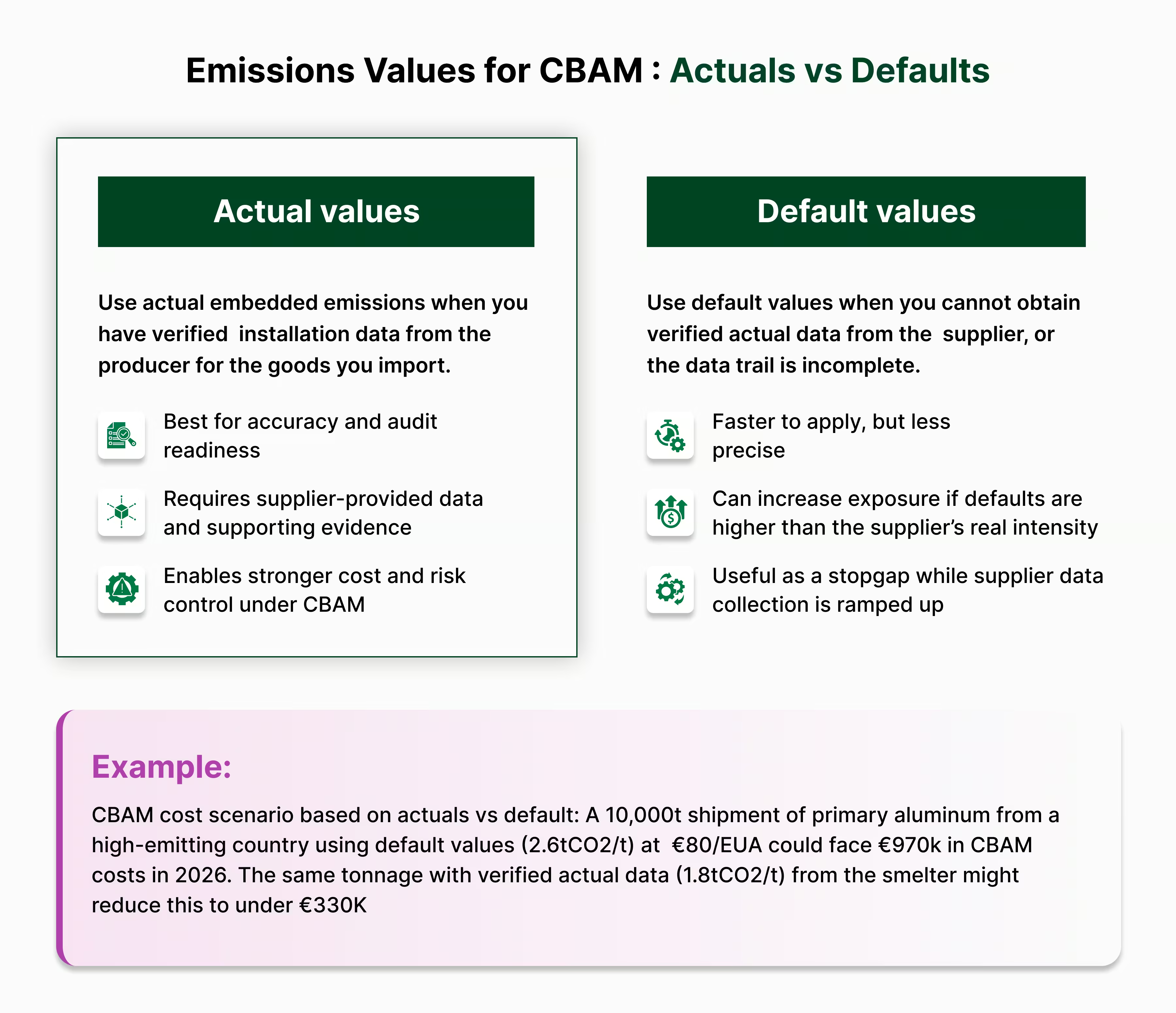
What ultimately matters is not whether CBAM applies in principle, but whether you can demonstrate emissions performance accurately and on time. Exporters who cannot do this are more likely to face cost pass-through, tougher negotiations with EU buyers, or pressure to absorb CBAM impacts themselves.
Understanding this exposure sets the context for the next section, which explains why emissions data under CBAM now functions as a trade requirement rather than a conventional ESG disclosure.

Emissions Data is Now a Trade Requirement, Not ESG
Under CBAM, emissions data is no longer supporting sustainability disclosure. It functions as trade data that directly determines the carbon cost applied to imports into the EU.
For CBAM covered products, emissions must be calculated using EU defined methodologies, based on actual production conditions, and independently verifiable. Industry averages or high-level ESG disclosures are not sufficient for compliance.
This shifts emissions responsibility beyond sustainability teams to operations, finance and compliance. Where data cannot be validated, EU importers must apply conservative default values, often increasing costs above actual performance.
In practice, the quality, timing and credibility of emissions data now directly influence competitiveness in the EU market.

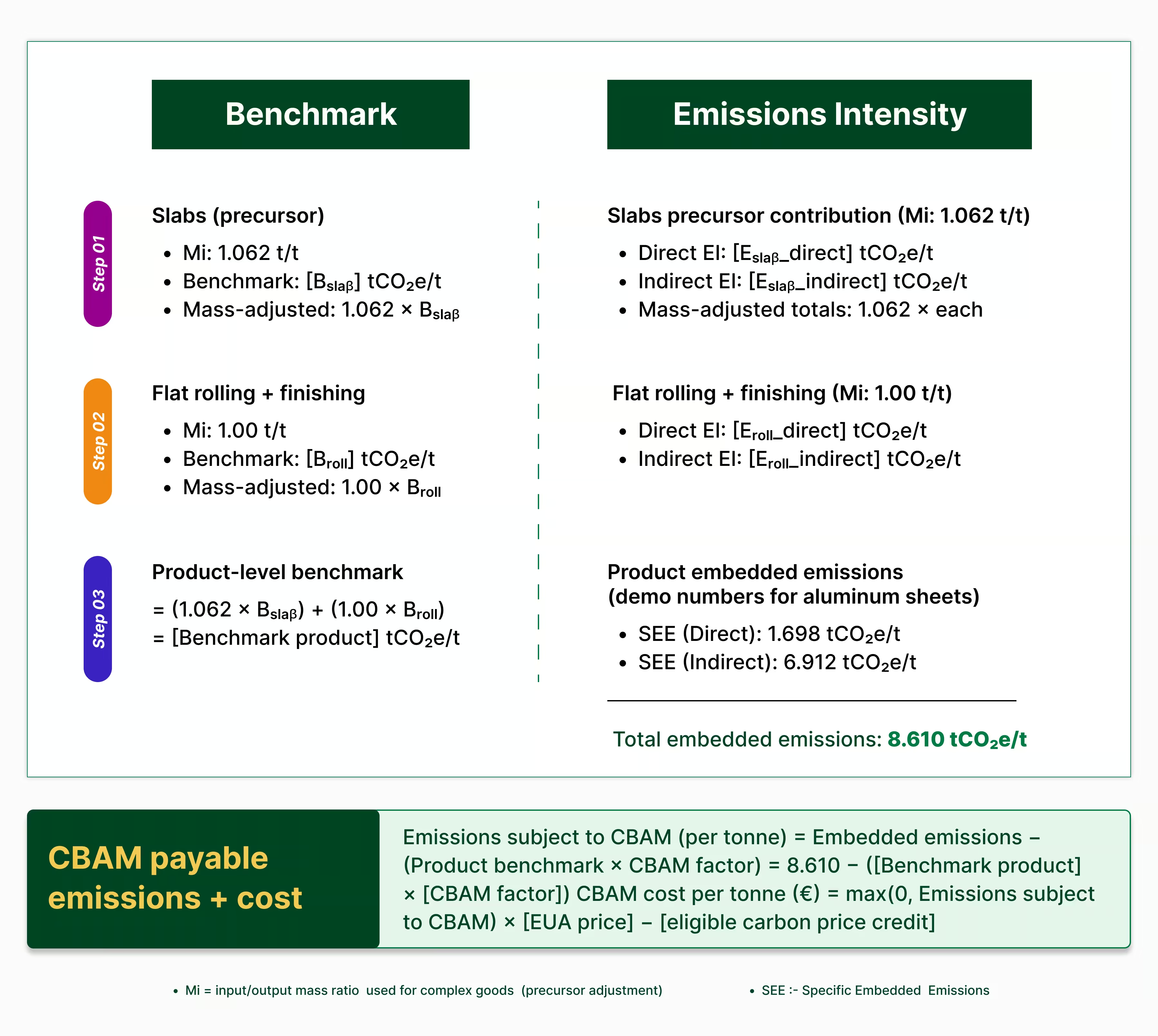
How CBAM Cost is Calculated

1. Embedded emissions (tCO₂/t): emissions intensity of the imported product (actual if verified, otherwise default)
2. Benchmark allowance (tCO₂/t)*: free allocation benchmark applied to that product/route
3. Phase-in rate (%): share of emissions that becomes payable as CBAM is phased in
4. CBAM carbon price (€/tCO₂): CBAM certificate price linked to EU ETS
5. Carbon price already paid (€/t): any eligible carbon price paid in the country of production that can be deducted

All CBAM cost calculations will be performed in the KarbonWise Platform, combining supplier data and defaults with benchmark logic and pricing inputs to produce compliant, traceable outputs.
Cost Calculation Example: Aluminium Sheet
Manufacturing Process: Primary or remelted Aluminium (unwrought) → cast into slabs (sheet precursor) → hot/cold rolling to sheet gauge → finishing (tension levelling, trimming) + packaging → aluminium sheet (final CBAM good).
How Verification is Done Under CBAM
From 2026, emissions data used for CBAM must be independently verified before it can be accepted by EU importers. Verification follows a structured process, designed to confirm that emissions have been calculated correctly and are supported by evidence.
While the exact approach may vary by verifier, the process typically involves the following stages.
1. Data Preparation: Production data, energy use and calculation records are prepared and shared with the verifier. Early review helps identify gaps or inconsistencies before formal assessment.
2. Independent Verification Review: The verifier assesses calculations, documentation and on-site systems to confirm alignment with EU CBAM methodology and actual operating conditions.
3. Verification Outcome: Once satisfied, the verifier issues a confirmation statement for EU importers. If verification fails or is delayed, default values may be applied instead.
{{cta}}
Why this Matters for Exporters
Verification is not a last-minute formality. It introduces timing, coordination, and capacity constraints that exporters must plan for in advance. Securing verifier availability early and preparing data throughout the year reduces the risk of delays, disputes, and unnecessary CBAM cost exposure.
Turning CBAM From a Risk into a Commercial Advantage
While CBAM is often approached as a compliance burden, it also creates a clear way to differentiate as an exporter. As EU buyers adjust to carbon priced trade, emissions performance becomes part of how suppliers are evaluated.
Exporters who prepare early are better placed to protect margins, strengthen buyer relationships, and plan decarbonisation on their own terms.
Decarbonisation as a Market Signal
Lower carbon intensity is increasingly visible to EU buyers. When emissions data is accurate and verified, it becomes a signal of operational control and long term reliability.
Exporters that can demonstrate year on year emissions improvement are better positioned in supplier reviews and contract renewals. In some cases, lower embedded emissions can directly reduce CBAM related costs for buyers, strengthening commercial negotiations.
This shifts decarbonisation from a future ambition to a present day market advantage.
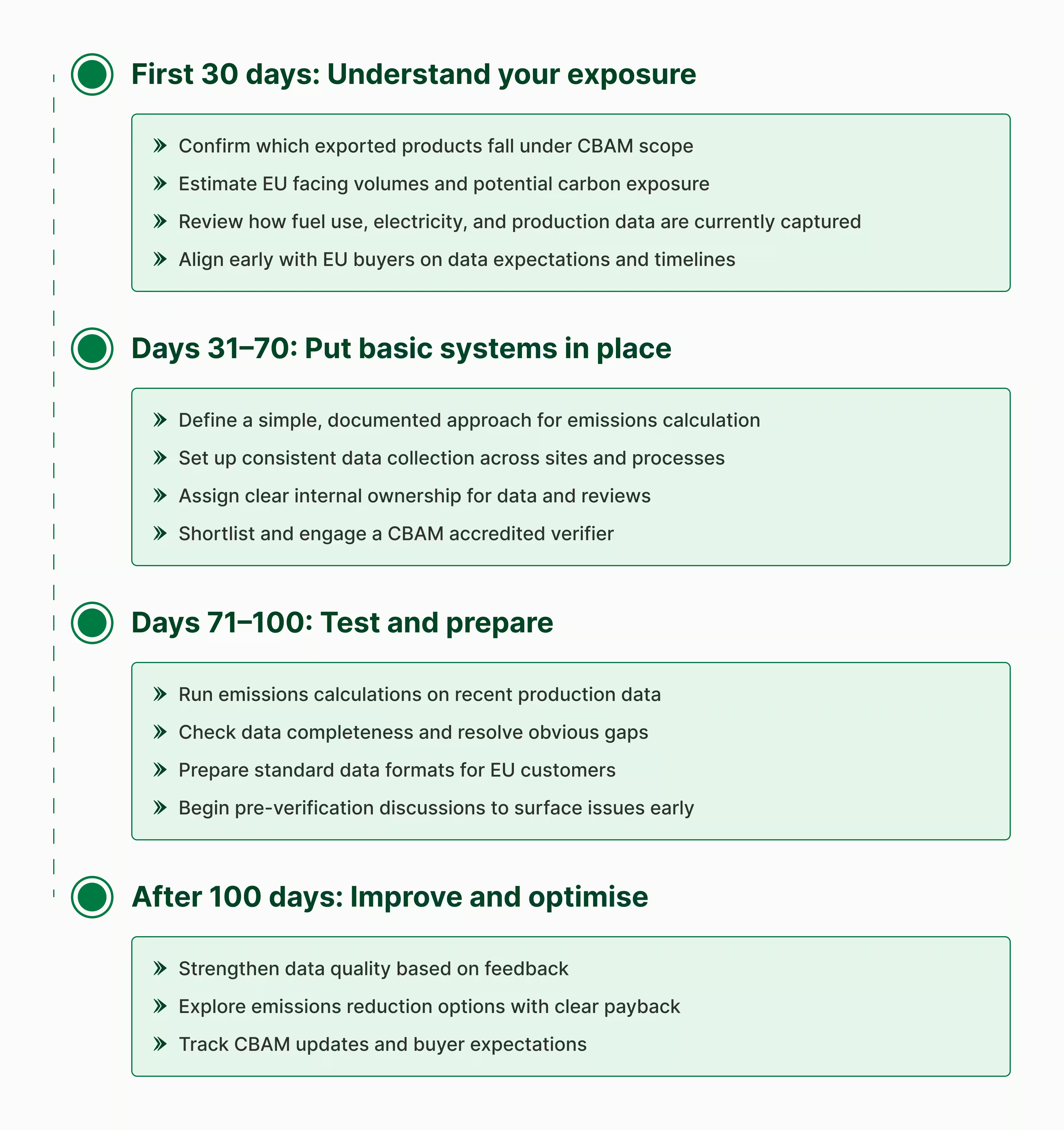
A Practical 100-day CBAM Readiness Plan
CBAM readiness does not require perfect systems on day one. What matters is building enough clarity and structure to respond to EU buyer requests and avoid default exposure. A focused 100-day approach helps exporters move from uncertainty to control.
CBAM is already changing trade. The question is how prepared you choose to be.
How KarbonWise Supports CBAM Readiness
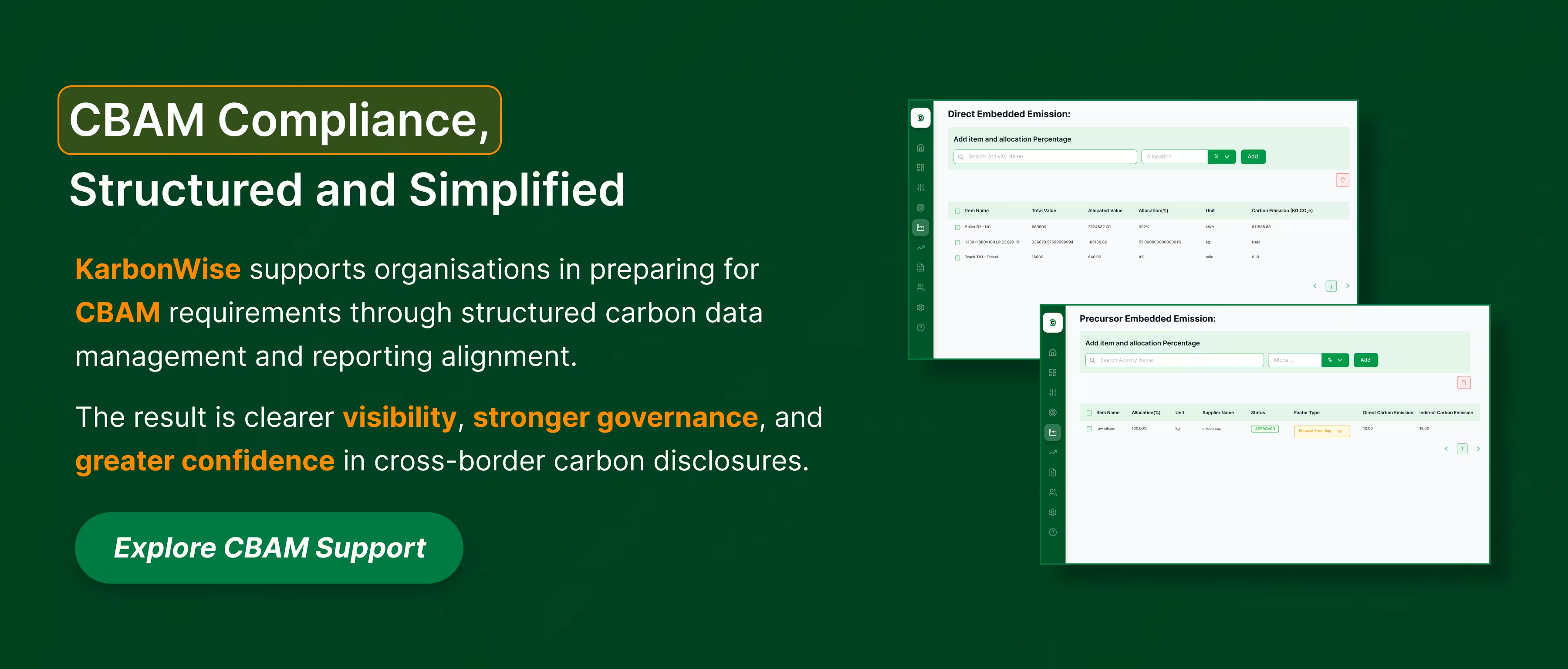
Preparing for CBAM requires emissions data that is accurate, traceable, and aligned with EU methodologies. KarbonWise supports exporters by helping structure emissions data in a way that is suitable for CBAM reporting and verification.
The platform enables facility level emissions tracking, links emissions data to production activity, and supports consistent calculation across sites. This helps exporters move away from manual estimates and fragmented spreadsheets toward auditable data workflows.
By improving data quality and visibility early, exporters are better positioned to respond to EU importer requests, reduce reliance on default values, and manage CBAM related costs more effectively.
If you are evaluating your CBAM readiness, KarbonWise can help you assess emissions data quality and alignment with CBAM requirements.
{{accordion}}

Continue Reading
CBAM in 2026: The Cost Is Small Today. Here Is Exactly How It Compounds
CBAM costs may seem small today, but they increase significantly over time. Discover how the phase-in schedule, default values, and compliance obligations affect exporters through 2034.
Introduction to Carbon Border Taxes
Carbon border taxes are transforming global trade by assigning a carbon cost to imported goods based on embedded emissions. Learn how CBAM works, its impact on supply chains, and how businesses can prepare for evolving compliance requirements.
CBAM Compliance for Indian Exporters: What you need to know about CBAM and EU Carbon Tariffs
A practical guide for Indian exporters on understanding and complying with the EU’s Carbon Border Adjustment Mechanism (CBAM). Learn how carbon tariffs impact key sectors like steel and aluminium, what emissions data must be reported, and how exporters can prepare through accurate measurement, verification, and decarbonisation strategies.


.avif)








.svg)
.svg)