ISO 14067: Turning Product Carbon Footprints into a Business Tool
A practical guide to ISO 14067 and how product carbon footprints support better design, procurement and credible sustainability reporting.

.svg)
Table of Contents


ISO 14067 is the international standard for calculating the carbon footprint of a product using life cycle assessment. It enables organisations to measure, compare and communicate product-level greenhouse gas emissions in a consistent, auditable way.
For many years, organisations concentrated primarily on corporate carbon inventories. While these remain important, they only tell part of the story. A significant share of a company’s climate impact is embedded in the products it designs, manufactures and places on the market every day.
ISO 14067 is an international standard that defines how to quantify and communicate the carbon footprint of a product using life cycle assessment (LCA). It translates complex product emissions into a structured, comparable metric that can be used for decision-making, reporting and communication across value chains.
When applied effectively, ISO 14067 moves product carbon footprinting beyond a technical exercise. It becomes a practical business tool that supports better product design, clearer sustainability communication and more confident commercial decisions.
Why Product Carbon Footprints are Rising in Importance
The growing focus on product carbon footprints reflects a fundamental shift in market expectations. Customers, business buyers and regulators increasingly expect specific, verifiable data at product level, rather than high-level corporate claims.
Consumers are more likely to trust sustainability claims when they are backed by transparent, traceable data. Similarly, B2B buyers now routinely request product-level emissions information to support procurement decisions, supplier comparisons and internal reporting obligations.
In this context, ISO 14067 provides a reassuring constant. By anchoring product claims in life cycle assessment principles, it enables organisations to move from assumptions to evidence they can stand behind.
How ISO 14067 Works in Practice
ISO 14067 is grounded in life cycle assessment, meaning it examines emissions across defined stages of a product’s life rather than focusing only on manufacturing or operations.
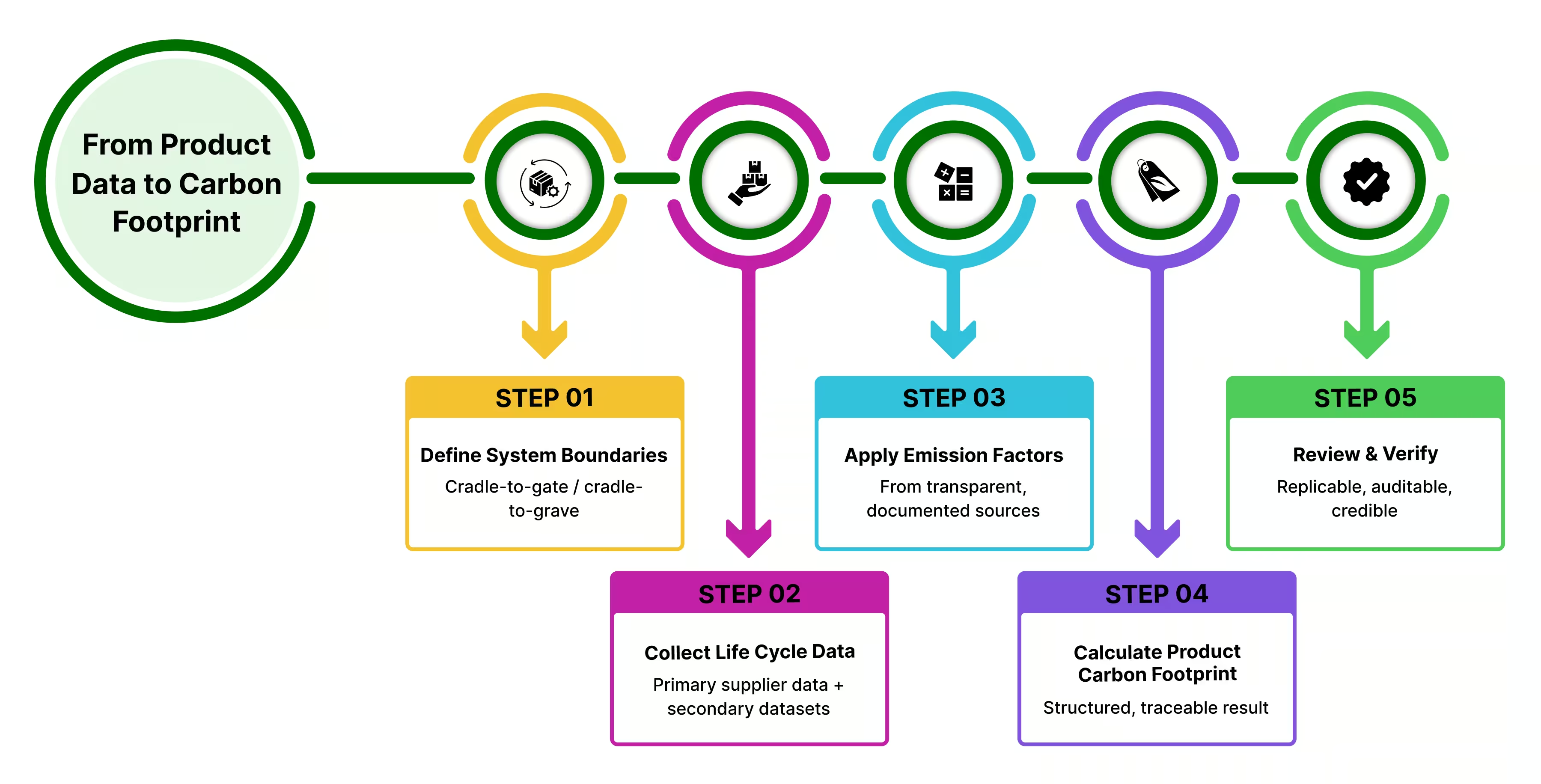
Organisations begin by defining system boundaries, such as cradle-to-gate or cradle-to-grave, ensuring life cycle stages are treated consistently. Primary data from suppliers is encouraged wherever feasible, while secondary datasets are used to address unavoidable gaps, provided data quality requirements are met.
Emission factors must be selected from transparent, documented sources. This allows calculations to be reviewed, replicated and, where necessary, verified. The result is a product carbon footprint that is structured, traceable and suitable for both internal decision-making and external communication.
Key Life Cycle Elements Behind a Credible Product Carbon Footprint
A product carbon footprint is only as strong as the life cycle logic beneath it. ISO 14067 applies established LCA principles to ensure that calculations are not only consistent, but meaningful in real-world decision making. These three elements shape the credibility, comparability and usefulness of a product carbon footprint.
{{flipcards}}
Functional Units in ISO 14067: The Basis for Fair Product Comparison
One of the most important, yet often overlooked, concepts in product carbon footprinting is the functional unit. In life cycle assessment, a footprint is only meaningful when it is linked to the function a product delivers, not just its physical form.
ISO 14067 requires emissions to be expressed relative to a defined functional unit, such as one kilogram of material, one wash cycle, one kilometre travelled or one year of service life. This ensures that products are compared based on performance rather than appearance.
Without a clear functional unit, comparisons can be misleading. Products that appear similar by weight or volume may perform very differently in real use. By anchoring footprints to function, ISO 14067 enables fair comparison and informed substitution decisions.
Cut-Off Rules and Data Completeness in ISO 14067
No life cycle study can capture every input and output with absolute completeness. Cut-off rules define which flows may be excluded based on their expected insignificance to the overall climate impact.
ISO 14067 requires that cut-offs are justified, documented and applied consistently. This prevents selective exclusion of inconvenient data and maintains transparency.
More importantly, it encourages proportionate effort. High-impact materials, energy-intensive processes and major logistics flows take priority, while minor inputs are treated appropriately. Over time, this approach supports continuous improvement in data coverage and quality.

Interpreting ISO 14067 Results for Business Decisions

Interpretation is where ISO 14067 becomes a true business tool. Product carbon footprints often reveal that a large share of emissions is embedded upstream, particularly in raw materials and early life cycle stages.
This insight shifts focus towards design decisions, supplier selection and material choices, rather than treating emissions as a downstream reporting exercise. Teams can use footprint results to compare alternatives, test scenarios and guide investment decisions.
When interpreted correctly, ISO 14067 supports not just measurement, but meaningful action.
ISO 14067 vs Corporate Carbon Accounting
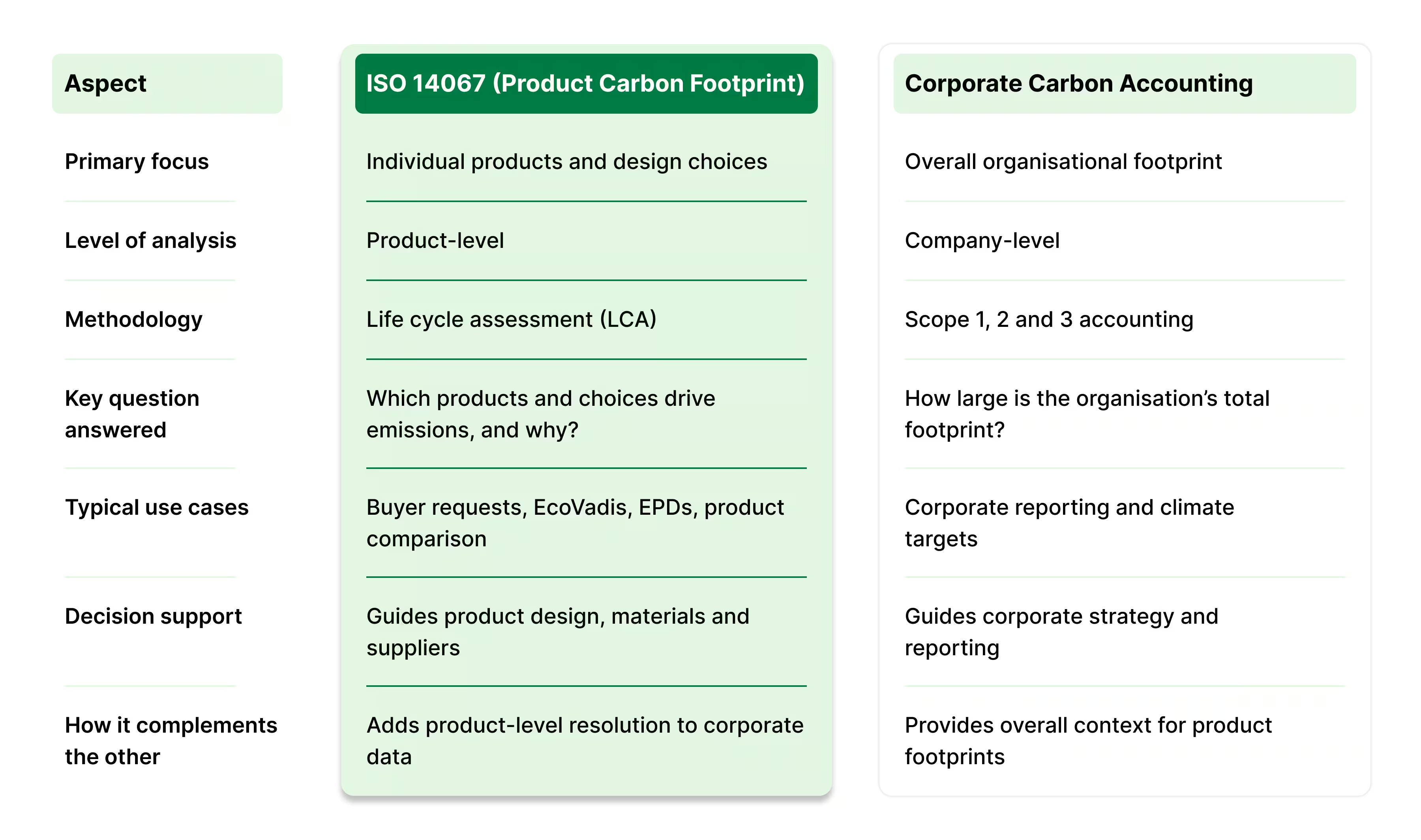
Corporate carbon inventories answer an important question: how large is an organisation’s overall footprint? Product carbon footprints answer a different one: which products and design choices drive that footprint, and why?
ISO 14067 complements Scope 1, 2 and 3 accounting by providing product-level resolution. This is increasingly critical for responding to buyer requests, supporting EcoVadis assessments, developing Environmental Product Declarations and preparing for product-focused regulation.
Together, corporate and product carbon accounting create a more complete picture of climate impact.
Applying ISO 14067 in Real Business and Supply Chains
In practice, the biggest challenge in ISO 14067 implementation is not methodology, but data availability. Supplier data is often incomplete or inconsistent, particularly across global value chains.
ISO 14067 helps organisations surface these gaps early and address them progressively. By prioritising high-impact areas, teams can improve data maturity over time rather than waiting for perfect information.
This evidence-based approach aligns strongly with markets such as the UK and EU, where environmental claims must be substantiated to avoid misleading customers. Once established, product carbon footprints become a shared reference point across sustainability, procurement and product teams.
Where KarbonWise Fits
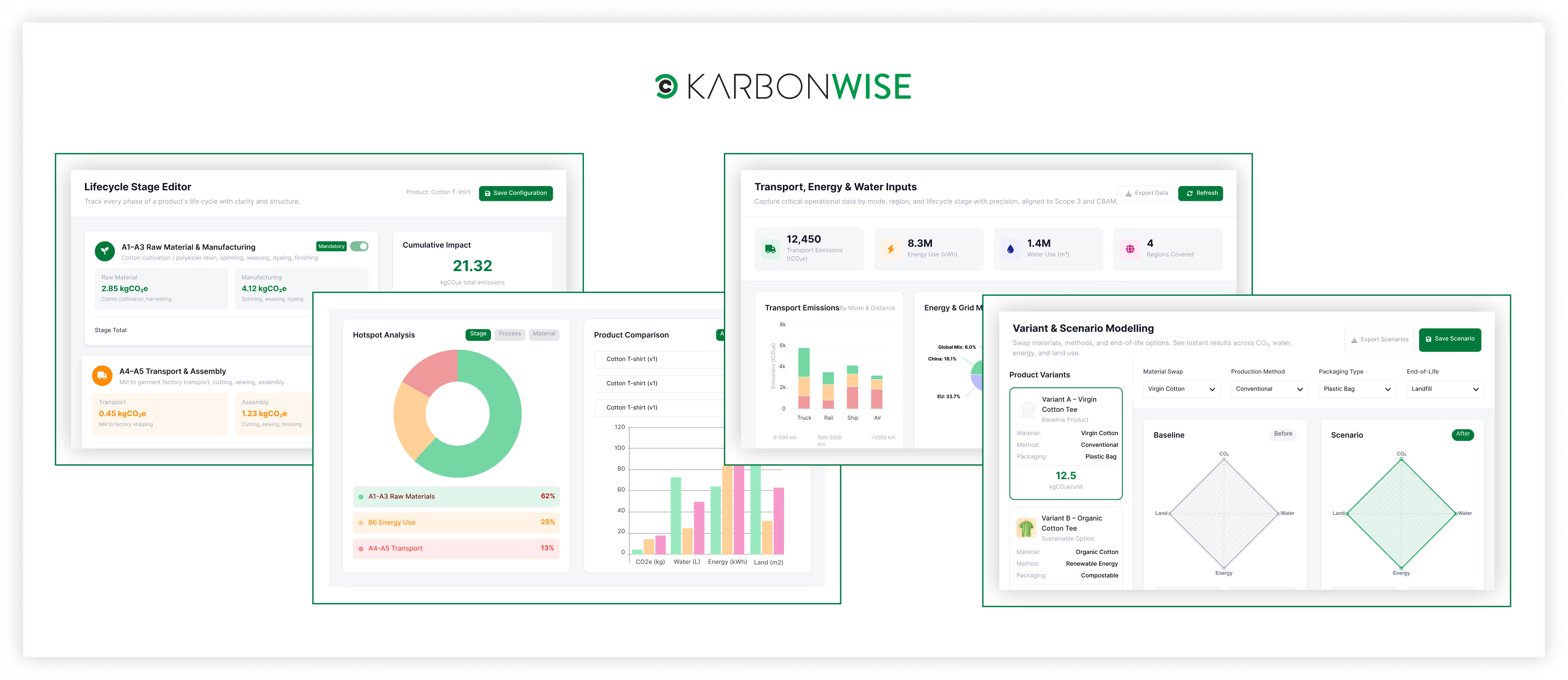
KarbonWise supports organisations in building ISO 14067-aligned product carbon footprints by integrating activity data, supplier inputs, emission factors and life cycle analysis within a single ESG data spine.
The platform supports product and building LCAs, full Scope 1, 2 and 3 accounting, and alignment with frameworks including GRI, SRS, CSRD, BRSR and EcoVadis. With a focus on accuracy, auditability and consistency, KarbonWise helps organisations turn product carbon footprints into practical tools for reporting, design and commercial strategy.
{{accordion}}
{{sources}}
{{cta}}



Continue Reading

The EU Just Cut CSRD Reporting Requirements by 60%. Here Is What Actually Changed.
The EU has significantly changed CSRD reporting requirements. Explore the revised ESRS, what changed, who remains in scope, and what businesses need to do next.
.avif)



.avif)







.svg)
.svg)