Is Your EcoVadis Score Telling the Full Story of Your Supply Chain?
EcoVadis has become a key reference for assessing supplier ESG performance, but a single score does not always reflect the full reality of a supply chain. This article explores what EcoVadis measures, why it matters, and how organisations can use it more effectively to strengthen sustainability and risk management.


.svg)
Table of Contents


Imagine trying to judge a supplier only from their sales pitch. The website looks polished, the slide deck is convincing, but you still do not know what is happening in their factories, warehouses or tier 2 vendors. That gap between story and reality is exactly where supply chain risk lives.
EcoVadis steps into that gap. It gives buyers a common scorecard for supplier sustainability performance, and gives suppliers a structured way to prove that their ESG story is real.
For many companies, the EcoVadis medal on their profile, whether Bronze, Silver, Gold or Platinum, has become a quick way to signal their credibility to customers and partners.
What is EcoVadis?
EcoVadis is a global sustainability ratings platform that evaluates how companies manage environmental, social, and ethical topics across their operations and supply chains. It was founded in 2007 and has since grown into one of the most widely used supplier ESG assessment systems in the world.
Today, EcoVadis has rated more than 150,000 companies across over 180 countries and 250 industries, making it a de facto benchmark for supply chain ESG performance.
Large buyers use EcoVadis to screen and monitor suppliers. Suppliers use it to respond to multiple customer requests through one recognised assessment, rather than filling out many different questionnaires.

Why is EcoVadis so Prominent Right Now?
Three forces have pushed EcoVadis from “nice to have” to a mainstream requirement in many supply chains.
{{flipcards}}
What does EcoVadis actually Measure?
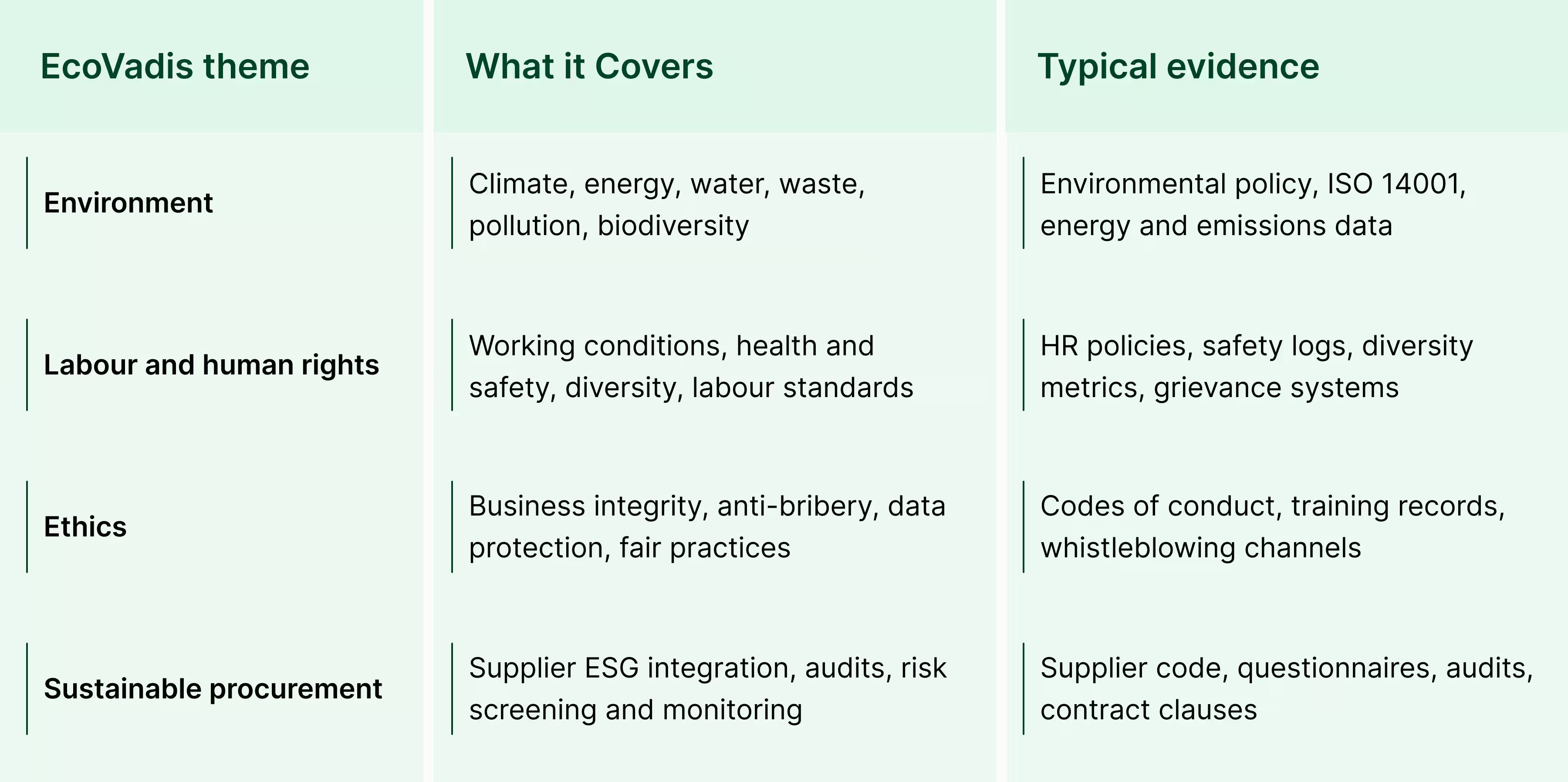
EcoVadis does not rate “ESG” in the abstract. It assesses the quality of a company’s sustainability management system across three pillars: policies, actions and results, using 21 criteria grouped into four themes.
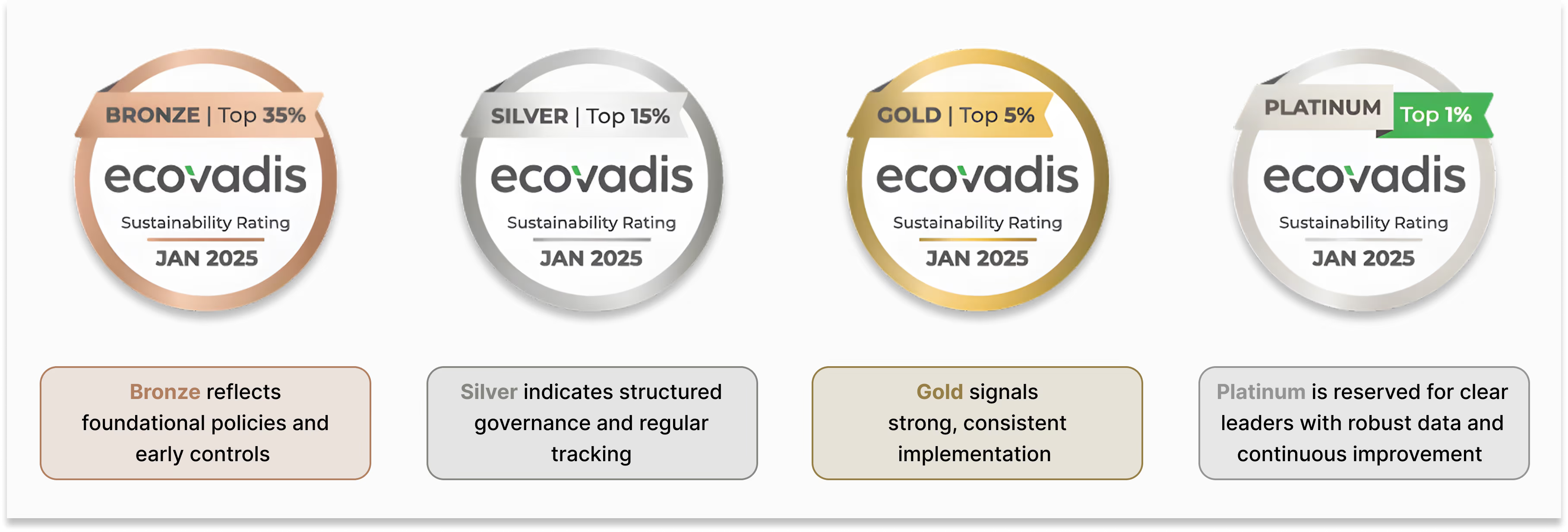
Each assessment results in a score from 0 to 100, often linked to a medal level: Bronze, Silver, Gold or Platinum, each signalling a different stage of maturity. Bronze typically reflects a company that is putting the basics in place with core policies and initial controls. Silver indicates a more structured approach, with clearer governance and regular tracking of ESG performance. Gold points to strong, consistent implementation where sustainability is embedded across operations and the supply chain. Platinum is reserved for clear leaders, with robust data, independent evidence and continuous improvement built into business decisions. For buyers, this compresses a complex picture into a comparable metric they can use across suppliers. For suppliers, it turns “prove you are sustainable” into a tangible checklist with a visible path to move from one medal tier to the next.
How the EcoVadis Process Works
You can think of the EcoVadis journey in four stages.
Application and Scoping
Some companies arrive at EcoVadis because a customer requests an assessment, others choose to apply themselves so they are prepared for future tenders or want a recognised way to show their ESG performance. In both cases the process starts the same way. The company shares information on its size, sector and locations, and EcoVadis uses this to generate a questionnaire tailored to that profile.
In many organisations this first step already exposes a few internal gaps. ESG, procurement, finance and HR teams may all hold pieces of the information, but there is no single owner coordinating the response. Basic company data often sits in different files and systems, which means simply confirming scope, headcount or operational footprint can take longer than expected.
Questionnaire and Documentation
Once the application and scoping are in place, the company completes the online questionnaire and uploads evidence such as:
- Policies and codes
- Management system certificates
- KPIs and performance data
- Audit reports and corrective action plans
This is where many organisations start to feel the strain. ESG data sits in disconnected spreadsheets and systems. Proof documents live in personal drives and email threads. Previous EcoVadis cycles are not archived in a reusable way. The result is a time-consuming “data chase” every time a new request arrives.
Analysis and Scoring
EcoVadis analysts review the documentation and combine it with a 360° scan of public sources like news, sanctions lists and NGO reports, using more than 100,000 external sources to validate performance.
Output typically includes:
- Overall score and theme level scores
- Strengths and improvement areas
- A corrective action plan with recommended next steps
Sharing, Benchmarking and Improvement
Suppliers can share their EcoVadis scorecard with multiple customers, while buyers can benchmark suppliers by theme, region or category and track performance over time.
The real value comes when these insights feed back into day-to-day decisions. In practice, that does not always happen. Scores often sit in isolation instead of being tied to internal ESG targets or carbon strategy. Procurement teams may see clear risk hotspots on the dashboard yet still lack the granular data they need to design the right interventions. On the supplier side, the assessment highlights improvement areas, but without a structured plan or support, recommendations remain on paper rather than turning into concrete projects.
Common Challenges EcoVadis Brings to the Surface
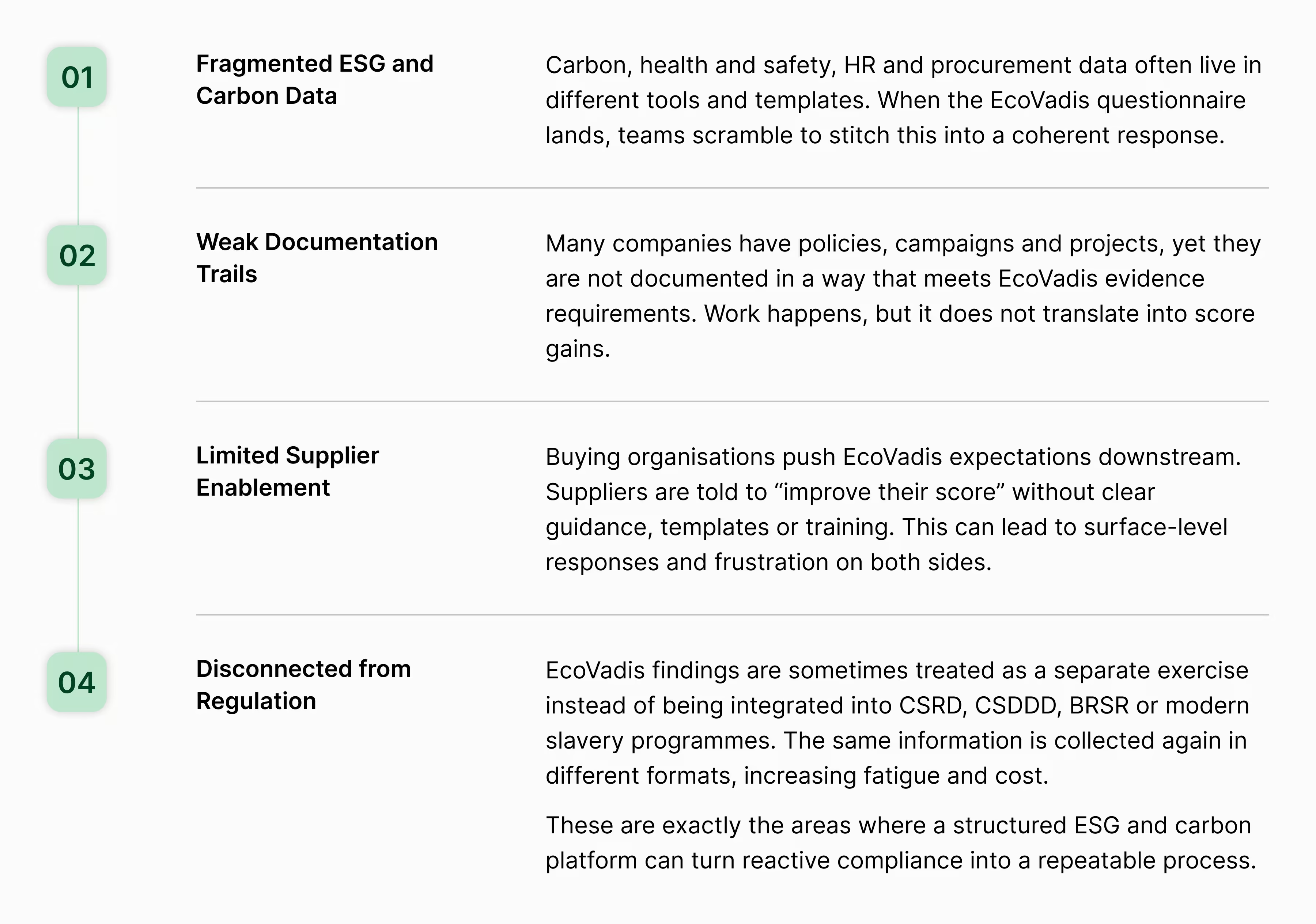
EcoVadis is not the problem. It simply makes existing gaps visible.
Typical challenges include:
Why EcoVadis Matters for your Business
Handled well, EcoVadis is more than a score. It can become a trigger for better data, better decisions and stronger supplier relationships.
If you are a Buying organisation
For buying organisations, EcoVadis brings structure to what used to be a very fragmented picture. A single scorecard across thousands of suppliers gives clearer visibility of environmental, social and ethics risks, instead of ad hoc questionnaires and self-declarations. The same evidence base can feed directly into CSRD and CSDDD value chain disclosures, reducing the need to build parallel data collections for regulatory reporting. Because the assessment looks at climate targets, energy use and transition plans, it also strengthens Scope 3 roadmaps by moving away from generic emission factors towards supplier specific insight. Procurement teams can then anchor RFP criteria, vendor segmentation and category strategies on these ESG thresholds, treating the EcoVadis score as one of the key inputs to commercial decisions.
If you are a Supplier
For suppliers, a strong EcoVadis result becomes a practical asset rather than just a badge. A recognised third-party rating can be shared with multiple customers, which reduces the need to complete separate ESG forms for every new tender and brings welcome consistency to responses. The scorecard also shows how you perform against peers on each theme, so it is easier to see where to focus time and budget. The improvement areas translate into a working roadmap that can link directly to ISO certifications, science-based targets or responsible sourcing programmes. Over time, a solid EcoVadis track record supports your positioning in RFPs and strengthens your appeal to employees and partners who are actively looking for credible sustainability commitments.

Where EcoVadis fits in the ESG Reporting Landscape
EcoVadis is an assessment and rating system, not a narrative reporting framework. It has its own methodology, yet it aligns with major standards and regulations.
In practice, companies often use it alongside:
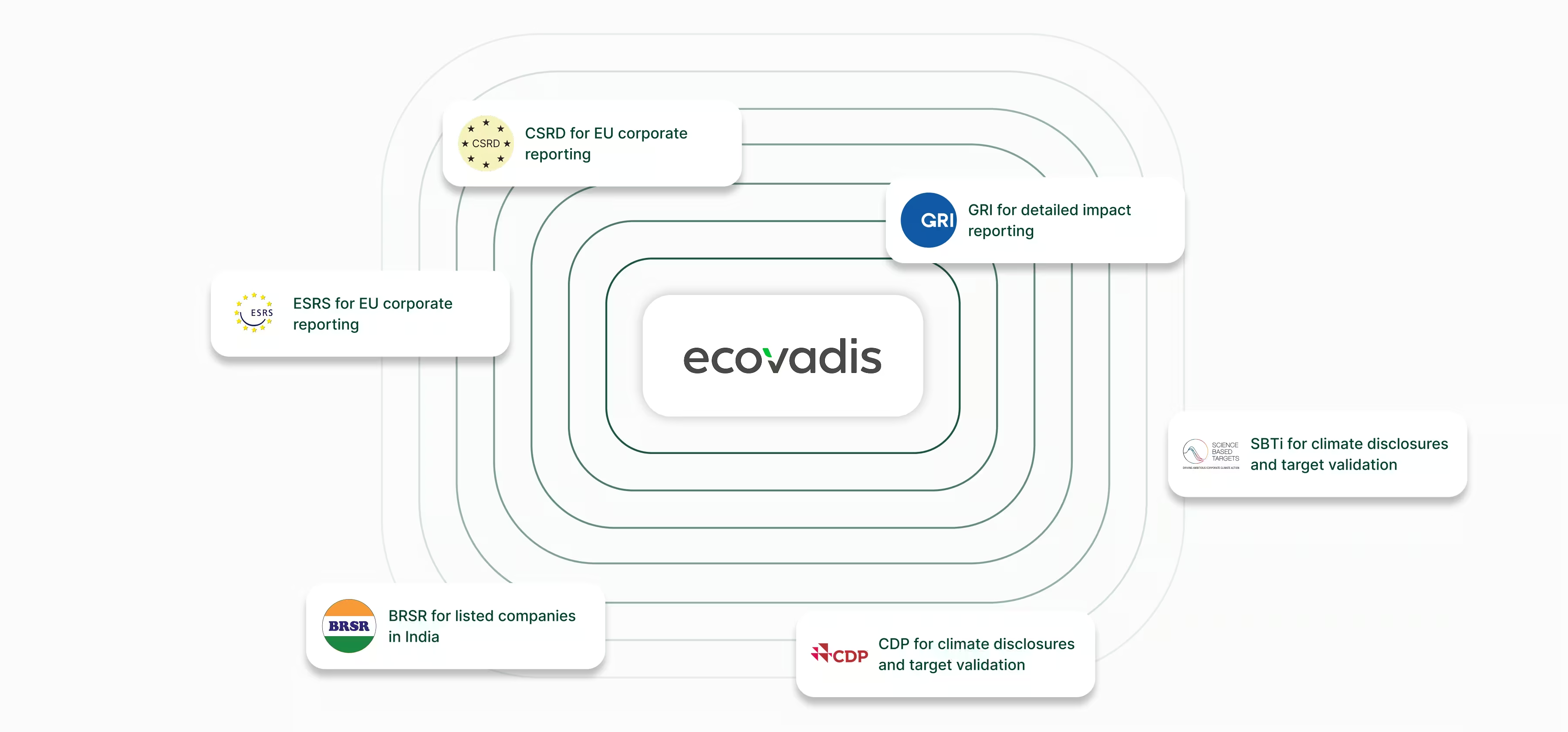
The most efficient approach is to treat EcoVadis as one outcome of a single ESG data backbone, not as a standalone project.
Case Studies
EcoVadis can feel quite abstract until you see how it plays out inside real organisations. These three examples show how the same rating system supports compliance, decarbonisation and market positioning in practice.

Brenntag, a global chemicals and ingredients distributor, works with EcoVadis to assess supplier sustainability and support compliance with regulations such as the German Supply Chain Due Diligence Act. By rolling out EcoVadis across its supplier base, Brenntag has a clearer view of environmental and social risks in its value chain and can target engagement where it matters most. At group level, Brenntag has itself been awarded an EcoVadis Gold medal, placing it among the top three per cent of rated companies worldwide, which it now uses as a visible signal of its sustainability performance in customer and investor conversations.

France’s national railway company, SNCF, uses EcoVadis alongside the Sweep carbon platform to strengthen its Scope 3 strategy. By integrating EcoVadis Carbon Action Manager with Sweep, SNCF is pulling in primary carbon data from more than 3,000 suppliers and reducing the reporting burden on those suppliers at the same time. The result is more integrated carbon data, faster workflows and lower internal reporting effort, which helps SNCF shift from estimates to supplier specific information and focus decarbonisation programmes where they will have the greatest impact.

Deloitte Switzerland has been awarded the EcoVadis Platinum medal, placing the firm in the top one per cent of assessed companies worldwide and marking a significant improvement on its previous score. The firm highlights this result in its own impact reporting and client communications as concrete proof that its internal sustainability practices stand up to external scrutiny. In pitches and supplier evaluations, the Platinum status acts as a simple shorthand that reassures clients who are increasingly asking for measurable, third party verified ESG performance rather than broad commitments.
How KarbonWise can Support your EcoVadis Journey
EcoVadis asks you to “show your proof”. KarbonWise helps you build that proof once, structure it properly, and reuse it across customers, frameworks and reporting cycles.
KarbonWise turns EcoVadis preparation into a structured, repeatable process. It creates a central ESG and carbon data spine so environmental, labour, ethics and procurement information sits in one platform rather than across multiple spreadsheets. Policies, audits, KPIs and action plans can be mapped directly to the four EcoVadis themes and 21 criteria, which keeps evidence organised and ready for each new assessment cycle. The same dataset then feeds Scope 1, 2 and 3 calculations, product and building LCAs, and reporting under frameworks such as GRI, CSRD and BRSR, so work is not duplicated. On the supplier side, KarbonWise provides clear data templates, training workflows and progress tracking, helping teams understand how to improve their scores and embed those improvements in everyday operations.
The outcome is not only a stronger EcoVadis score. It is a cleaner ESG data foundation and a more resilient supply chain.
{{cta}}
{{accordion}}
{{sources}}




Continue Reading
%20(1).avif)
Top 5 ESG Software Platforms in 2026: Features and Use Cases
Compare the top 5 ESG software platforms in 2026, their key features, use cases, and reporting capabilities to find the right fit for your organisation.

Primary vs Secondary Emissions Data: Key Differences and When to Use Each
Learn the key differences between primary and secondary emissions data, when to use each, and how better data quality supports more accurate carbon accounting and Scope 3 reporting.
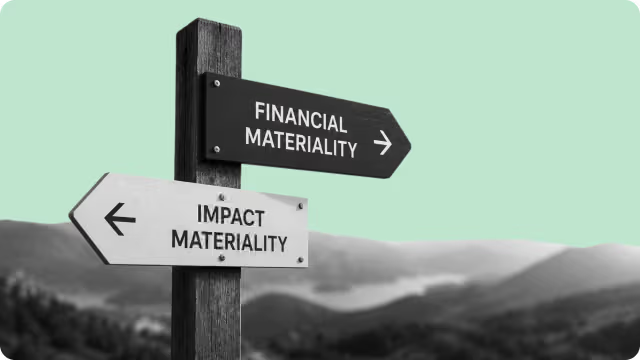
How to conduct a double materiality assessment: A practical step-by-step guide (2026)
Learn how to conduct a Double Materiality Assessment with this practical step-by-step guide covering impact and financial materiality, IROs, stakeholder engagement, scoring, materiality matrices, and ESG reporting.

.avif)






.svg)
.svg)