The Rise of EPDs: Why Green Buildings Need Transparent Materials
A practical overview of how Environmental Product Declarations are reshaping green construction by improving material transparency, reducing embodied carbon and supporting LEED, BREEAM, IGBC and GRIHA compliance.

.svg)
Table of Contents


The construction industry is changing faster than ever. Climate commitments, green building certifications and responsible sourcing are no longer optional goals but everyday expectations. In the middle of this shift, one thing has become absolutely essential: clear and trustworthy information about the materials we use. Builders, architects and even government clients want to know exactly what goes into a product and how it affects the planet.
This is where Environmental Product Declarations, or EPDs, are starting to play a powerful role. They provide verified, easy-to-understand data on a material’s environmental footprint. What was once seen as a nice-to-have sustainability label is now becoming a real advantage for manufacturers and project teams around the world.
India is seeing this change unfold in real time. Large developers, public projects and export-oriented manufacturers are becoming more aware of the need for transparency. In the Middle East, ambitious national visions are pushing for low-carbon construction at scale. And in the United Kingdom, whole-life carbon assessments have made EPDs almost indispensable for credible reporting. Across all these regions, EPDs are emerging as the foundation for informed, climate-aligned decision-making.
What Are Environmental Product Declarations (EPDs)
An Environmental Product Declaration is a clear, standardised document that explains the environmental impact of a product throughout its entire life cycle. It is based on a scientific analysis and is verified by an independent expert. This means the information is credible, comparable and free from marketing bias.
EPDs help different stakeholders speak the same language. Manufacturers can demonstrate responsibility. Architects can choose materials more confidently. Developers can show that their projects meet sustainability expectations. As global supply chains evolve, products with EPDs often become the preferred choice because they bring clarity to an otherwise complex world of environmental claims.
How EPDs Are Created

Why EPDs Matter for Green Buildings
Green building is no longer just about how efficiently a building operates. It is equally about what it is made of. Materials like steel, cement, aluminium and glass carry significant carbon footprints, yet these impacts often remain unseen. EPDs reveal these hidden stories. They bring clarity to decisions that were previously based on assumptions.
In India, more developers are recognising that transparent material choices strengthen a project’s credibility and market value. In the Middle East, where countries are investing heavily in future-ready, sustainable cities, EPD-backed products increasingly appear in specifications for major public and private projects. In the United Kingdom, planners and designers rely on EPDs for whole-life carbon assessments, which influence everything from material choice to planning approvals.
Across these regions, EPDs help move the industry from intention to action. They turn sustainability goals into measurable choices.
{{cta}}
Reducing Embodied Carbon
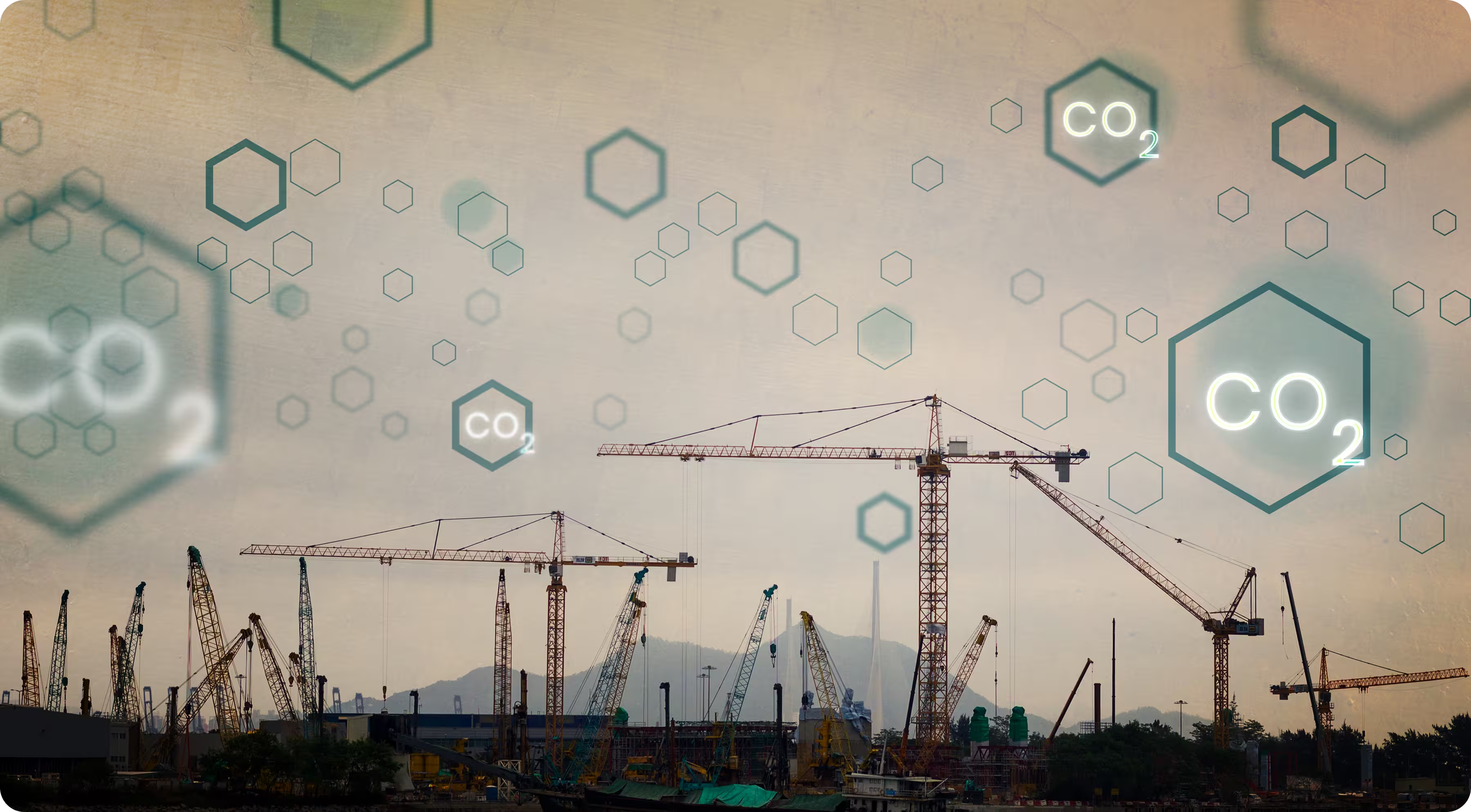
The construction sector is responsible for a large share of the world’s emissions, and a significant portion of these come from the materials themselves. Embodied carbon accounts for a third of the industry’s emissions. With most of the buildings of 2050 yet to be constructed, reducing embodied carbon has become an urgent priority.
EPDs make it possible to measure and compare the embodied carbon of different materials. For example, a project team can choose a low-carbon cement blend or use recycled steel with a verified EPD. These choices can significantly reduce a building’s upfront emissions. Indian green building systems like IGBC and GRIHA already reward the use of materials backed by EPDs, which helps teams reach certification targets faster while genuinely lowering environmental impact.
EPDs and Circular Economy Goals
Modern sustainability is not only about reducing carbon. It is also about using materials better, extending their life and keeping them in circulation. EPDs support these goals by providing information on a product’s composition, recyclability and likely end-of-life pathway.
This information helps designers think ahead and plan for what happens long after the building is occupied. It also supports manufacturers who want to create products that are easier to recycle or reuse.
EPDs and Green Building Certifications
Green building certifications across the world increasingly rely on EPDs. LEED rewards projects that specify multiple verified EPDs from different manufacturers. BREEAM includes EPDs in its materials scoring. In India, IGBC and GRIHA recognise EPDs as reliable proof of a material’s sustainability performance.
Having EPD-backed materials makes the certification journey smoother. It also helps project teams justify their choices with real data instead of assumptions.
Challenges in Adopting EPDs
Even with growing awareness, the adoption of EPDs still faces challenges. In many regions, there simply are not enough materials with verified EPDs available. Large global manufacturers are ahead in publishing EPDs, but smaller regional players sometimes struggle to keep up.
Cost is another barrier. Creating an EPD requires detailed data, technical expertise and verification. For small firms, this can feel overwhelming. In markets such as India and Southeast Asia, the supply chain is often fragmented, data collection is difficult, and the capacity for conducting LCAs is still developing. All of this slows down adoption.
However, interest is growing rapidly. More manufacturers are beginning the process, and more project teams are asking for EPD-backed materials. The ecosystem is evolving.
Conclusion: Making EPDs Standard Practice in Green Construction
For forward-looking businesses, adopting EPDs early is not just about meeting regulations. It is about leadership. It signals maturity, responsibility and readiness to compete in a global marketplace that increasingly values verified environmental impact over claims.
India has a real opportunity to become a leader in this space. By embracing EPDs now, manufacturers and developers can align with global benchmarks, win international tenders and build the low-carbon infrastructure of tomorrow. The Middle East and the United Kingdom are already showing how strong policies and market demand can accelerate this shift.
The future of construction will be shaped by data, not declarations. EPDs give the industry the clarity it needs to build sustainably, confidently and competitively.
Your Trusted Partner for LEED, BREEAM, IGBC V4 and GRIHA Compliance
No matter which green building standard you are targeting, KarbonWise ensures your material and building LCAs meet the mark. Our EPD and LCA workflows are designed to fit seamlessly with LEED, BREEAM, IGBC V4, GRIHA and other regional requirements across India, the Middle East and the UK. If you need a partner who understands these frameworks and helps you get it right the first time, KarbonWise is here to guide you.
{{cta}}
{{accordion}}
{{sources}}

Continue Reading
.avif)
Top 5 LCA Software Tools in 2026
Explore the top LCA software tools of 2026 and compare their features, strengths, and use cases for lifecycle assessment, carbon footprinting, and sustainability reporting.

LEED v5, Embodied Carbon, and the Whole-Lifecycle Mandate: What Project Developers and Asset Owners Need to Know
LEED v5 introduces a whole-life carbon approach to building certification, making embodied carbon assessment a key requirement for project developers, asset owners, designers, and investors.
.avif)


.avif)







.svg)
.svg)