ESDD: A Practical Framework for Understanding Real-World Impacts Across the Value Chain
ESDD helps organisations identify supply-chain risks early, strengthen accountability and build resilient, responsible value chains.


.svg)
Table of Contents


You know that moment when a supplier email lands in your inbox and something feels slightly off? A missing certificate, a vague sustainability claim, or a shift in delivery timelines. Most teams recognise that hesitation. It is often the moment where Environmental and Social Due Diligence, or ESDD, stops being theoretical and becomes essential. ESDD gives organisations a realistic view of their supply chain long before risks form into operational, reputational, or financial issues.
ESDD blends environmental thinking with social responsibility and pragmatic risk assessment. As expectations rise across industries, organisations need clearer evidence and stronger supplier-level insight. Due diligence provides a structured way to understand vulnerability, demonstrate accountability, and strengthen resilience.
Why ESDD Matters Today
Across global supply chains, transparency is becoming a fundamental expectation. Customers, investors, regulators, and business partners increasingly ask organisations to show how responsibly their suppliers operate, how materials are sourced, and how risks are managed. Wider industry discussions increasingly frame future-proof supply chains around resilience, end-to-end visibility and the ability to respond quickly to disruption.
Operational stability is another reason ESDD is gaining momentum. Companies that understand supplier behaviour early can reduce exposure, prevent disruption, and improve planning. More organisations are now examining how transparency supports sustainable operations.
Investor expectations have also matured. Environmental and social risks increasingly influence company valuations. Lenders and investors expect organisations to demonstrate structured oversight and responsible sourcing. This trend aligns with broader research on global supply-chain resilience:
These three shifts make ESDD a strategic capability, not a compliance requirement.
How ESDD Works in Practice
ESDD begins with identifying environmental and social hotspots across the value chain. Many risks sit beyond Tier 1 suppliers, especially in raw materials, labour-intensive operations, and regions with limited regulatory oversight. Organisations use site insight, supplier engagement, screening tools, and data analysis to uncover where exposure sits.
Once hotspots are identified, teams assess severity and likelihood. Environmental risks may involve emissions intensity, land-use pressure, water availability, or waste practices. Social risks may relate to wages, safety, worker housing, local community effects, or governance gaps.
Meaningful supplier engagement follows. Conversations, workshops, direct Q&A, evidence reviews, and on-site observations reveal where suppliers excel and where support is required. This step builds trust and gives suppliers clarity about expectations.
Corrective action plans help close gaps. These plans specify actions, timelines, responsibilities, and methods of verification. Monitoring ensures follow-through and supports supplier capability building.
From Early Signals to Confident Decisions
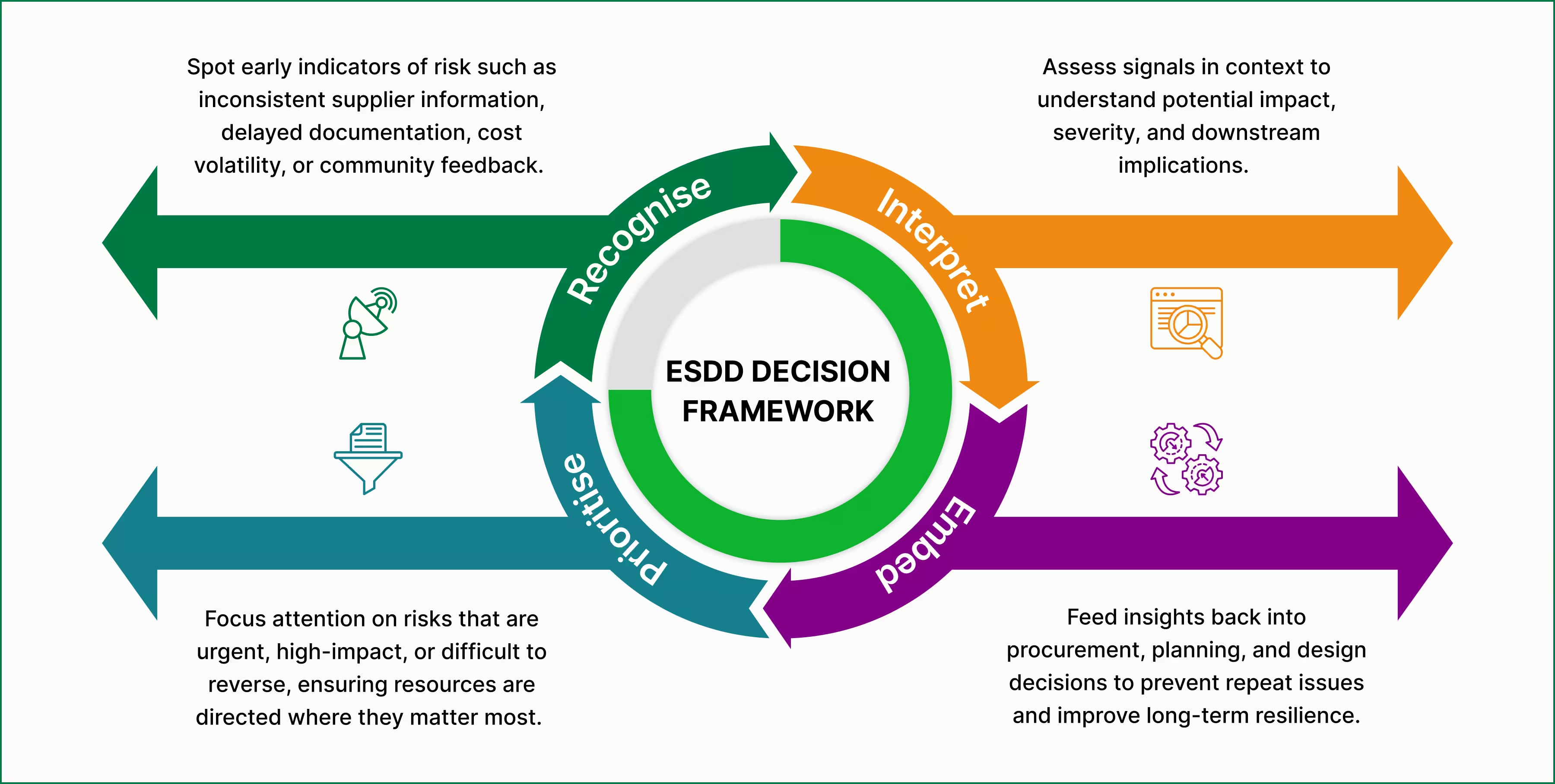
Environmental and Social Due Diligence often generates large volumes of information, but insight only emerges when signals are recognised, interpreted, prioritised, and applied. This framework shows how organisations can convert early indicators from the value chain into decisions that reduce exposure and strengthen resilience.
Where ESDD Creates the Most Value
When organisations embed ESDD into daily work flows rather than annual reporting cycles, they gain several advantages:
- Earlier identification of environmental and social risks
- Reduced operational and supply-chain disruption
- Strengthened supplier relationships
- More accurate sustainability reporting
- Increased investor confidence
- Better long-term planning
Industry research continues to emphasise the importance of structured, ongoing supplier risk management.
Core Elements of Responsible Due Diligence
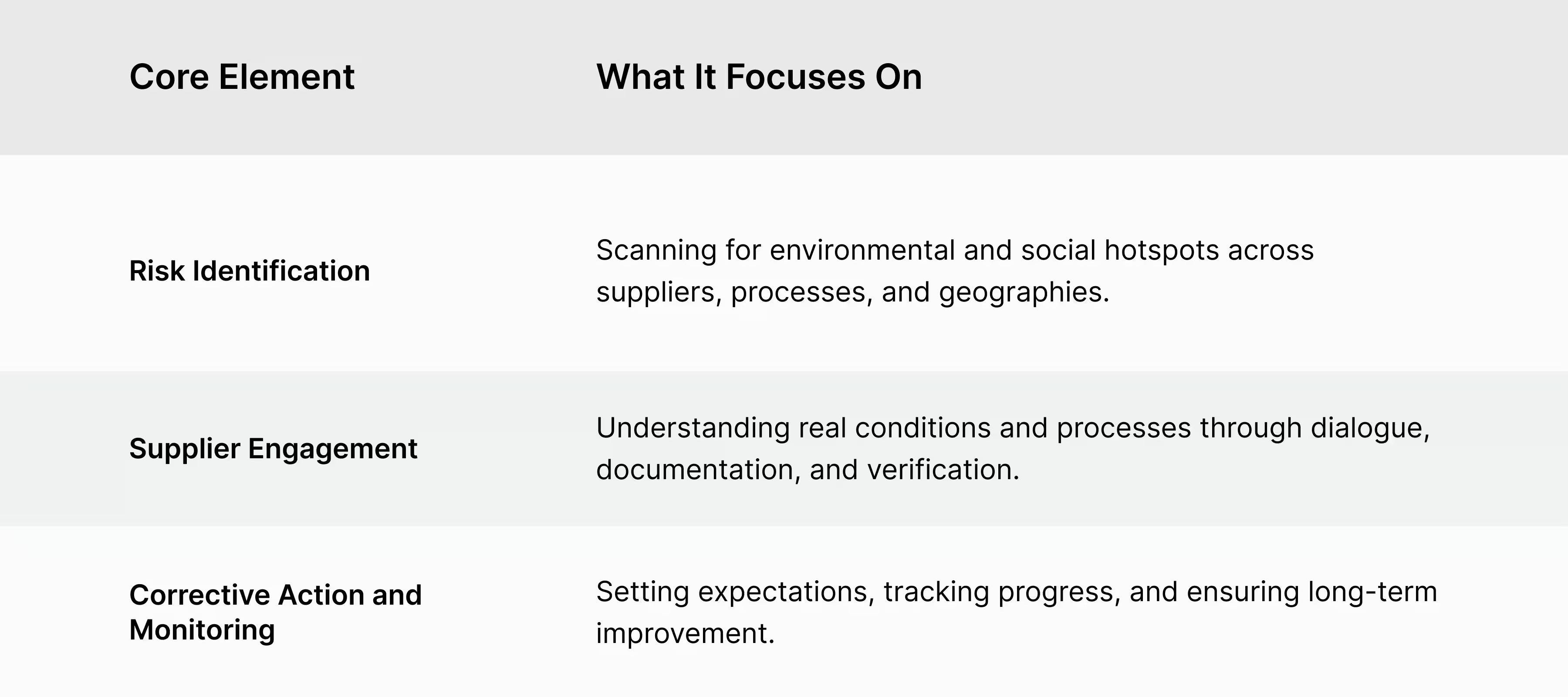
Together, these elements provide the foundation for responsible supply-chain oversight.
Foundations of ESDD
{{flipcards}}
Case Studies: How ESDD Works in Real Organisations

Standard Chartered: Responsible Financing at Scale: Standard Chartered integrates ESDD into financing decisions, identifying risks early and aligning lending with responsible practices.
Nestlé: Strengthening Agricultural Value Chains: Nestlé assesses labour practices, environmental conditions, and sourcing vulnerabilities across agricultural suppliers. Engagement with farmers improves local outcomes and strengthens supply-chain stability.
Siemens Energy: Reducing Project Delivery Risk: Siemens Energy applies ESDD at the earliest planning phase, reducing delays, improving community outcomes, and supporting compliant infrastructure development.

ESDD in Everyday Operations
When ESDD becomes a routine part of decision-making rather than a periodic check, teams across procurement, sustainability, finance, and product design benefit. Procurement teams select suppliers more confidently. Sustainability teams focus on the right interventions. Finance models long-term exposure more accurately. Product teams better understand how materials affect both impact and risk.
LCA strengthens this understanding. LCA quantifies environmental impact across a product’s life cycle, while ESDD provides the social, ethical, and governance context that shapes real-world outcomes.
How ESDD Supports Low-Carbon and Ethical Supply Chains
Customers and markets now expect organisations to minimise environmental harm, support ethical sourcing, and reduce carbon intensity. ESDD helps teams identify where environmental and social risks overlap, making it easier to prioritise suppliers that align with the organisation’s transition goals.
Research continues to show that future-ready supply chains are those that balance efficiency, responsibility, and resilience.
Organisations that strengthen transparency build trust, reduce exposure, and adapt more effectively to rapid market and regulatory changes.
Where KarbonWise Fits
Effective Environmental and Social Due Diligence requires companies to move beyond policy commitments and systematically identify, assess, and manage risks across their value chains. KarbonWise supports ESDD by enabling structured, risk-based assessments across environmental and social dimensions, linking supplier, site, and product-level data to material ESG risk indicators. Our custom tools and workflows help organisations map activities across tiers, prioritise high-risk suppliers and geographies, and document mitigation actions in a traceable, auditable manner. By integrating due diligence findings with Life Cycle Assessment (LCA) insights and operational data, KarbonWise helps companies build a consistent, evidence-backed view of impacts, risks, and dependencies- strengthening regulatory readiness, stakeholder confidence, and decision-making across procurement and sustainability teams.
{{cta}}
{{sources}}
{{accordion}}

.avif)
.avif)
.avif)
Continue Reading

SBTi FLAG Guidance v1.2: What Changed and What to Do Next
Learn what's new in SBTi FLAG Guidance v1.2, including updated deadlines, mandatory commodities, no-deforestation requirements, and practical steps for businesses.
How to conduct a double materiality assessment: A practical step-by-step guide (2026)
Learn how to conduct a Double Materiality Assessment with this practical step-by-step guide covering impact and financial materiality, IROs, stakeholder engagement, scoring, materiality matrices, and ESG reporting.


.avif)








.svg)
.svg)