Closing the Loop: Why Circularity is no Longer Optional
Circularity is no longer optional. Explore how Reduce, Reuse, and Recycle strategies help organisations cut costs, minimise waste, and build long-term competitive advantage in a resource-constrained world.
.avif)

.svg)
Table of Contents


As human societies evolved, so did our consumption patterns. From the earliest toolmakers to today's digital innovators, our needs have expanded, leading to an increase in the products and services we consume. This growth, while a testament to human resourcefulness, has also resulted in a significant rise in waste generation. Without a shift towards rethinking resource use, this waste will continue to accumulate, posing dire challenges.
The concept of circularity emerged as a response to these challenges. It advocates for a closed-loop system where products, materials, and resources are continually reused, refurbished, remanufactured, and recycled.
"The goods of today are the resources of tomorrow at yesterday’s resource prices." - Walter R. Stahel
What is Circularity?
.avif)
A circular economy is a system designed to minimize waste and enhance sustainability by keeping resources in use for as long as possible.
1. Reduce
Reduce is the first step in the circularity framework, focusing on lowering the consumption of raw materials and energy.
To implement Reduce effectively, organisations can adopt several strategies:
Streamline production lines and optimise material usage to minimise waste from the outset.
Adopt lean manufacturing and just-in-time inventory to reduce overproduction and unused stock.
Design products with fewer components or multi-functional parts to decrease raw material consumption.
Use energy-efficient machinery and water-saving processes to further reduce resource use while maintaining productivity.
2. Reuse
Reuse focuses on extending the lifecycle of products and materials by using them multiple times before disposal. This helps organisations maximise the value of their resources while minimising waste.
To implement Reuse effectively, organisations can adopt several strategies:
Refurbish or repair products to extend their usability.
Implement take-back or return programmes to collect used products for further use.
Encourage product sharing or leasing models instead of single ownership.
Repurpose materials or components for new products or applications.
3. Recycle
Recycle involves processing used materials to create new products, reducing the need for virgin resources and minimising waste. It closes the loop by converting end-of-life items into raw materials for future production.
To implement Recycle effectively, organisations can adopt several strategies:
Collect and sort waste materials for recycling purposes.
Invest in recycling technologies to process materials efficiently.
Utilize recycled content in the production of new products.
Partner with specialised recycling firms to handle complex materials.
Implementing recycling strategies can bring significant benefits to organisations. It reduces raw material costs, decreases landfill waste, helps meet regulatory requirements, and strengthens the company’s environmental credentials, appealing to conscious consumers.
The Business Case for Circularity: Why You Can’t Afford to Ignore It
In 2026, more and more businesses are embracing the circularity model to stay competitive, reduce costs, and meet rising sustainability expectations. Companies that fail to adapt risk falling behind, losing market share, and missing out on benefits that circular practices can deliver.
.avif)
A. Cost Savings: Reducing material and energy usage directly lowers operational costs. McKinsey's analysis indicates that adopting circular economy principles could generate cost savings as high as €600 billion annually in Europe by 2030.
B. Revenue Opportunities: Circular business models, such as product leasing or refurbished products, can create new revenue streams. A survey conducted by Bain & Company and the World Economic Forum found that more than 70% of manufacturing executives anticipate that adopting circular business solutions will increase their revenue by 2027.
C. Regulatory Compliance: Companies adopting circular practices reduce risk of fines and meet evolving environmental regulations.
D. Consumer Preference: Brands that embrace sustainability attract environmentally conscious consumers, boosting loyalty and market share.
E. Innovation & Competitive Advantage: Circularity drives innovation, giving early adopters an edge over competitors.
Case Study: Patagonia’s Circularity Through the Worn Wear Program
Patagonia, a leader in sustainable outdoor apparel, has long championed environmental responsibility. Their Worn Wear program exemplifies a commitment to circularity by extending the life of their products through repair, resale, and recycling initiatives.
Key Aspects of Worn Wear
.avif)
Repair and Reuse: Customers can send in used Patagonia gear for repairs or trade them in for store credit. The company also offers DIY repair guides to encourage self-sufficiency.
Resale: Patagonia resells refurbished items through its Worn Wear website, promoting the reuse of quality gear.
Recycling: The program facilitates the recycling of materials from worn-out roducts, reducing landfill waste. Patagonia
Through these initiatives, Patagonia not only reduces environmental impact but also fosters a culture of sustainability among consumers.
Challenges
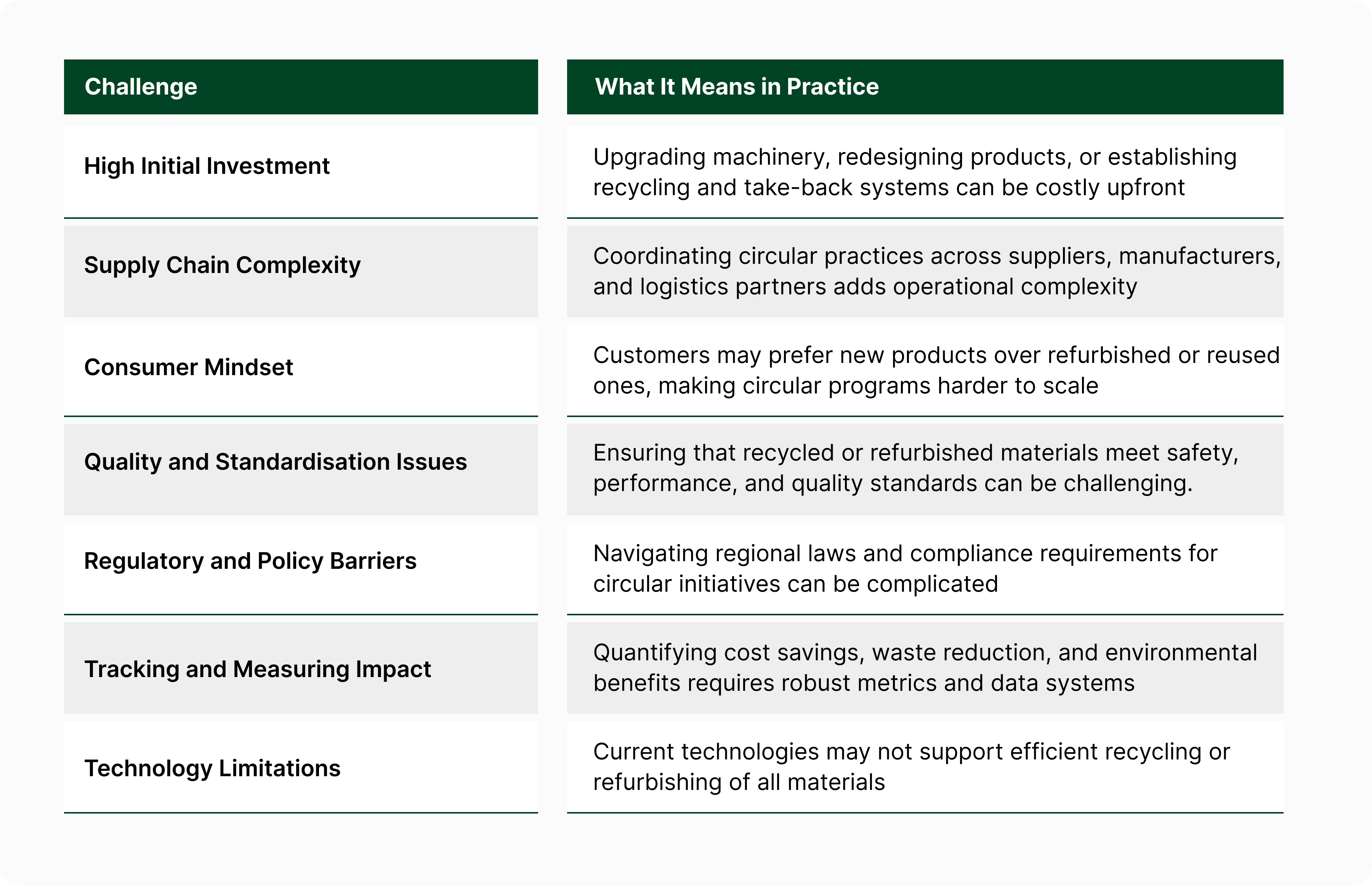
For companies whose manufacturing processes were not originally designed with circularity in mind, transitioning to a circular model can be a complex journey. While the benefits are clear, organisations often face practical and financial huddles like:
Conclusion
As we move further into 2026 and beyond, circularity is no longer just an option, it is becoming a business imperative. Companies that embrace Reduce, Reuse, Recycle, and Refurbish will be better positioned to navigate resource scarcity, meet consumer expectations, and gain a competitive edge. The future points toward smarter, more sustainable production, with innovations in materials, technology, and business models enabling organisations to operate profitably while reducing their environmental impact. Those who fail to adapt risk being left behind, while forward-thinking businesses can thrive in a world where sustainability and success go hand in hand.
{{cta}}
{{accordion}}
{{sources}}

Continue Reading
.avif)
Sixes, Stadiums & Sustainability: Measuring What Matters in the IPL
A sharp look at how the IPL can evolve into a sustainable, high-performance system by rethinking energy, water, mobility, and waste through better measurement and smarter operations.
.avif)
AI and Sustainability: What It Actually Does Across Carbon Accounting, ESG and LCA
AI is reshaping sustainability workflows across carbon accounting, ESG, and LCA, but not in the way it’s often portrayed. This blog breaks down what AI actually does, where it adds real value, and why human judgement remains critical for reliable, audit-ready outcomes.



.avif)







.svg)
.svg)