What is BRSR?
BRSR is India’s SEBI-mandated ESG reporting framework, shaping how businesses disclose sustainability performance and prepare for future compliance.

.svg)
Table of Contents


Introduction
Corporate responsibility reporting in India has historically been inconsistent. While many companies disclosed sustainability-related information, there was no common structure guiding what should be reported, how performance should be measured, or how claims could be compared across organisations. As a result, ESG disclosures often varied widely in quality and depth, making it difficult for investors, regulators and other stakeholders to rely on them for decision-making.
Business Responsibility and Sustainability Reporting (BRSR) was introduced to close this gap. Mandated by the Securities and Exchange Board of India (SEBI), BRSR establishes a standardised framework for how large listed companies disclose their environmental, social and governance performance. It replaces fragmented narratives with structured, comparable and data-led disclosures, bringing greater credibility and accountability to sustainability reporting.
BRSR marks a shift away from voluntary storytelling towards regulated transparency. It signals that sustainability is no longer peripheral to business reporting, but a core part of corporate accountability.
Is BRSR Only Relevant for Large Listed Companies?
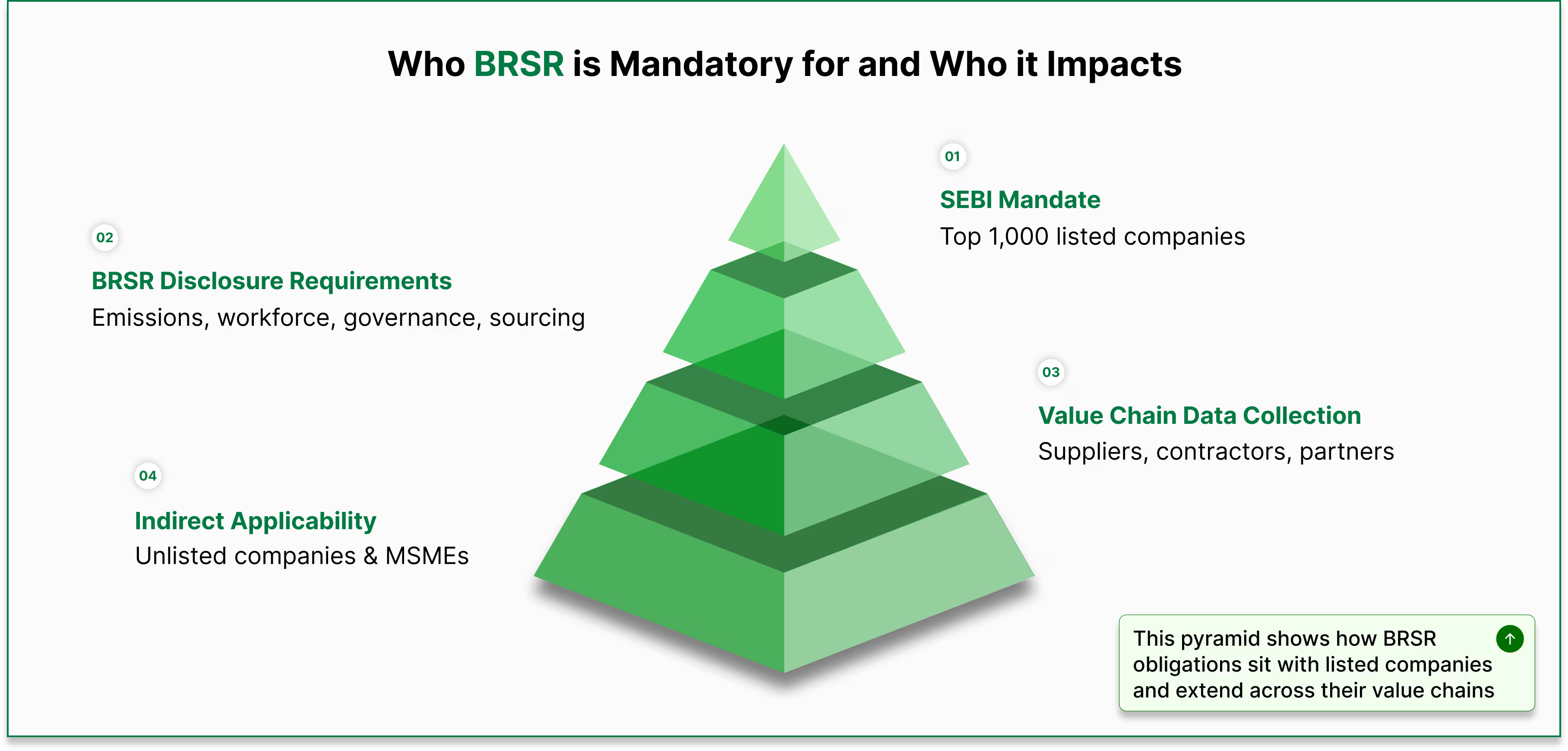
On paper, BRSR is mandatory only for the top 1,000 listed companies in India by market capitalisation. However, its practical relevance extends far beyond this group. Large listed companies operate within extensive supply chains, and their reporting obligations increasingly shape the data expectations placed on suppliers, contractors and partners.
As BRSR requires companies to disclose information across areas such as emissions, workforce practices, sourcing policies and governance controls, organisations are compelled to collect data from across their value chains. This means that even unlisted companies and smaller suppliers often find themselves responding to BRSR-aligned data requests.
In effect, BRSR is influencing sustainability practices across Indian business ecosystems, not just at the level of listed entities. Over time, it is becoming a de facto reference point for responsible business conduct in India.
Inside the BRSR Framework
At its core, BRSR is designed to bring clarity and consistency to sustainability reporting. The framework is built around nine principles of responsible business conduct, covering environmental stewardship, social responsibility and ethical governance.
BRSR disclosures are divided into three main sections.
{{flipcards}}
Together, these sections ensure that companies report not just what they aspire to do, but how those commitments translate into measurable outcomes.
Materiality in BRSR
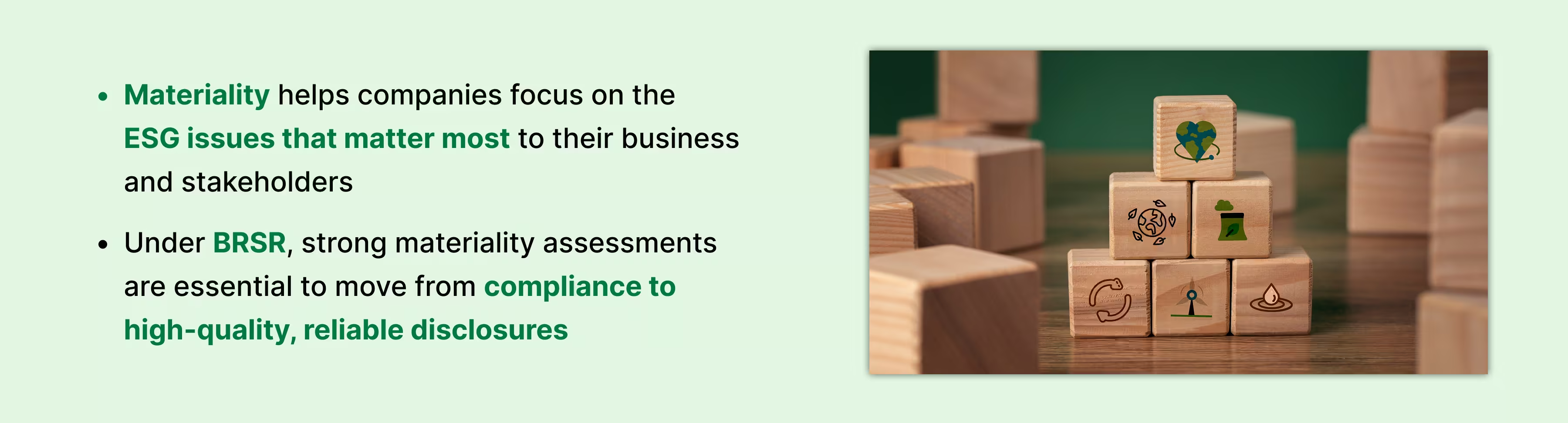
Materiality plays a central role in how companies approach BRSR reporting. Rather than disclosing every possible ESG metric, organisations are expected to identify the issues that are most relevant to their business, stakeholders and impact footprint.
Under BRSR, materiality is not limited to financial risk alone. Companies must consider how their operations impact the environment and society, alongside how sustainability-related risks and opportunities affect business performance. This broader lens encourages more balanced and meaningful disclosures.
Recent analysis of Indian ESG reporting shows that while compliance rates are high, the quality of material disclosures still varies significantly. In fact, data from 2025 indicates that although nearly all mandated companies filed BRSR reports, a significant proportion failed to provide complete emissions data, highlighting ongoing gaps between compliance and data maturity.
This reinforces the importance of robust materiality assessments backed by reliable data systems.
Why BRSR Matters for Businesses
BRSR is often viewed as a regulatory obligation, but its implications go far beyond compliance.
One reason BRSR matters is investor confidence. Transparency around ESG performance is increasingly influencing investment decisions. Regulatory commentary suggests that by 2025, close to 88 percent of India’s top listed companies were publishing structure sustainability disclosures.
BRSR also helps protect brand trust. In an environment where greenwashing claims are scrutinised closely, structured disclosures force companies to substantiate sustainability statements with data. This reduces reputational risk and strengthens credibility with customers and regulators alike.
From an operational perspective, BRSR reporting often reveals inefficiencies across processes and supply chains. Collecting data on energy use, waste, workforce metrics or supplier practices frequently surfaces improvement opportunities that can drive cost savings and operational resilience.
Finally, BRSR prepares companies for a future of tighter global disclosure expectations. As international standards converge, organisations with mature BRSR processes are better positioned to align with emerging global frameworks.

Practical Challenges in BRSR Reporting
While BRSR brings much-needed structure, many organisations face practical hurdles when implementing it effectively:
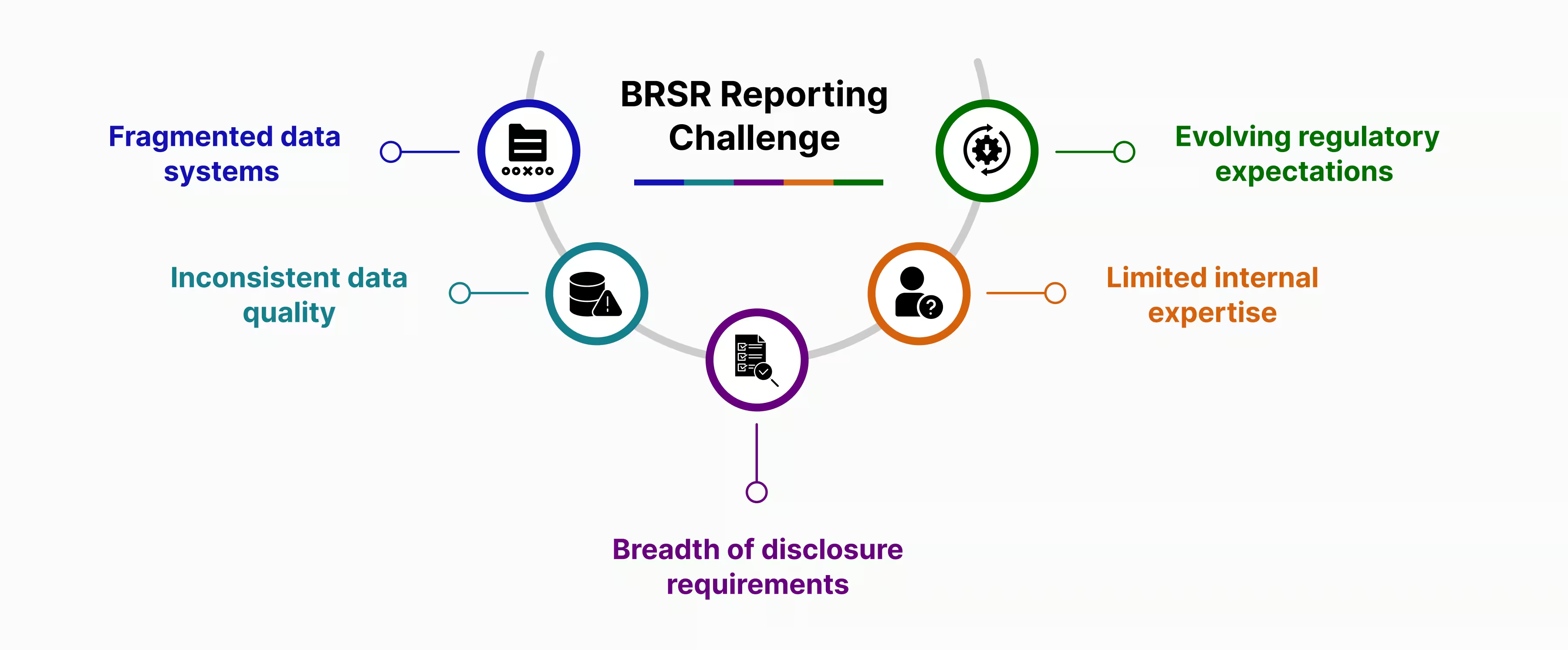
- Fragmented data systems
ESG information is often spread across departments, geographies and tools, making consolidation slow and error-prone.
- Inconsistent data quality
Many companies still rely on manual inputs, estimates or proxy data, particularly for emissions and supply chain metrics, which weakens confidence in reported figures.
- Breadth of disclosure requirements
BRSR spans environmental, social and governance topics, requiring coordination between finance, HR, operations, procurement and compliance teams.
- Limited internal expertise
Teams may lack familiarity with sustainability metrics, materiality assessments or regulatory interpretation, slowing reporting cycles.
- Evolving regulatory expectations
With the introduction of BRSR Core and phased assurance, companies must continuously track updates and adjust processes to remain compliant.
How KarbonWise Supports BRSR Reporting
This is where structured tools and platforms make a difference. KarbonWise supports BRSR reporting by centralising sustainability data across functions and mapping it directly to BRSR disclosure requirements. Instead of managing disconnected spreadsheets and manual workflows, teams gain a single source of truth for ESG information.
By streamlining data collection, improving traceability and supporting consistent reporting, KarbonWise helps organisations move beyond compliance towards decision-ready sustainability insights.
The Future of BRSR
BRSR is still evolving, but its direction is clear. Over time, reporting will move away from volume towards quality. Greater emphasis will be placed on accurate data, meaningful materiality assessments and assurance-ready disclosures.
As sustainability becomes more closely linked to financial performance and risk management, BRSR will increasingly be viewed not as a separate report, but as an integral part of corporate governance. Companies that invest early in systems, processes and skills will be better positioned to meet future expectations and build long-term trust.
{{cta}}
{{sources}}
{{accordion}}




Continue Reading

SBTi FLAG Guidance v1.2: What Changed and What to Do Next
Learn what's new in SBTi FLAG Guidance v1.2, including updated deadlines, mandatory commodities, no-deforestation requirements, and practical steps for businesses.

How to conduct a double materiality assessment: A practical step-by-step guide (2026)
Learn how to conduct a Double Materiality Assessment with this practical step-by-step guide covering impact and financial materiality, IROs, stakeholder engagement, scoring, materiality matrices, and ESG reporting.


.avif)









.svg)
.svg)