Carbon Footprinting Explained: How Businesses Measure and Reduce Emissions
A practical guide to carbon footprinting, explaining how businesses measure emissions, manage Scope 1, 2 and 3 data, and turn carbon insights into meaningful action.

.svg)
Table of Contents


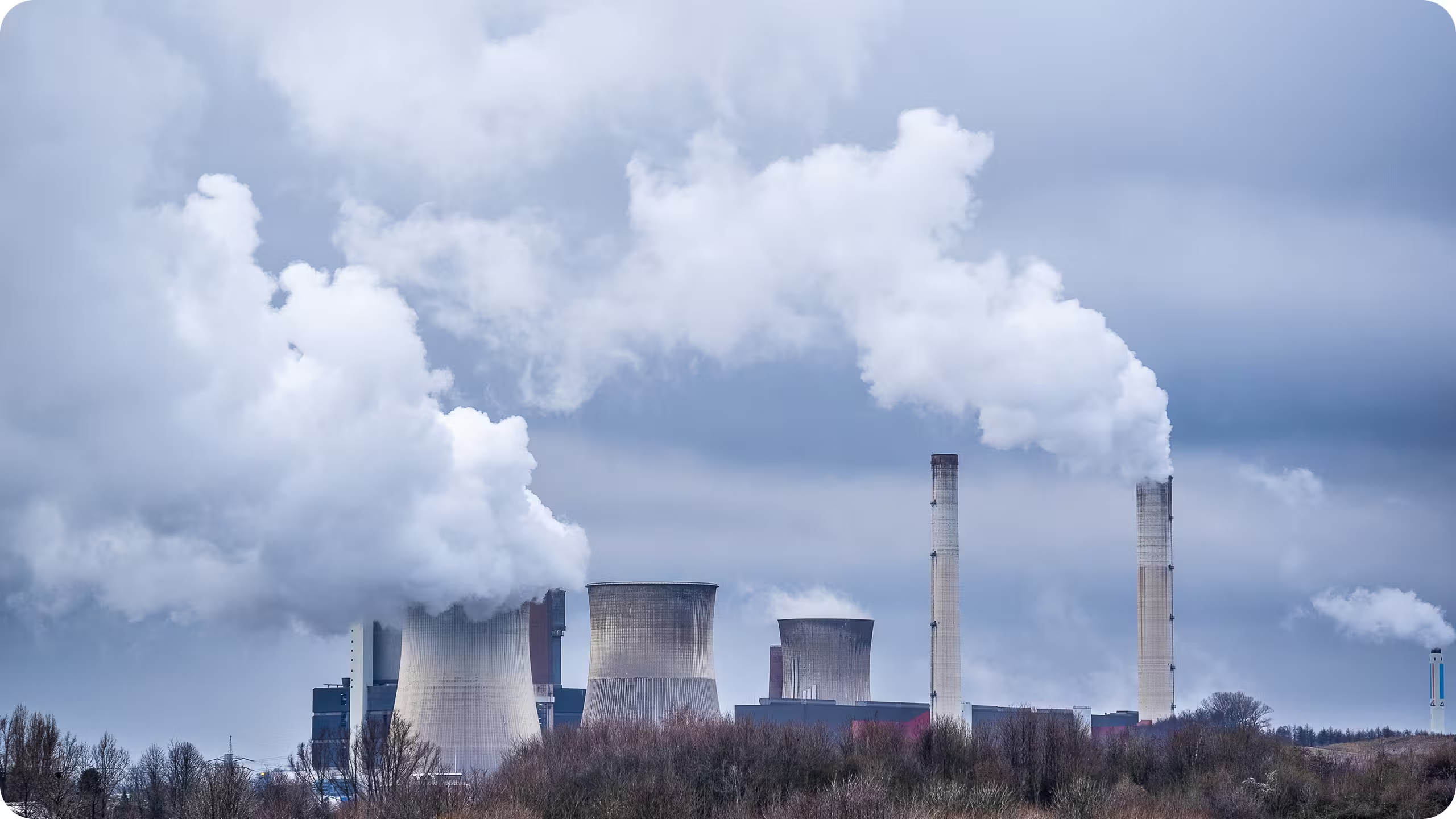
Carbon footprinting has shifted from a specialist sustainability exercise to a core business requirement. As organisations face growing pressure to disclose greenhouse gas emissions, meet ESG expectations, and demonstrate progress towards Net Zero targets, carbon footprinting provides a structured way to measure, manage, and reduce emissions across operations and value chains.
Despite this shift, many explanations of carbon footprinting remain high level. They define the concept, but stop short of explaining how businesses actually calculate emissions, manage Scope 1, 2, and 3 data, or turn measurement into meaningful action. This guide takes a practical, business-focused approach, explaining what carbon footprinting is, how it works in practice, and how organisations apply it at scale to support reporting, decision-making, and emissions reduction.
What Is Carbon Footprinting?
Carbon footprinting is the process of measuring the total greenhouse gas emissions associated with an organisation, product, service, or activity. These emissions are typically expressed as carbon dioxide equivalent (CO₂e), allowing different greenhouse gases to be compared on a common basis.
For businesses, carbon footprinting establishes a quantified emissions baseline. This baseline enables emissions to be tracked over time, compared across business units or products, and used as the foundation for reduction planning and external reporting.
Why Carbon Footprinting Matters for Businesses
Carbon footprinting supports far more than regulatory compliance. It enables organisations to identify emissions hotspots, respond to investor and customer scrutiny, and prepare for expanding disclosure requirements across jurisdictions.
International standards such as ISO 14064-1 provide a formal structure for measuring and reporting organisational greenhouse gas emissions, helping businesses ensure consistency, transparency, and credibility in their carbon data.
As climate-related disclosures become more closely scrutinised, carbon footprinting is increasingly viewed as a core operational capability rather than a one-off reporting exercise.
How Carbon Footprinting Works
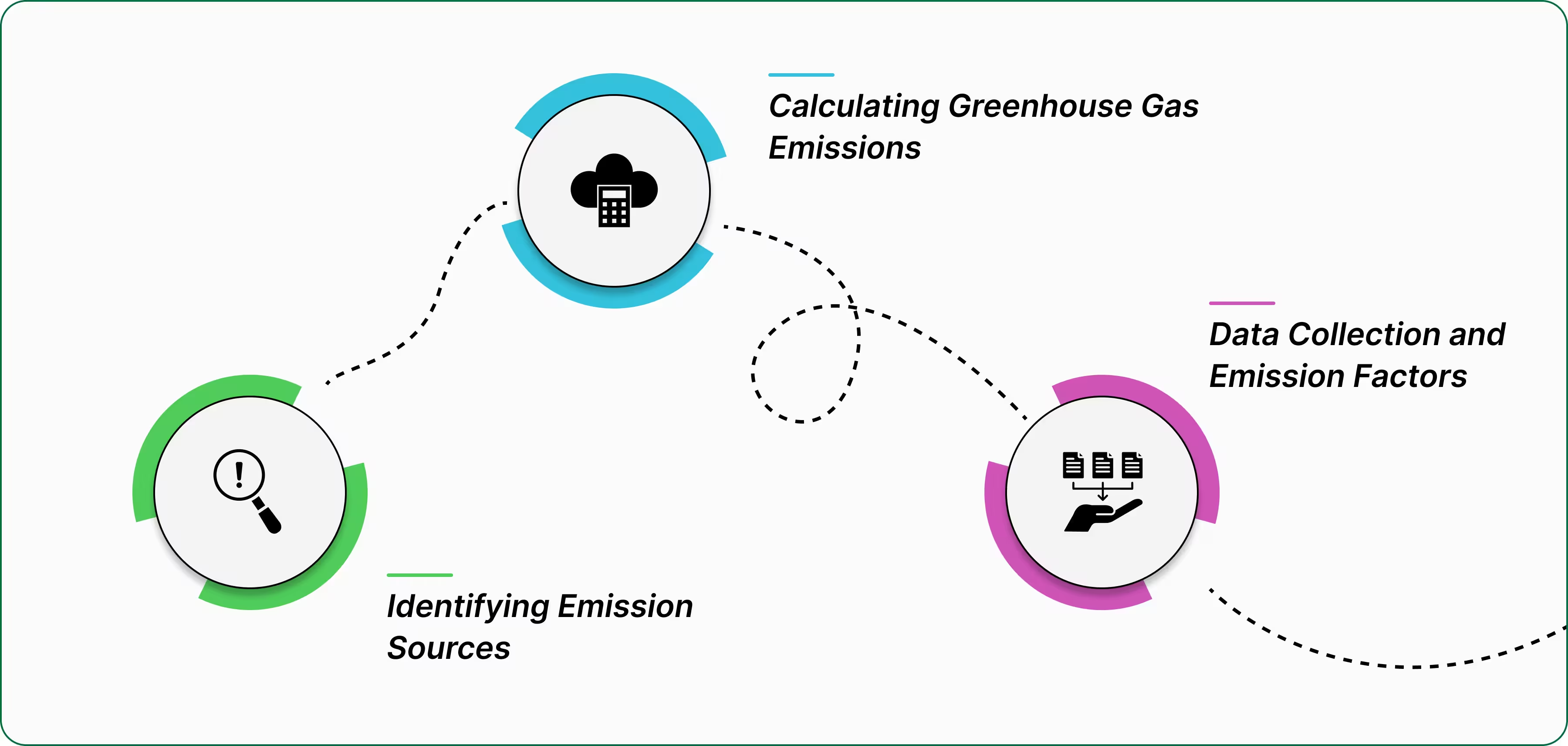
Carbon footprinting follows a defined sequence that turns operational activity into measurable emissions. Each stage builds on the previous one, moving from identifying where emissions arise to calculating and validating results. This structured approach ensures the footprint is complete, comparable, and suitable for decision-making and reporting.
Identifying Emission Sources
The first step in carbon footprinting is identifying emission sources across operations and value chains. These typically include fuel combustion, purchased electricity, refrigerants, business travel, purchased goods and services, logistics, waste, and the use of sold products.
To ensure consistency and comparability, emissions are commonly categorised using the Scope 1, Scope 2, and Scope 3 framework defined by the Greenhouse Gas Protocol.
This structure allows organisations to separate direct emissions from indirect and value chain emissions, while maintaining a complete view of their total footprint.
Calculating Greenhouse Gas Emissions
Once emission sources are identified, activity data is collected and multiplied by appropriate emission factors. This converts operational data such as fuel use, electricity consumption, or spend data into emissions expressed in CO₂e.
The accuracy of this step depends on the quality of underlying data, the relevance of emission factors used, and the transparency of assumptions applied.
Data Collection and Emission Factors
Businesses typically rely on a mix of internal operational data and external emission factor databases. As reporting expectations increase, maintaining data quality, version control, and audit trails becomes critical, particularly when emissions data is used for external disclosure or target setting. International lifecycle and emissions initiatives consistently highlight that incomplete or low-quality data remains one of the biggest barriers to accurate carbon footprinting, particularly across complex supply chains.
Types of Carbon Footprints
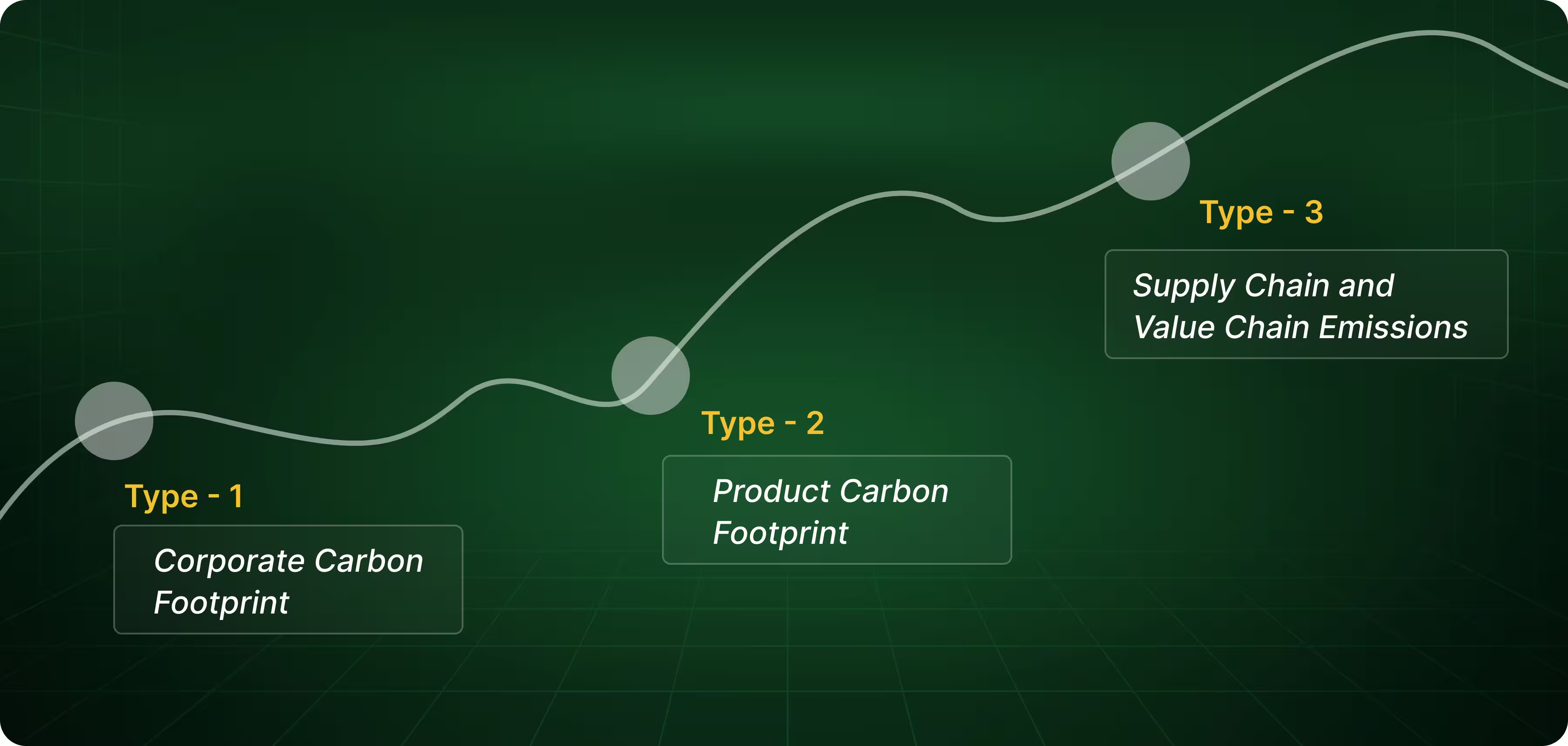
Carbon footprinting follows a structured process that turns everyday operational data into measurable emissions. Each step builds on the last, moving from identifying where emissions occur to calculating and validating results. Together, these steps ensure the footprint is complete, consistent, and decision-ready.
Corporate Carbon Footprint
A corporate carbon footprint measures emissions across an organisation’s operations, usually aligned to financial or organisational boundaries. It forms the basis for ESG reporting, regulatory disclosures, and corporate target setting.
Product Carbon Footprint
Product carbon footprints assess emissions associated with individual products or services across their life cycle. These footprints support product comparisons, eco-design decisions, and customer-facing sustainability claims.
Supply Chain and Value Chain Emissions
For many organisations, value chain emissions represent the largest share of total emissions. Addressing these emissions requires supplier engagement, consistent data models, and the ability to manage incomplete or evolving data across complex supply chains.
Carbon Footprinting at Scale: How Businesses Apply It in Practice
For most organisations, the real challenge is not understanding carbon footprinting methodology, but applying it consistently across multiple business units, products, or regions. At scale, carbon footprinting becomes an ongoing operational process rather than an annual calculation.
Businesses typically start by defining common organisational boundaries, data hierarchies, and calculation rules. This creates a repeatable structure that allows emissions data to be updated, compared, and aggregated without rebuilding models from scratch each year.
In manufacturing, carbon footprinting is often rolled out across entire product portfolios. A representative production process is modelled first, capturing energy use, material inputs, and logistics. Variants are then created to assess alternative materials, suppliers, or production methods, enabling faster comparisons and more targeted reduction strategies.
In FMCG, scale is driven by speed and volume. Products are grouped by category, with shared templates for common ingredients, packaging formats, and transport routes. This allows carbon footprinting to keep pace with frequent product changes while still supporting credible reporting and claims.
In construction and infrastructure, carbon footprinting is applied at project level but must remain consistent across portfolios. Emissions are structured by building elements or project stages, allowing developers to compare embodied carbon performance across designs and projects over time.
Across sectors, the most effective organisations treat carbon footprinting as iterative. Data improves, suppliers change, and models are refined, ensuring emissions data continues to inform real decisions rather than sitting in static reports.
Examples of Businesses Applying Carbon Footprinting in Practice
Several large organisations have publicly documented how carbon footprinting has been embedded into their operations and decision-making.

Standards and Frameworks for Carbon Footprinting
Carbon footprinting is guided by a set of recognised standards and frameworks that ensure emissions are measured consistently and reported credibly. These frameworks help organisations align internal calculations with external expectations, making carbon data comparable, auditable, and suitable for disclosure across markets and stakeholders.
GHG Protocol and Scope 1, 2, and 3: The Greenhouse Gas Protocol is the most widely used framework for categorising and reporting corporate emissions. Its Scope-based structure supports clarity, comparability, and accountability across organisations and sectors.
ISO 14064 and ISO 14067 Explained: ISO standards provide formal requirements for greenhouse gas quantification and reporting at organisational and product level. They ensure that carbon footprint results are documented, transparent, and suitable for external communication.
Regulatory and ESG Reporting Alignment: Carbon footprinting increasingly underpins regulatory and ESG disclosures, particularly as climate reporting requirements expand. In the European Union, climate policy continues to strengthen expectations around emissions transparency and corporate accountability.

Key Benefits of Carbon Footprinting for Businesses
Carbon footprinting delivers practical value when it is embedded into business decision-making rather than treated as a reporting exercise. By turning emissions data into clear insight, it supports operational focus, strategic planning, and credible communication with stakeholders.
{{flipcards}}
Common Challenges in Carbon Footprinting
- Carbon footprinting becomes difficult when data is fragmented across systems, suppliers, and teams, reducing consistency and reliability.
- Limited visibility into Scope 3 emissions remains a major barrier to building complete and accurate carbon footprints.
- Shorter reporting cycles increase pressure on teams to deliver timely emissions data without compromising quality.
- Manual and spreadsheet-based approaches do not scale as emissions reporting requirements expand.
- Without structured processes and systems, organisations struggle to maintain accuracy, comparability, and confidence in reported results over time.
How KarbonWise Simplifies Carbon Footprinting and Carbon Management
KarbonWise manages the entire carbon lifecycle through an all-in-one platform that simplifies carbon footprinting from data collection and analysis to emissions reporting and reduction planning. Designed to work across complex organisational structures, it supports distributed data ownership, multiple business units, and varied reporting hierarchies without losing consistency or control. Powered by AI and automation, KarbonWise enables faster insights, smarter decisions, and audit-ready reporting that scales across the organisation.
The platform delivers automated carbon calculations across Scope 1, Scope 2, and Scope 3 emissions, supported by ERP and utility integrations that consolidate data into a single, reliable carbon baseline. Supplier collaboration tools improve visibility and verification of Scope 3 emissions, helping organisations move beyond estimates.
With built-in target setting, real-time progress tracking, and a Carbon Simulator with an integrated MACC curve, KarbonWise helps teams model reduction scenarios and prioritise actions with confidence. Dynamic dashboards and export-ready reports ensure carbon data is always usable, shareable, and decision-ready.
KarbonWise is built not just to measure emissions, but to turn carbon footprinting into measurable action.
Conclusion
Carbon footprinting is entering a new phase. What was once a periodic reporting exercise is becoming a continuous capability that shapes how organisations design products, select suppliers, and allocate capital. As disclosure expectations tighten and value chain scrutiny increases, the ability to measure emissions accurately and update them in near real time will separate leaders from those struggling to keep pace.
Looking ahead, carbon data will increasingly sit alongside financial and operational data, informing everyday decisions rather than annual reports. Businesses that invest early in scalable, transparent carbon footprinting will be better positioned to respond to regulatory change, collaborate with suppliers, and translate climate ambition into measurable progress. In this future, carbon footprinting is not simply about compliance, but about building long-term resilience and decision confidence in a low-carbon economy.
Ready to move from measurement to action?
Speak to our team to see how KarbonWise simplifies carbon footprinting across Scope 1, Scope 2, and Scope 3 emissions. Request a demo or trial the software to understand how automated calculations, supplier collaboration, and scenario modelling can support reporting and emissions reduction at scale.
{{cta}}
{{accordion}}
{{sources}}




Continue Reading

Primary vs Secondary Emissions Data: Key Differences and When to Use Each
Learn the key differences between primary and secondary emissions data, when to use each, and how better data quality supports more accurate carbon accounting and Scope 3 reporting.

Netflix, Binge-Watching & the Hidden Carbon Footprint of Streaming Culture
Streaming feels effortless, but every Netflix session relies on data centres, networks, and devices that consume energy continuously. Discover the hidden carbon footprint of streaming culture and learn simple ways to reduce your digital impact.



.avif)








.svg)
.svg)