Understanding the Connection Between Carbon Accounting and ESG
Learn how carbon accounting enables accurate ESG reporting by providing structured emissions data for compliance, risk assessment, and decision-making.

.svg)
Table of Contents


Carbon accounting and ESG reporting are often discussed as separate disciplines, but in practice they are tightly linked. Carbon data is one of the most material, scrutinised, and regulated inputs within ESG reporting, particularly under the environmental pillar. Understanding how the two connect is the first step towards credible, audit-ready sustainability reporting.
What Is Carbon Accounting?
Carbon accounting is the process of measuring, tracking, and managing greenhouse gas emissions generated by an organisation’s activities. This typically includes emissions across Scope 1, Scope 2, and Scope 3, covering direct operations, purchased energy, and value chain activities. The objective is not only to calculate emissions totals, but to understand where emissions originate, how they change over time, and which activities drive the greatest impact.
At an organisational level, carbon accounting provides a structured view of emissions performance. It relies on defined data sources, recognised calculation methodologies, and consistent boundaries to ensure emissions data is comparable year on year. This structure is what allows carbon data to be used reliably beyond internal analysis, including for regulatory disclosure and ESG reporting.
What Is ESG Reporting?
ESG reporting is the disclosure of how a business manages environmental, social, and governance risks and impacts. It spans a broad set of topics, from emissions and resource use to workforce practices, ethics, and board oversight. Within this framework, emissions data underpins the environmental pillar and plays a critical role in climate-related disclosures.
Unlike narrative sustainability statements, ESG reporting requires evidence. Carbon accounting provides that evidence for climate-related performance, risk exposure, and transition progress. Without robust emissions data, environmental disclosures lack credibility and fail to meet growing expectations from regulators, investors, and other stakeholders.
Why Carbon Accounting Is Critical for ESG Reporting
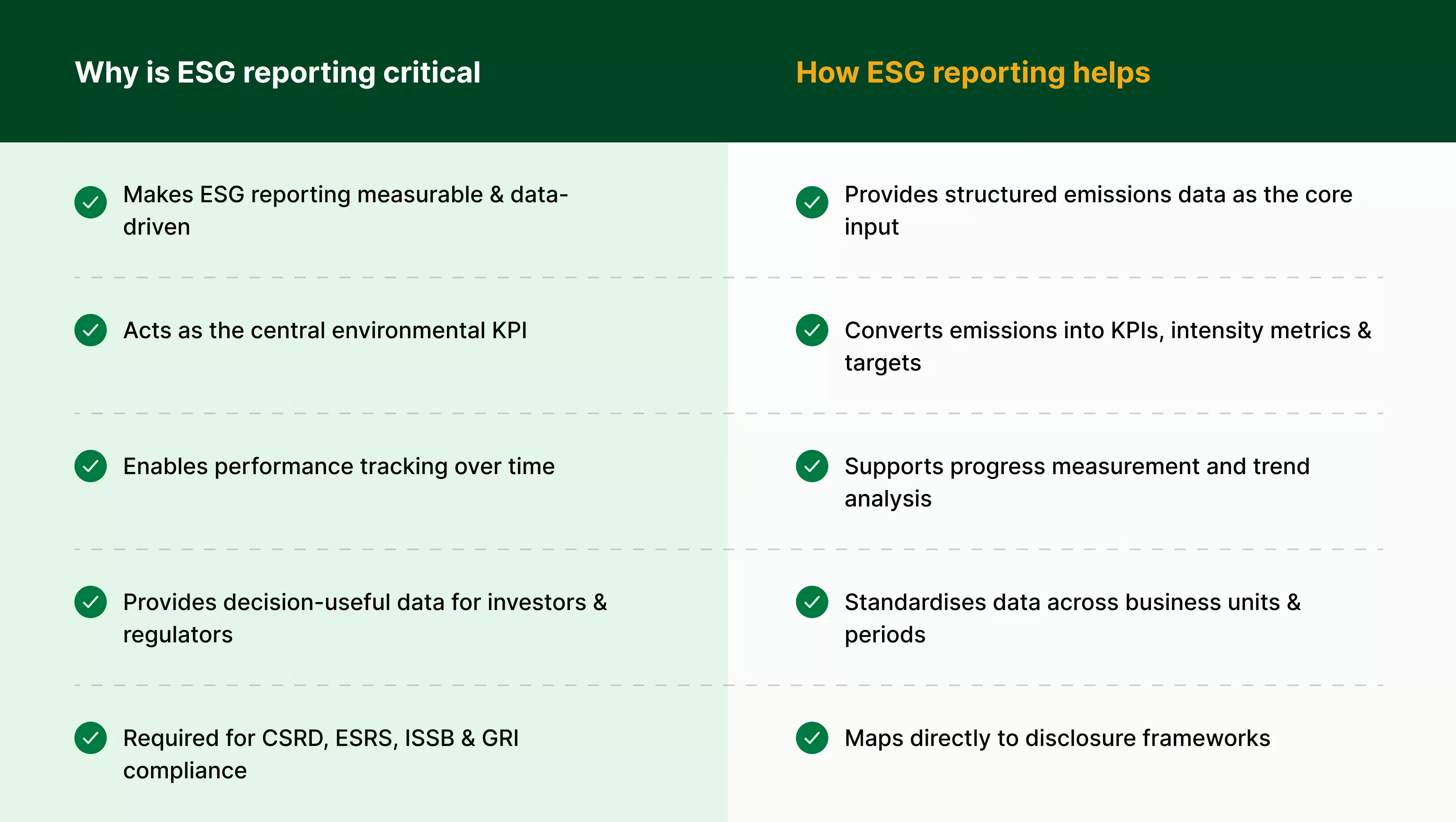
As ESG reporting becomes more regulated and data-driven, carbon accounting has shifted from a supporting exercise to a core requirement. Emissions data is no longer optional context. It is central to how environmental performance, climate risk, and transition readiness are evaluated within ESG disclosures.
Carbon Emissions as a Core ESG Metric
Carbon emissions sit at the centre of the environmental pillar of ESG because they directly reflect a company’s contribution to climate change and its exposure to transition and physical risks. Investors and regulators increasingly expect emissions data to be consistent, comparable, and decision-useful. This includes not just headline totals, but intensity metrics, trends over time, and coverage across Scope 1, 2, and 3 emissions.
Without structured carbon accounting, emissions figures remain fragmented and difficult to validate. Robust carbon data allows businesses to demonstrate progress, explain performance drivers, and link climate strategy to measurable outcomes. In ESG reporting, this turns climate commitments into evidence rather than aspiration.
Regulatory Drivers Linking Carbon and ESG
Regulation is one of the strongest forces binding carbon accounting and ESG reporting together. Frameworks such as CSRD and ESRS require detailed, standardised emissions disclosures as part of broader sustainability reporting. At the same time, global initiatives such as ISSB and GRI reinforce the expectation that climate-related information is grounded in reliable emissions data.
These regulations do not treat carbon data as a standalone exercise. Emissions figures are expected to feed into risk disclosures, transition plans, targets, and performance narratives. As a result, businesses that treat carbon accounting separately from ESG reporting often struggle with duplication, inconsistencies, and audit challenges. Integrating the two is increasingly essential to meet regulatory expectations efficiently and credibly.
How Carbon Accounting Feeds ESG Disclosures
Once carbon accounting is established, its value extends beyond emissions totals into the core structure of ESG disclosures. Emissions data becomes an input that shapes environmental KPIs, climate risk narratives, and strategic reporting, rather than a standalone calculation exercise.
Mapping Emissions Data to ESG Metrics
Carbon accounting provides the quantitative foundation for many environmental KPIs used in ESG reporting. Emissions data feeds directly into metrics such as absolute emissions, emissions intensity, and progress against reduction targets. These KPIs allow businesses to demonstrate performance over time and support comparisons across business units, geographies, or peers.
Beyond performance metrics, emissions data also underpins climate-related risk disclosures. Understanding where emissions originate and how they evolve helps organisations assess exposure to transition risks, regulatory changes, and market shifts. In ESG reports, this linkage allows climate risk narratives to be supported by measurable data rather than qualitative statements.
Scope 1, 2, and 3 in ESG Reports
In ESG reporting, Scope 1, 2, and 3 emissions provide transparency across the full emissions profile of a business. Scope 1 and 2 data reflects operational control and energy sourcing, while Scope 3 emissions reveal impacts and dependencies across the value chain. Together, they enable stakeholders to understand where emissions are concentrated and how responsibility is distributed.
Materiality considerations determine how deeply each scope is reported. For many organisations, Scope 3 emissions represent the most significant share of total impact and therefore carry greater reporting weight. Integrating carbon accounting with ESG reporting ensures that scope-based disclosures are consistent, proportionate, and aligned with both regulatory expectations and stakeholder priorities.
Step-by-Step Framework to Integrate Carbon Accounting With ESG Reporting
Integrating carbon accounting with ESG reporting requires more than technical alignment. It depends on clear processes, consistent data, and governance that supports both regulatory compliance and decision-making. A structured, step-by-step approach helps ensure integration is effective and scalable.

Step 01 – Establish a Robust Carbon Accounting System
The foundation of integration is a carbon accounting system built on reliable data sources and recognised calculation methodologies. This includes defining organisational boundaries, identifying emissions sources across Scope 1, 2, and 3, and ensuring data is collected consistently from operations, energy use, suppliers, and logistics. Applying standardised calculation methods ensures emissions figures are comparable over time and suitable for external reporting.
Step 02 – Align Carbon Data With ESG Standards
Once emissions data is calculated, it must be aligned with ESG reporting standards such as ESRS, GRI, and SASB. This involves mapping carbon metrics to required disclosures, definitions, and reporting structures. Alignment at this stage reduces duplication, prevents inconsistencies between carbon and ESG reports, and ensures emissions data supports both regulatory and stakeholder reporting requirements.
Step 03 – Centralise ESG and Emissions Data
Effective integration depends on having a single source of truth for ESG and emissions data. Centralising data allows organisations to manage updates, controls, and validations in one place rather than across disconnected systems. This improves data quality, enables consistent use across reports, and supports collaboration between sustainability, finance, and compliance teams.
Step 04 – Automate Reporting and Validation
Automation is critical for maintaining accuracy and audit readiness as reporting requirements scale. Automated reporting workflows reduce manual handling, apply consistent validation checks, and create traceable data trails. This makes it easier to produce ESG disclosures, respond to audits, and adapt to evolving regulatory expectations without rebuilding processes each reporting cycle.
Benefits of Integrating Carbon Accounting With ESG Reporting
{{flipcards}}
How KarbonWise Enables Seamless Integration
KarbonWise supports the integration of carbon accounting and ESG reporting by providing a single platform for managing emissions data and sustainability reporting requirements.
Automated Carbon Accounting Across Scopes
KarbonWise supports the calculation and management of Scope 1, Scope 2, and Scope 3 emissions using structured data inputs. This enables organisations to measure and maintain emissions data across operations and value chains within one system.
ESG-Aligned Dashboards and Reporting
KarbonWise provides dashboards and reporting views that align emissions data with ESG reporting requirements. This supports structured sustainability reporting and preparation for disclosures aligned with frameworks such as CSRD and ESRS.
Continuous Monitoring and Compliance Support
KarbonWise allows organisations to track emissions and ESG data on an ongoing basis rather than through one-off reporting exercises. This helps businesses maintain up-to-date sustainability data as reporting requirements and internal needs evolve.
{{cta}}
{{accordion}}
{{sources}}




Continue Reading
%20(1).avif)
Top 5 ESG Software Platforms in 2026: Features and Use Cases
Compare the top 5 ESG software platforms in 2026, their key features, use cases, and reporting capabilities to find the right fit for your organisation.

Primary vs Secondary Emissions Data: Key Differences and When to Use Each
Learn the key differences between primary and secondary emissions data, when to use each, and how better data quality supports more accurate carbon accounting and Scope 3 reporting.

How to conduct a double materiality assessment: A practical step-by-step guide (2026)
Learn how to conduct a Double Materiality Assessment with this practical step-by-step guide covering impact and financial materiality, IROs, stakeholder engagement, scoring, materiality matrices, and ESG reporting.


.avif)









.svg)
.svg)