LCA vs Product Carbon Footprint: Key Differences, Use Cases, and When to Use Each
Learn the differences between LCA and Product Carbon Footprint (PCF), including methodologies, ESG relevance, standards, and practical business use cases.

.svg)
Table of Contents


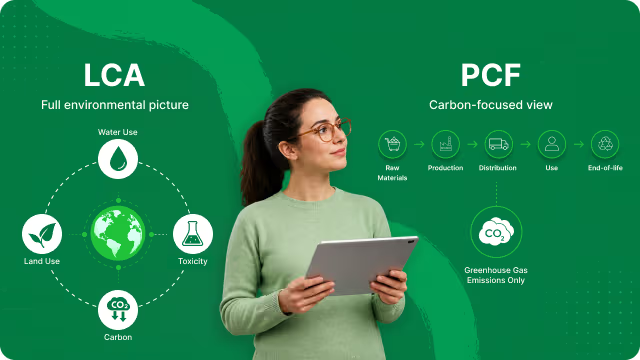
People often confuse LCA and Product Carbon Footprint (PCF), especially since both use a life cycle approach to measure environmental impact. But they are not interchangeable. LCA looks at a broader set of environmental impacts across a product’s life cycle, while PCF focuses only on carbon emissions. As sustainability reporting and supply chain disclosures become more common, understanding this difference matters much more in practice.
A lot of confusion comes from how similar the two methods look on the surface. They follow many of the same stages and use similar data structures, which is why PCF is often treated as a smaller version of LCA. In reality, they are built to answer different questions, and choosing the wrong method can lead to misleading conclusions. In this blog, we break down the key differences between LCA and PCF, where each method is used, their advantages and limitations, and how businesses decide which approach fits their sustainability goals.
What Is Life Cycle Assessment (LCA)?
ISO 14040 and ISO 14044 define Life Cycle Assessment as a methodology to quantify environmental impacts across a product system’s life cycle.
It evaluates multiple impact categories, not just climate change. Typical categories include acidification, eutrophication, ozone depletion, water use and land use. Inventory data are translated into impact indicators using established characterisation models.
An LCA usually follows a cradle-to-grave boundary: raw material extraction, production, distribution, use and end-of-life. The functional unit defines the performance basis of comparison and prevents distorted claims.
What Is Product Carbon Footprint (PCF)?
A Product Carbon Footprint quantifies total greenhouse gas emissions linked to a product, expressed in CO₂ equivalents.
ISO 14067 sets the methodological requirements. The accounting structure commonly aligns with the GHG Protocol Product Standard.
PCF follows life cycle logic but assesses only one impact category: climate change. It does not evaluate toxicity, water scarcity or resource depletion.
Life Cycle Assessment vs Product Carbon Footprint - Core Differences
Both approaches use life cycle thinking, but they differ in scope, complexity and business application.

Methodologies and Standards
Both LCA and PCF are governed by formal standards. The difference lies in how broadly those standards define environmental impact.
LCA Standards and Guidelines
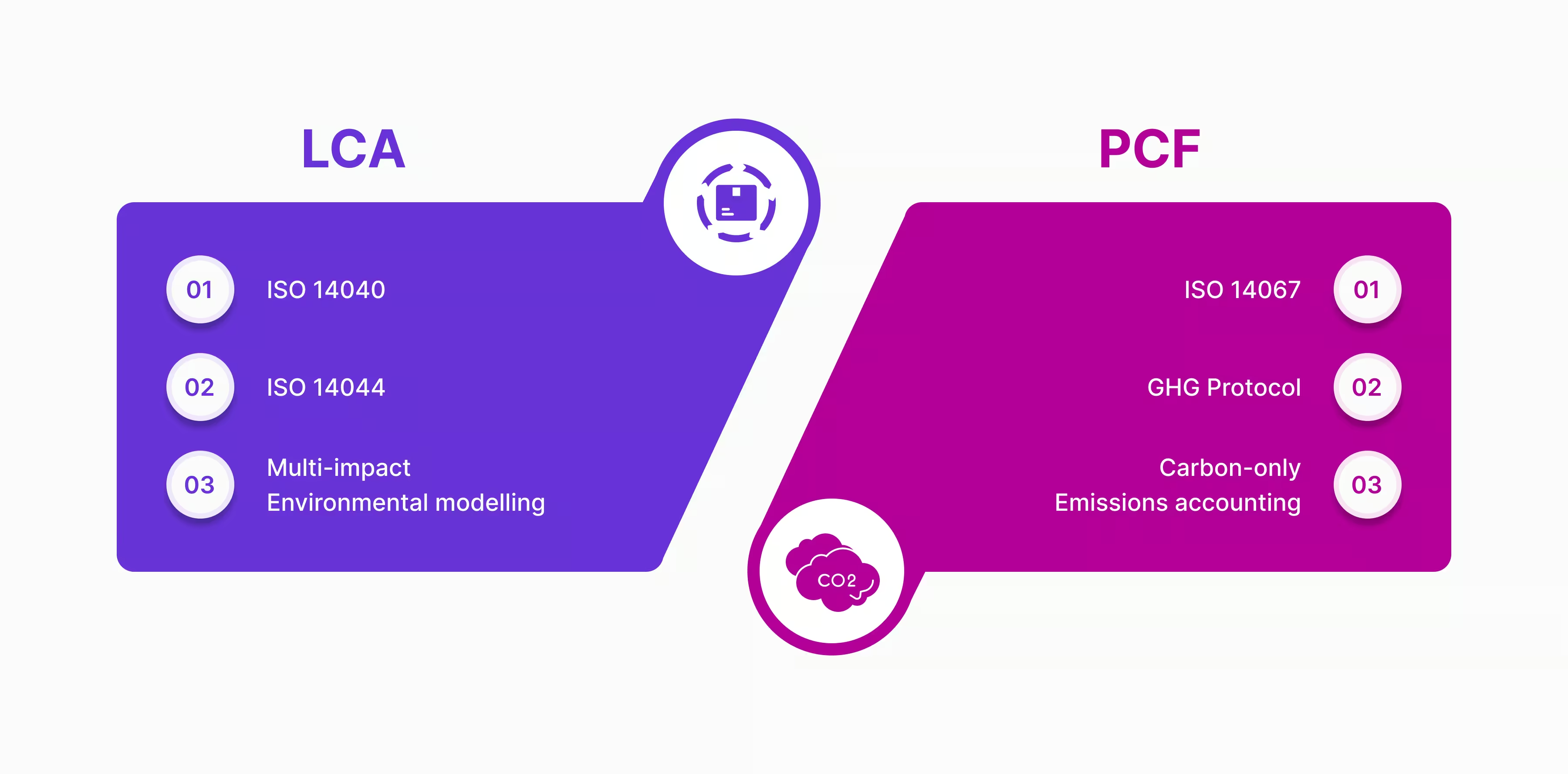
ISO 14040 establishes the principles and framework for Life Cycle Assessment. ISO 14044 sets the technical requirements, including system boundary definition, functional unit selection, allocation rules and impact assessment procedures.
Together, they require transparency in assumptions, data sources and modelling choices. Critical review is recommended when results are used for public comparative claims. The emphasis is methodological rigour and avoidance of selective interpretation.
Product Carbon Footprint Standards
ISO 14067 specifies requirements for quantifying and reporting a product’s greenhouse gas emissions. It draws from LCA structure but limits assessment to climate change.
The GHG Protocol Product Standard aligns product-level emissions with corporate Scope 1, 2 and 3 accounting. It provides rules for boundary setting, data treatment and reporting consistency.
In short, LCA standards govern multi-impact environmental modelling. PCF standards govern climate-specific quantification and disclosure.
Business Use Cases - When to Use What
The decision depends on what the business is trying to solve. Structural design questions require breadth. Disclosure and comparability require focus.
When Life Cycle Assessment Is the Right Choice
- Product design and innovation
LCA is appropriate when environmental performance shapes core design choices. It allows teams to compare materials, manufacturing processes and end-of-life pathways on a consistent functional basis. This prevents shifting impact from one stage of the value chain to another.
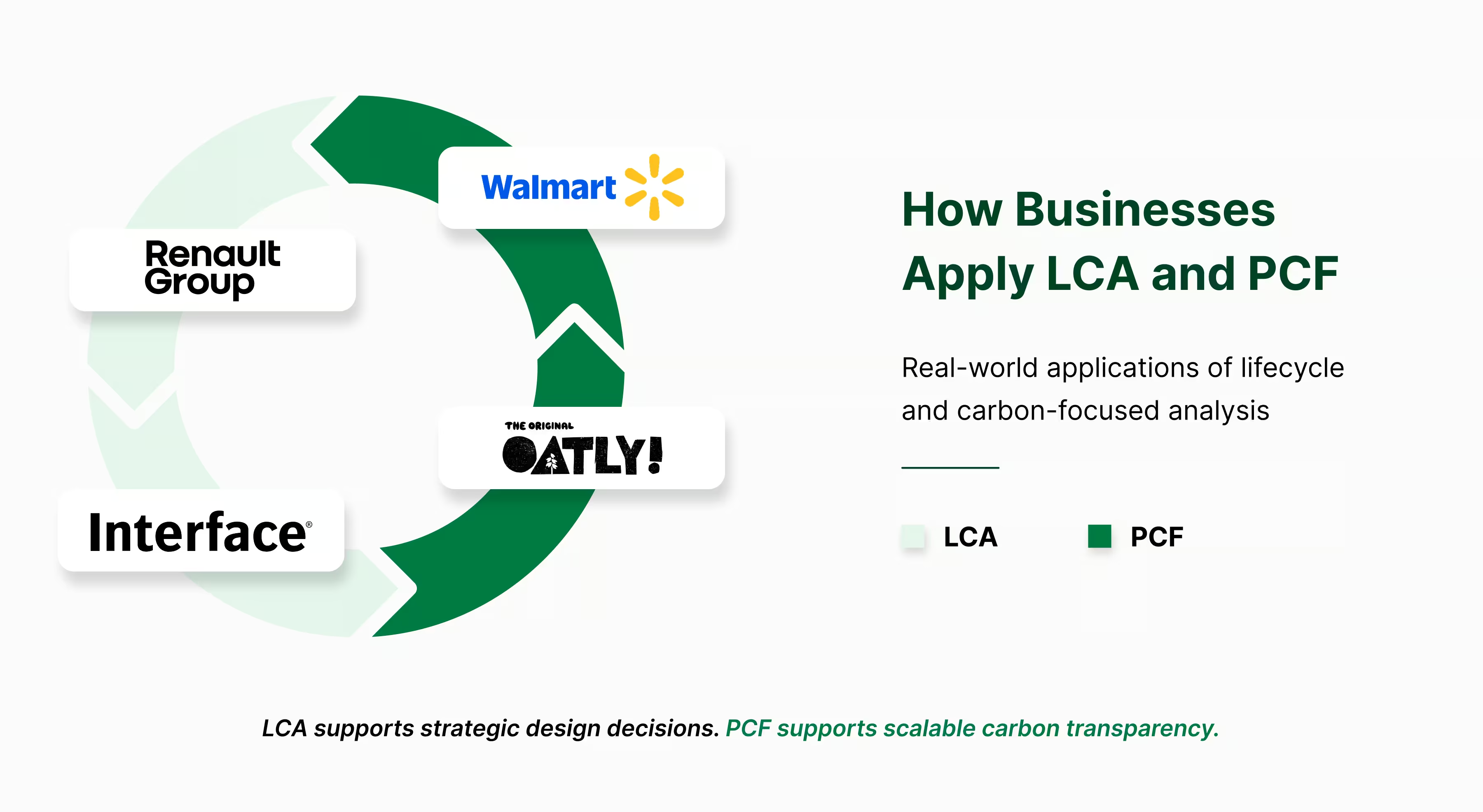
A practical example is Interface, which used full LCAs to identify nylon yarn as a dominant impact driver across multiple categories, not only climate change. That insight influenced recycled content strategy and material redesign, not just carbon reduction targets.
- Environmental impact reduction beyond carbon
Where regulatory pressure or corporate strategy extends beyond greenhouse gases, LCA becomes necessary. It quantifies impacts such as resource depletion, toxicity and water use alongside climate change.
Renault Group applies LCA to evaluate electric vehicle batteries, assessing upstream mineral extraction, manufacturing intensity and end-of-life recovery. The analysis informs trade-offs between carbon savings and resource pressures, which a carbon-only approach would not capture.
When Product Carbon Footprint Is Sufficient
- Product labelling
PCF is suitable when the objective is climate transparency at product level. It produces a single, comparable CO₂e figure that consumers can understand.
Oatly prints product-level carbon footprints on its packaging to communicate climate impact directly. The focus is clear carbon disclosure rather than a full environmental profile.
- Customer and supply-chain communication
PCF supports procurement and Scope 3 reporting where standardised carbon data is required at scale. It enables comparability across suppliers without modelling multiple environmental categories.
Walmart requests product-level emissions data from suppliers under Project Gigaton to quantify purchased goods emissions. The requirement is consistent carbon data aligned with corporate climate targets, not multi-impact LCAs for every product.
Role of LCA and PCF in ESG and Sustainability Reporting
Sustainability reporting frameworks increasingly require product-level evidence. The relevance of LCA and PCF depends on whether the disclosure focus is broad environmental performance or climate-specific accountability.
How LCA Supports ESG Strategy
LCA supports ESG strategy where disclosures extend beyond greenhouse gases. Under the EU’s Corporate Sustainability Reporting Directive, companies must report impacts, risks and opportunities across environmental topics including water, pollution and resource use. A carbon-only metric is insufficient in this context.
Because LCA models multiple impact categories within defined system boundaries, it provides structured evidence for broader environmental claims. It also supports double materiality assessments by linking upstream and downstream impacts to enterprise risk exposure. Where companies position products as “environmentally improved”, LCA offers defensible, methodology-based substantiation.
How PCF Supports Climate and Carbon Reporting
PCF directly supports climate reporting aligned with the GHG Protocol framework. Product-level carbon data can be mapped to Scope 1, 2 and 3 inventories, strengthening traceability between corporate targets and actual product emissions.
For net zero strategies, PCF enables tracking of emissions intensity reductions at SKU or portfolio level. It also supports customer disclosure requests and supply-chain decarbonisation programmes where standardised CO₂e data is required.
In reporting terms, LCA broadens environmental accountability. PCF strengthens carbon precision.
Common Misconceptions About LCA and PCF
Confusion usually arises when the two methods are treated as versions of the same tool. They share life cycle logic, but they are not interchangeable.
“PCF Is Just a Simplified LCA”
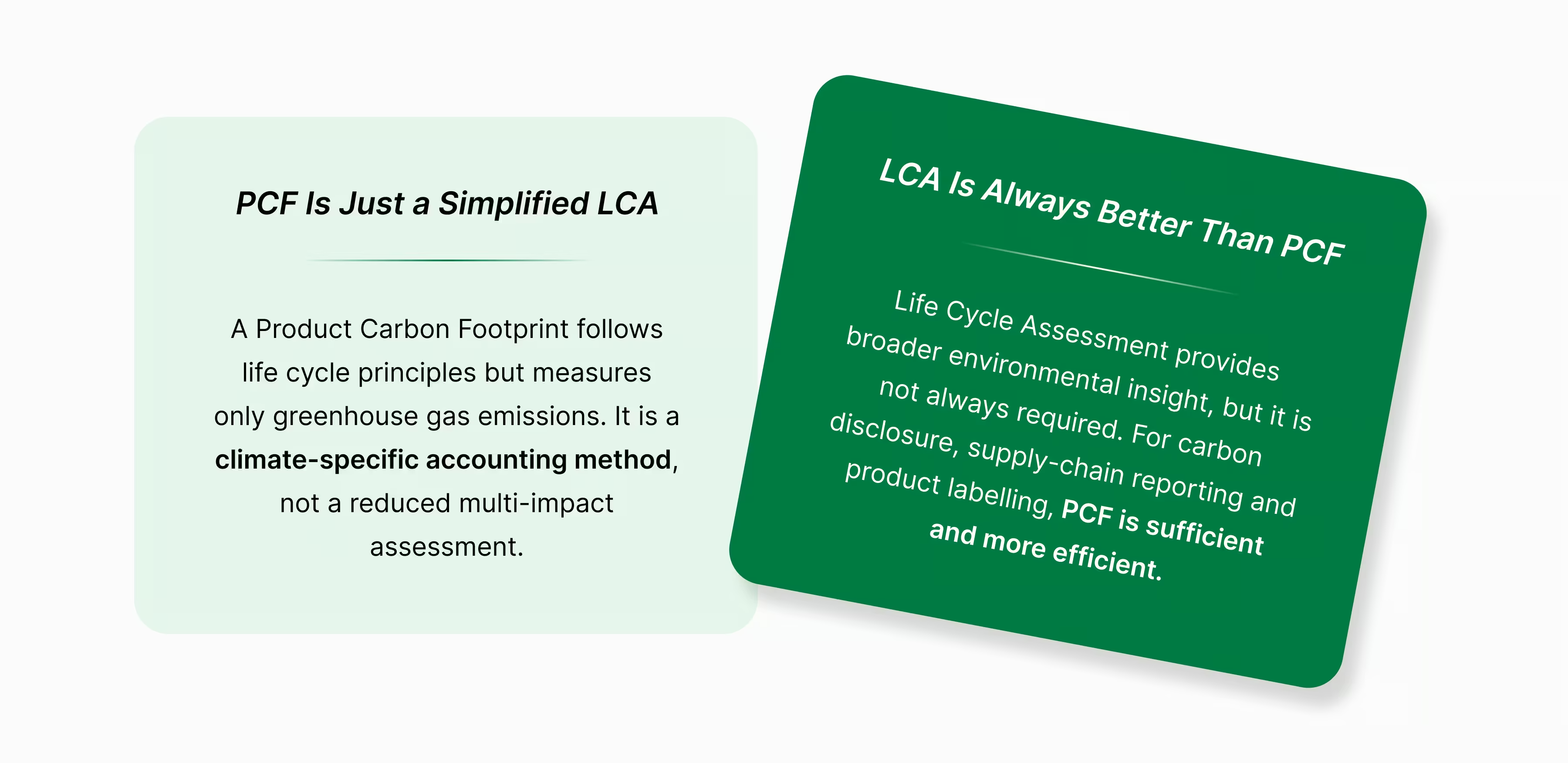
This assumption is misleading. While PCF borrows structural elements from LCA, such as boundary setting and life cycle stages, it is not a reduced multi-impact study. It is a climate-specific accounting exercise.
Under ISO 14067, the objective is to quantify greenhouse gas emissions only. There is no modelling of toxicity, land occupation or water stress. The methodological choices are narrower because the outcome is narrower.
Calling PCF a “simplified LCA” suggests it lacks rigour. That is incorrect. It is rigorous within a defined scope. The difference lies in dimensionality, not quality.
“LCA Is Always Better Than PCF”
This view assumes that broader automatically means superior. It does not.
A full LCA demands significant data, modelling effort and interpretation. If the business objective is carbon disclosure, supply-chain reporting or product labelling, multi-impact modelling may add cost without improving decision relevance.
The right question is not which method is more comprehensive. It is which method answers the decision at hand. Where environmental trade-offs matter, LCA is necessary. Where climate accountability is the focus, PCF is sufficient.
Method choice should follow purpose, not hierarchy.
How KarbonWise Supports LCA and Product Carbon Footprinting
KarbonWise’s platform is designed to make environmental measurement and reporting data-driven, automated and aligned with global standards, rather than manual and spreadsheet-based.
Accurate Product-Level Carbon Footprint Calculations
- KarbonWise’s carbon accounting tools automate Scope 1, 2 and 3 emissions measurement, connecting to live business data instead of relying on spreadsheets. This enables scalability and consistency in carbon calculations across products and operations.
- It also provides readiness support and methodological checks aligned with ISO 14067 to ensure product carbon data is credible and comparable before use in reporting or disclosure.
Data Integration Across Product Life Cycles
- KarbonWise centralises ESG and sustainability data into a unified system, enabling supplier, operational and lifecycle data to flow into footprinting and reporting workflows automatically.
- The platform includes connectors to ERPs and other systems so carbon and LCA data updates without manual entry, reducing manual effort and errors.
Actionable Insights for Product Sustainability
- Its LCA modules support full lifecycle modelling – from raw materials to end-of-life – with traceable stage-by-stage impacts and audit-ready outputs suitable for disclosures like EPDs.
- Visualisation tools and scenario comparisons help identify hotspots and reduction opportunities, enabling product teams to act on sustainability insights rather than just compile reports.
KarbonWise’s platform thus ties carbon measurement, lifecycle assessment and ESG reporting into one structured system, minimising manual work while delivering credible and scalable sustainability insights.
Conclusion
As sustainability reporting and product-level disclosures become more detailed, businesses are increasingly expected to understand what they are measuring and why. In practice, many organisations use both LCA and PCF depending on the decision they need to make, which is why the choice between the two ultimately comes down to purpose.
LCA vs Product Carbon Footprint – Key Takeaways
LCA measures multiple environmental impacts across a product’s life cycle. It supports design decisions and broader environmental claims, PCF measures greenhouse gas emissions only. It supports carbon disclosure and climate tracking. The method should match the question being asked.
How Businesses Should Decide
If the priority is net zero targets, Scope 3 reporting or customer carbon data, PCF is appropriate, if the priority is product redesign or broader ESG performance, LCA is required. Many businesses use both, depending on the decision context.
{{cta}}
{{accordion}}
{{sources}}

Continue Reading
.avif)
Top 5 LCA Software Tools in 2026
Explore the top LCA software tools of 2026 and compare their features, strengths, and use cases for lifecycle assessment, carbon footprinting, and sustainability reporting.

LEED v5, Embodied Carbon, and the Whole-Lifecycle Mandate: What Project Developers and Asset Owners Need to Know
LEED v5 introduces a whole-life carbon approach to building certification, making embodied carbon assessment a key requirement for project developers, asset owners, designers, and investors.
.avif)


.avif)








.svg)
.svg)