Inside ChemPro Tech India 2026: Where Sustainability Became Operational
Insights from ChemPro Tech India 2026 on Product Carbon Footprints, Scope 3 visibility, EcoVadis, and operational sustainability across the chemical sector.

.svg)
Table of Contents


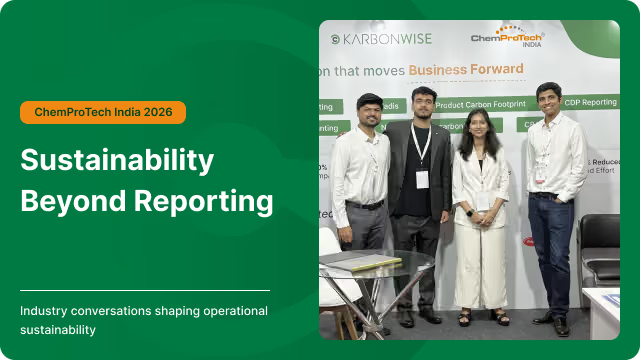
ChemPro Tech India 2026 brought together manufacturers, process technology companies, consultants, sustainability teams, and digital solution providers from across the chemical sector.
A lot of the conversations this year were around Product Carbon Footprints, EcoVadis, Scope 3 emissions, lifecycle assessments, and sustainability reporting. But unlike earlier years, these discussions were no longer limited to ESG or compliance teams. Procurement, exports, product development, and operations teams were all part of the conversation.
Sustainability is gradually becoming part of day-to-day business decisions rather than a separate reporting exercise.
What felt different this year
ChemPro has always focused heavily on process innovation, and that continued this year as well. Manufacturing technologies, flow chemistry, materials, and process systems remained central across the exhibition.
What has changed is that sustainability and digitalisation are now getting linked more closely with manufacturing and operational data. Companies are trying to understand emissions not just at a company level, but across products, suppliers, plants, and value chains.
Many teams spoke about the difficulty of bringing data together from different systems. Product teams are looking for lifecycle insights earlier in the design process, while procurement teams are increasingly being asked for supplier and Scope 3 emissions visibility.
The expectations are already here
AI and sustainability came up in several discussions during the event, but the bigger challenge is not awareness anymore. Most companies already understand why sustainability data matters. The difficulty is implementation, especially in industrial environments where data still sits across disconnected systems and teams.
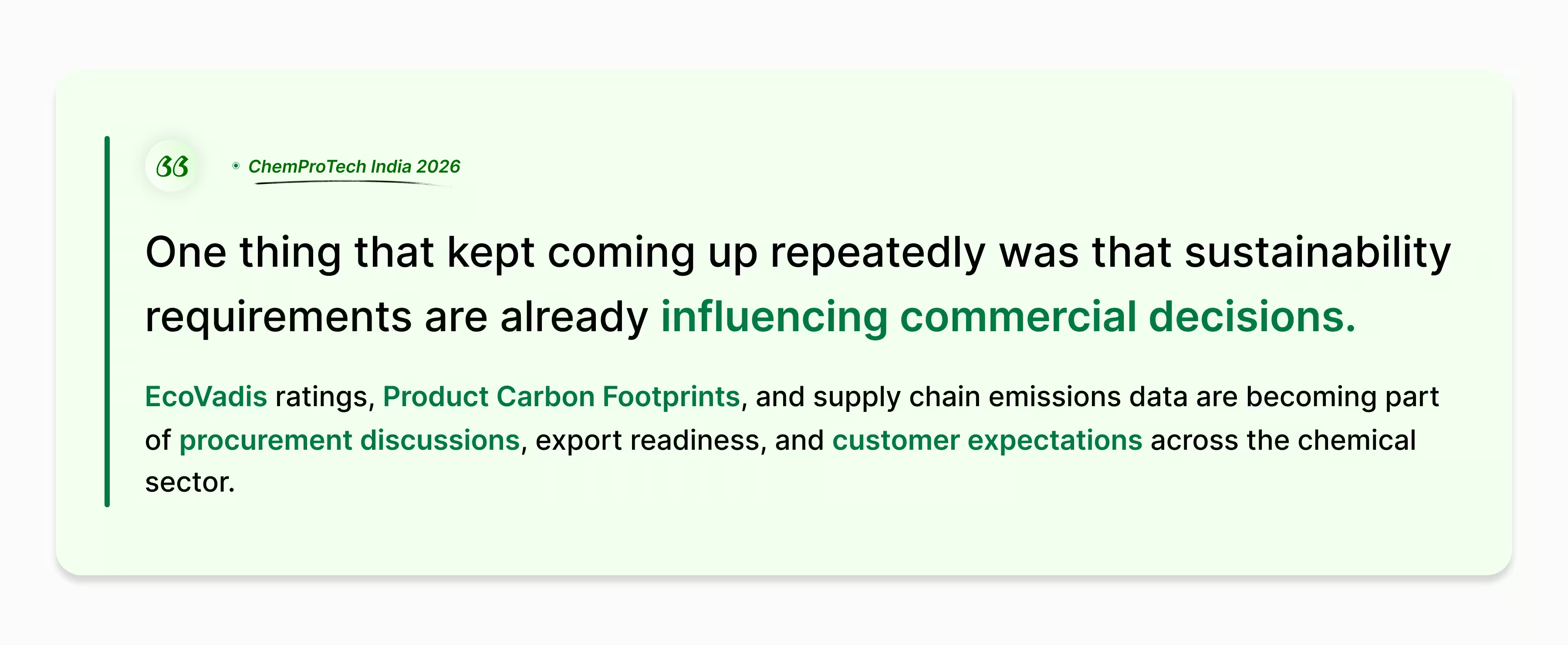
At the same time, customer and regulatory expectations are increasing quickly. Product Carbon Footprints are becoming important in customer qualification discussions. EcoVadis is increasingly part of procurement requirements. Regulations such as BRSR and CBAM are pushing companies to improve emissions visibility across operations and supply chains.
Companies like Covestro, BASF, and Tata Chemicals are already moving toward integrating sustainability data more closely into operational and business processes rather than treating it as a standalone reporting activity.
Where companies are still struggling

Disconnected systems and data
Operational data, supplier information, emissions tracking, and sustainability reporting often sit across different teams and tools. This makes it difficult to get a consistent view across plants, suppliers, and product lines.
Manual ESG workflows
Many ESG teams are still spending significant time consolidating information manually from spreadsheets, supplier emails, and multiple internal systems instead of working with connected data flows.
Limited product-level visibility
Product and R&D teams often do not get lifecycle or emissions insights early enough to influence design and sourcing decisions. As Product Carbon Footprints become more important, this gap is becoming more visible.
Scope 3 and supplier engagement challenges
Procurement teams are increasingly being asked for Scope 3 emissions visibility, but supplier data collection and upstream emissions tracking continue to remain difficult across fragmented value chains.
Moving from reporting to execution
The challenge for many organisations is no longer understanding why sustainability matters. It is building systems and processes that make sustainability data usable across day-to-day operations.
What chemical companies need next
Better integration between sustainability and operations
In many organisations, sustainability data still sits separately from operational systems. Chemical companies increasingly need workflows where emissions, supplier data, procurement decisions, and production information can work together instead of being managed independently.
More reliable product-level emissions data
As Product Carbon Footprints become more important, companies need more structured ways to collect, validate, and manage data across raw materials, suppliers, manufacturing processes, and logistics. Product-level carbon accounting is becoming difficult to manage through spreadsheets alone.
Stronger supplier engagement for Scope 3
Scope 3 reporting continues to depend heavily on supplier participation. Companies need better ways to request, manage, and analyse supplier emissions data across large and fragmented value chains.
Systems that scale across plants and business units
Many companies have already started sustainability initiatives, but scaling them consistently across products, locations, and teams remains a challenge. The focus is gradually shifting from standalone projects to building long-term systems and processes.
Faster access to decision-useful insights
Sustainability data is most useful when it can support procurement, product development, exports, and operational planning early enough for teams to act on it. Companies are increasingly looking for ways to reduce the time between data collection, analysis, and decision-making.

How KarbonWise is approaching this
At KarbonWise, a large part of our work with chemical companies today revolves around solving these operational gaps in a more practical and scalable way.
This includes supporting organisations through EcoVadis readiness, helping teams build more reliable Product Carbon Footprints, and improving Scope 3 visibility across supply chains through better data collection and supplier engagement workflows.
The focus is not just on reporting, but on helping companies build systems that make sustainability data easier to manage and more useful across procurement, operations, product development, and leadership teams.
Closing thought
ChemPro Tech India 2026 showed how quickly sustainability expectations are moving across the chemical sector.
Most companies are no longer asking whether they should start. The bigger challenge now is building the systems, processes, and internal alignment needed to manage sustainability at scale across products, suppliers, and operations.
That shift was visible across conversations throughout the event - and it is likely to become even more important over the next few years.
{{cta}}

Continue Reading

Primary vs Secondary Emissions Data: Key Differences and When to Use Each
Learn the key differences between primary and secondary emissions data, when to use each, and how better data quality supports more accurate carbon accounting and Scope 3 reporting.
How to conduct a double materiality assessment: A practical step-by-step guide (2026)
Learn how to conduct a Double Materiality Assessment with this practical step-by-step guide covering impact and financial materiality, IROs, stakeholder engagement, scoring, materiality matrices, and ESG reporting.


.avif)







.svg)
.svg)