SBTi FLAG Guidance v1.2: What Changed and What to Do Next
Learn what's new in SBTi FLAG Guidance v1.2, including updated deadlines, mandatory commodities, no-deforestation requirements, and practical steps for businesses.


.svg)
Table of Contents


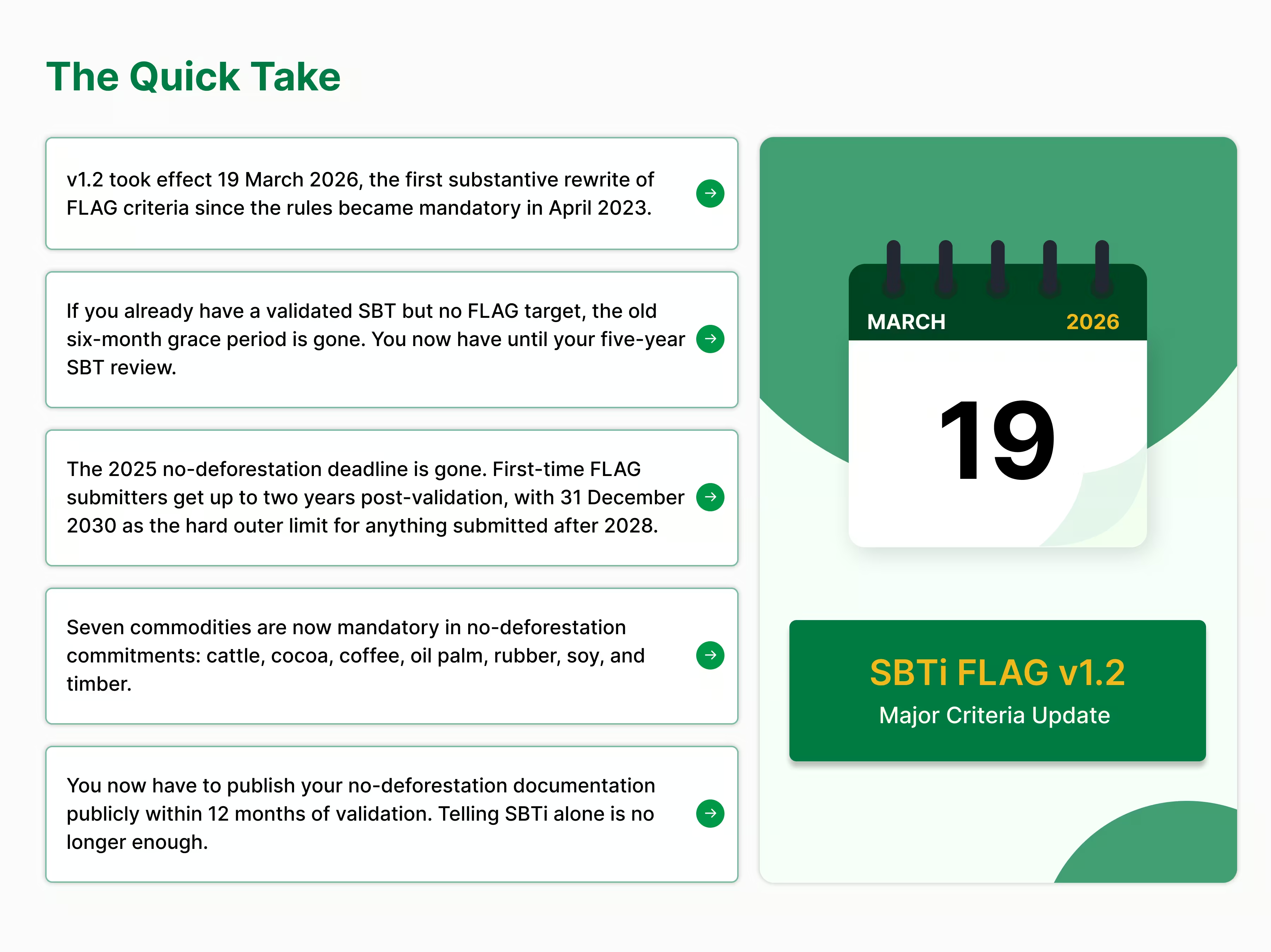
On 19 March 2026, the SBTi quietly redrew the deadlines that hundreds of companies had been planning around for years. If your sustainability team has a FLAG target sitting on a five-year review calendar, or a 2025 no-deforestation commitment you assumed was settled, that plan just changed.
This is the first time SBTi has touched the actual criteria of its Forest, Land and Agriculture (FLAG) guidance since it became mandatory back in 2023. Everything before this was either a voluntary phase or a minor edit. Version 1.2 is different. It rewrites who has to act, by when, and what “no-deforestation” actually requires you to prove.
Here is what changed, who it affects, and the six steps to get a FLAG target validated under the new rules.
Why FLAG Exists in the First Place
Most science-based targets cover the emissions companies are used to thinking about: energy, fuel, manufacturing. FLAG covers something else entirely: emissions from land. Agriculture, forestry, and the way land use changes over time, tracked all the way to the farm gate.
It is easy to underestimate how much this matters. Land-related activity drives roughly 22% of net global greenhouse gas emissions, around 13 billion tonnes of CO₂ equivalent every year, according to SBTi's FLAG Science-Based Target-Setting Guidance. The land sector is not just a source of emissions either; it is one of the biggest available levers for fixing the climate problem. Up to 37% of the emissions cuts the world needs by 2030 to stay on a 1.5°C path could come from land-sector action.
FLAG targets sit apart from a company's standard energy and industry SBTs, and they cover three distinct buckets:
- Land use change: deforestation, peatland drainage, coastal wetland conversion.
- Land management: enteric fermentation (yes, cow burps), fertiliser use, flooded rice paddies.
- Land-based removals: forest restoration, agroforestry, soil organic carbon.
FLAG has moved through three distinct phases to get here. It launched as a voluntary framework in September 2022. By April 2023, it became mandatory for any company meeting the criteria. Version 1.1 arrived in December 2023 with light editorial cleanup. Version 1.2, published in March 2026, is the first version that rewrites the rules rather than just polishing them.
Who Actually Has to Set a FLAG Target
Before getting into what changed, it is worth confirming whether any of this applies to you. Two separate triggers exist, and you only need to hit one of them to be in scope.
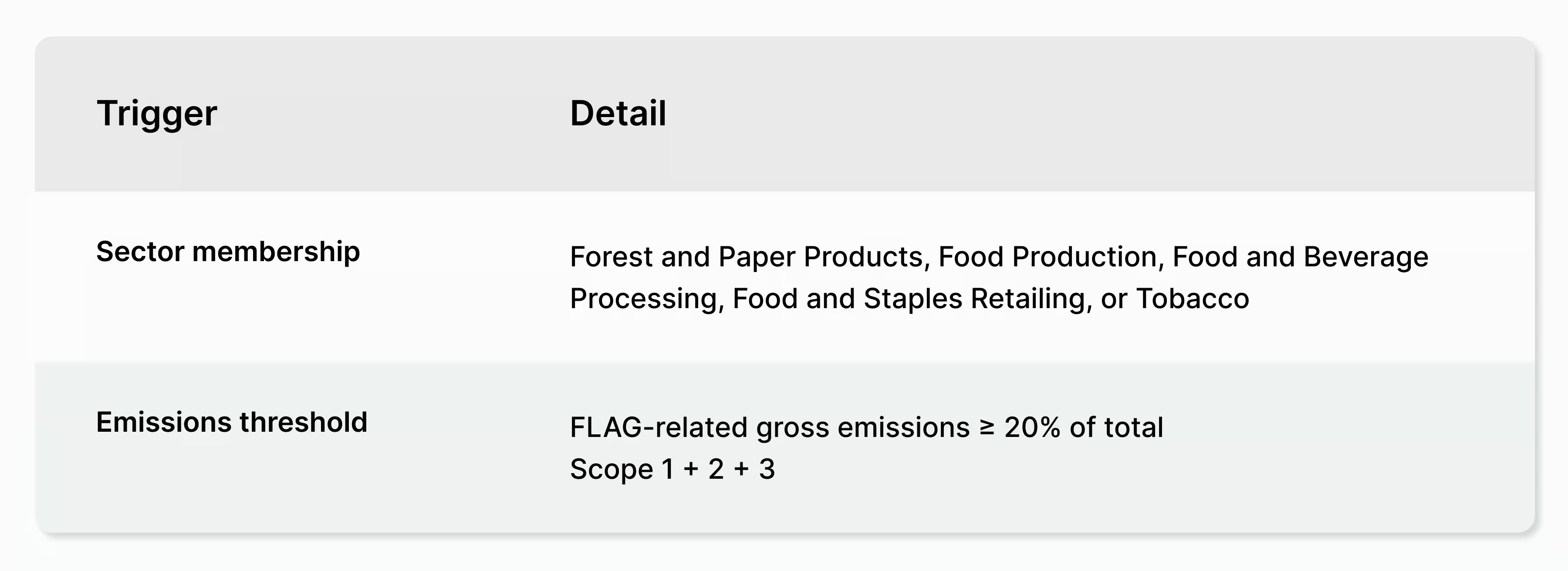
Two exemptions are worth knowing. SMEs are exempt from FLAG target-setting entirely. And if your FLAG-related emissions sit below 5% of your total Scope 1, 2, and 3 footprint, you are exempt from setting a standalone FLAG target. Those emissions still have to be folded into your energy and industry targets though, and you cannot use FLAG removals to offset them within that boundary.
There is also a less-known obligation that catches some companies off guard. If you meet the FLAG criteria and your Scope 3 emissions make up 40% or more of your total footprint, you need two separate Scope 3 targets: one FLAG, one energy and industry, each independently meeting its own 67% coverage threshold. They do not share a coverage pool.
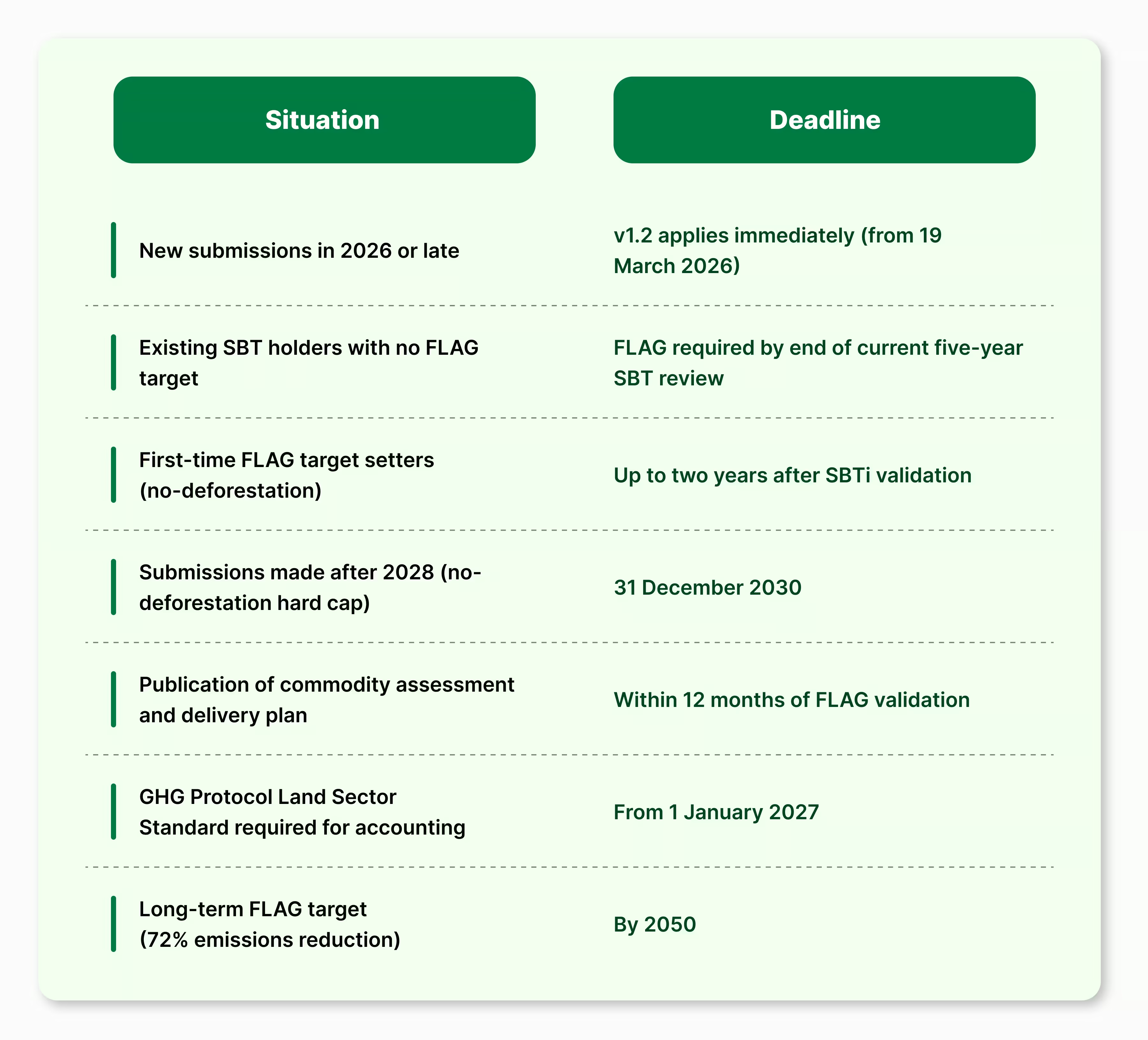
Key Deadlines at a Glance
What Changed in v1.2: The Five Updates
SBTi pushed this through using its “urgent revision” provision, a mechanism under clause 100 of its Standard Operating Procedure that lets it update standards outside the normal multi-year revision cycle. The full breakdown of what moved is in SBTi's Main Changes Document for Version 1.2. The SBTi technical team drafted it, the Technical Council approved it, and the Board of Trustees signed off after public consultation. Worth knowing: 83% of the FLAG criteria did not move at all. Everything that changed is confined to two criteria, FLAG-C1 (the deadline for existing SBT holders to add a FLAG target) and FLAG-C4 (the no-deforestation commitment).
1. The grace period for existing SBT holders is gone
Until now, if your company already had a validated science-based target but had not set a FLAG target yet, you had breathing room: six months from the publication of the GHG Protocol Land Sector and Removals Standard, which landed in January 2026. That window has been removed entirely.
The new rule is simpler and less forgiving. You must set your FLAG target by your mandatory five-year SBT review at the latest, and SBTi's language is explicit that you should move sooner if you can. If your five-year review lands in 2026 or 2027, FLAG is no longer something you can quietly push to next year's roadmap.
2. The no-deforestation deadline has real flexibility now, but a hard ceiling
The old 2025 no-deforestation deadline is gone. If you are setting a FLAG target for the first time, you now have up to two years from SBTi validation to actually achieve no-deforestation across your operations and supply chains. There is a hard outer limit though: any submission made after 2028 has to hit no-deforestation by 31 December 2030, with no exceptions.
If your company already has a no-deforestation commitment validated under the earlier v1.0 or v1.1 criteria with a 2025 date, you have an option, not an obligation. You can push that date out to no later than 31 December 2028, but it comes with a condition: you have to publicly disclose your progress against the original 2025 commitment first, including whatever barriers got in the way. SBTi's own recommendation is to keep your original commitment where you possibly can. Think of the 2028 option as a release valve, not an invitation to slow down.
One more wrinkle. If you submitted a target in 2025 and SBTi has not approved it yet, you can choose to voluntarily align with v1.2 instead of the older rules.
3. Two more commodities just became mandatory
No-deforestation commitments now have to explicitly cover seven primary deforestation-linked commodities, up from five. Coffee and rubber join the existing list of cattle, cocoa, oil palm, soy, and timber. This is not an arbitrary expansion. It brings SBTi's commodity scope in line with the EU Deforestation Regulation (EUDR), which already requires due diligence on these same seven.
The coverage requirement goes beyond what you buy directly. It extends to these commodities wherever they show up embedded in purchased products, including through animal feed pathways in livestock supply chains.
4. The 2020 cutoff date is now a rule, not a suggestion
Previously, using 2020 as your deforestation cutoff date was a recommendation, good practice but not enforced. Version 1.2 makes it a formal requirement. If 2020 genuinely is not achievable for specific parts of your value chain, you are allowed to use a later date, but it cannot be later than three years before your first FLAG submission, and you have to disclose and publicly justify the exception. Every other part of your value chain still has to hold the 2020 line, and once a cutoff date is set, it cannot be moved later.
5. You now have to publish, not just submit
Within 12 months of your FLAG target being validated, you are required to publish two things on your corporate website or in an authoritative policy document: the methodology and results of your commodity assessment across all seven commodities, and the key details of your delivery plan for the no-deforestation commitment.
Your commitment itself also has to go on the SBTi target dashboard, using SBTi's required wording: “[Company X] commits to no-deforestation across its primary deforestation-linked commodities, with a target date of [no later than two years after FLAG target submission date, and no later than 31 December 2030].” This is the detail that turns a private commitment into a public, checkable one.
What the Framework Actually Requires
Coverage thresholds
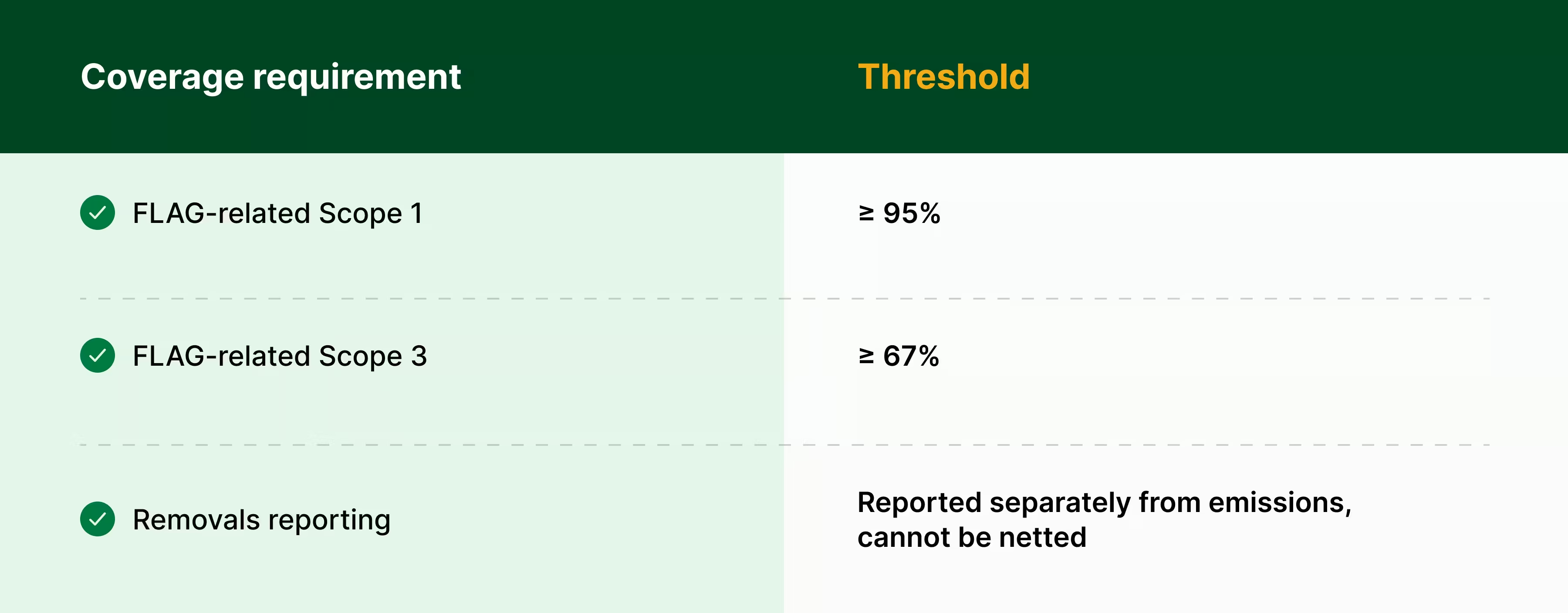
A few rules sit underneath these numbers that are easy to miss. FLAG abatement cannot be used to meet your energy and industry targets, and the reverse is also true. Land management CO₂ removals only count toward FLAG targets. That exists specifically so a good year of soil carbon sequestration cannot quietly cover up a bad year of fossil fuel emissions elsewhere in the business. And for near-term FLAG targets, purchased carbon credits do not count at all. Only in-chain removals, meaning the kind happening inside your own value chain, are eligible.
Choosing your pathway
SBTi gives you two ways to build a FLAG target, and you can blend them using the SBTi FLAG Aggregator Tool.
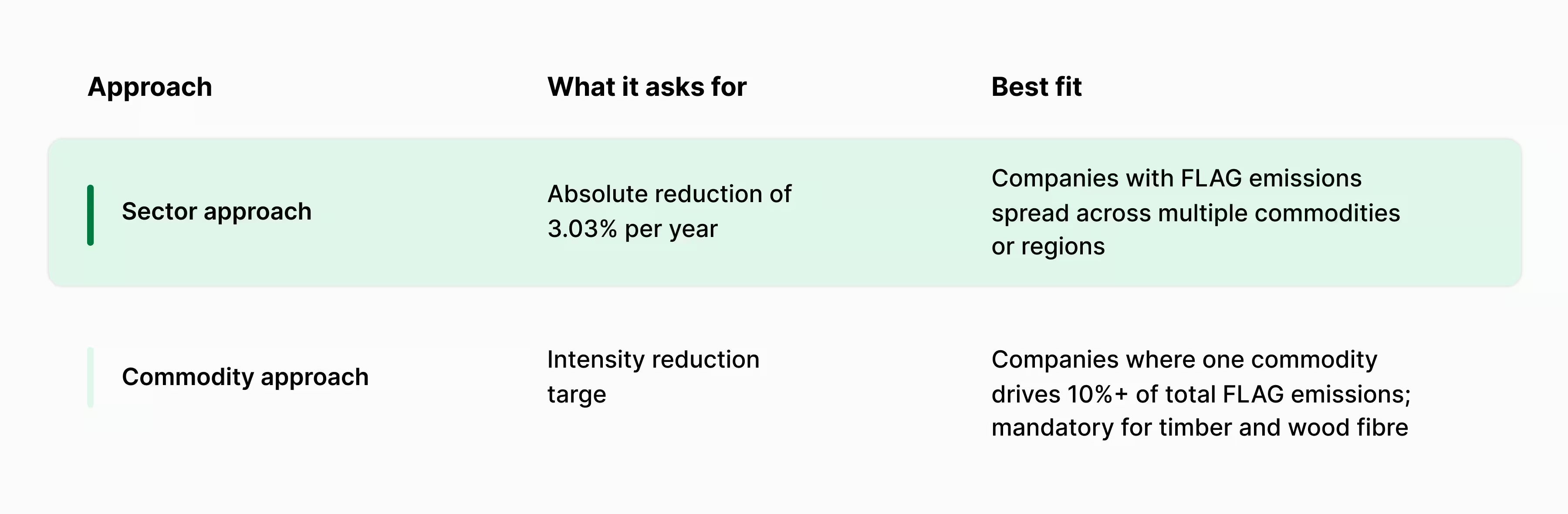
The commodity approach covers 11 specific commodities: beef, chicken, dairy, leather, maize, palm oil, pork, rice, soy, wheat, and timber and wood fibre, across 26 regional pathways. One date to circle: from 1 January 2027, the GHG Protocol Land Sector and Removals Standard becomes mandatory for FLAG accounting. If you are building your inventory now, build it to that standard from day one rather than retrofitting later.
One gap worth knowing before you commit to an approach: three of the seven commodities your no-deforestation commitment must cover, cocoa, coffee, and rubber, have no intensity pathway in the commodity approach. If either of those drives a meaningful share of your FLAG emissions, you'll be using the sector approach for it regardless of how concentrated your footprint is.
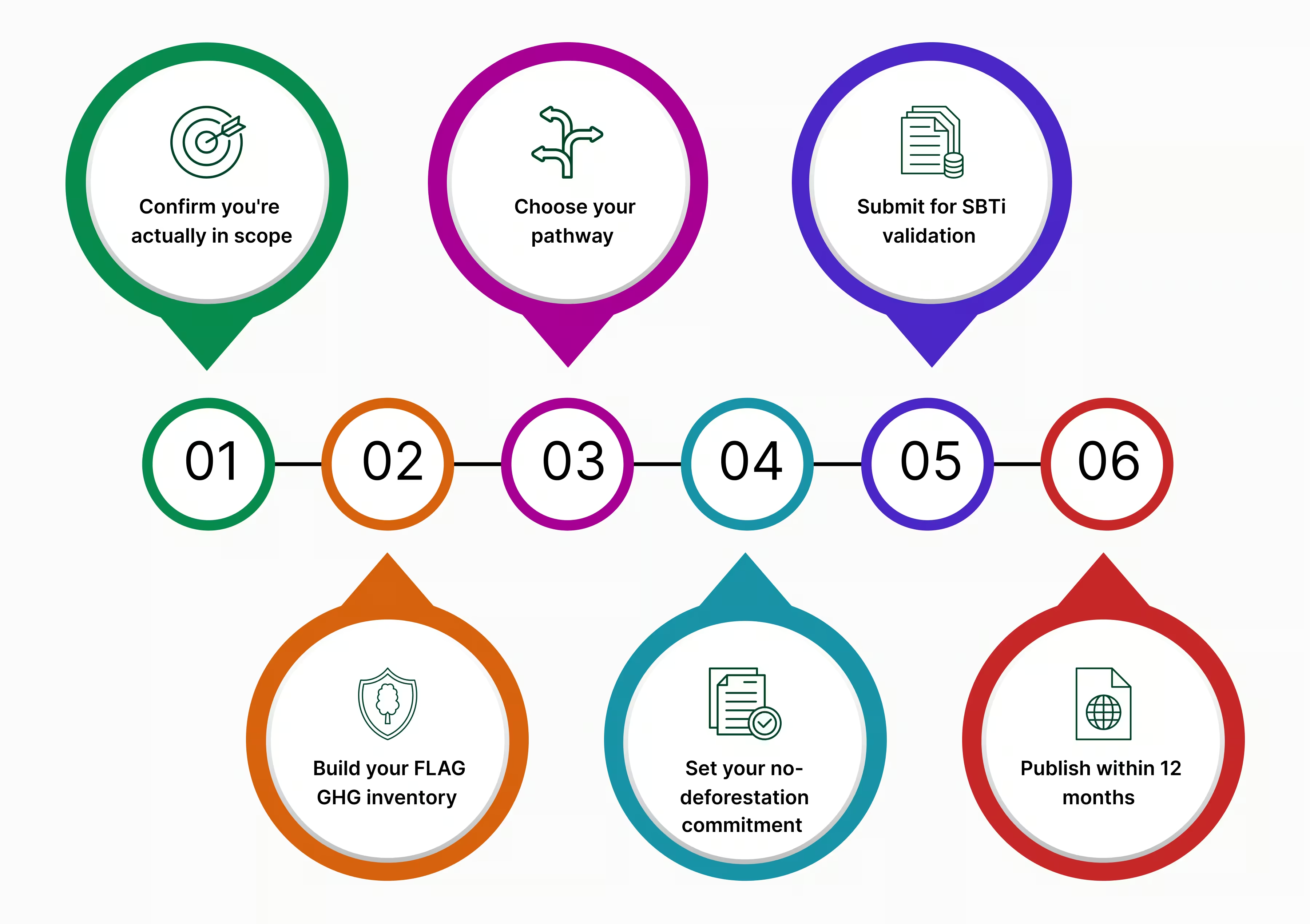
Step 1: Confirm you're actually in scope
Check sector membership and run the numbers on whether FLAG-related gross emissions clear 20% of your total Scope 1, 2, and 3. If your last scope check came in close to either threshold, it is worth rerunning against the updated v1.2 criteria rather than assuming the old answer still holds.
Step 2: Build your FLAG GHG inventory
Quantify land use change emissions using dynamic or static LUC methodology, land management emissions, and land-based removals, aligned to the GHG Protocol Land Sector and Removals Standard. Hit the 95% Scope 1 and 67% Scope 3 coverage thresholds, and keep removals reported separately since they cannot be netted against emissions within the same target.
Step 3: Choose your pathway
Decide between the sector approach, the commodity approach, or a blend of both. Use sub-global pathways where they exist for your commodities, and run everything through the SBTi FLAG Aggregator Tool if you are combining approaches into one consolidated target.
Step 4: Set your no-deforestation commitment
Assess all seven primary commodities across your value chain, including where they show up through feed or embedded ingredient pathways. The 2020 cutoff is the default requirement across your value chain. Where it genuinely is not achievable for specific portions, document an alternative date, no later than three years before your first FLAG submission, and prepare the public justification SBTi will expect to see. Set your target date within two years of submission, then post the required SBTi wording on the SBTi target dashboard.
Step 5: Submit for SBTi validation
Assemble the full package: base year emissions, activity data, Scope 1 and 3 coverage demonstrations, and removals documented separately. One detail that catches teams off guard: if you are submitting in 2026 or later, v1.2 applies even if you started the process before 19 March 2026. There is no grandfather clause for work already in progress.
Step 6: Publish within 12 months
Within 12 months of validation, get your commodity assessment methodology, your assessment results, and your no-deforestation delivery plan onto your corporate website or into a relevant policy document. This is the step that turns your target from a private commitment into something a customer, investor, or auditor can actually go check.
Where This Gets Genuinely Hard, and How KarbonWise Helps
By the time most teams reach Step 4, they hit the same wall. The no-deforestation commitment needs commodity-level traceability data that nobody in the business centrally owns. Procurement has the supplier lists. Sustainability has the emissions factors. Almost nobody has both, mapped against seven commodities, each with its own cutoff date and disclosure trail.
KarbonWise's SBTi and Net-Zero Roadmap tool is built around exactly this gap. Instead of assembling base year data, activity data, and coverage evidence across disconnected spreadsheets, it brings the emissions data, scenario modelling, and submission documentation FLAG requires into a single workflow.
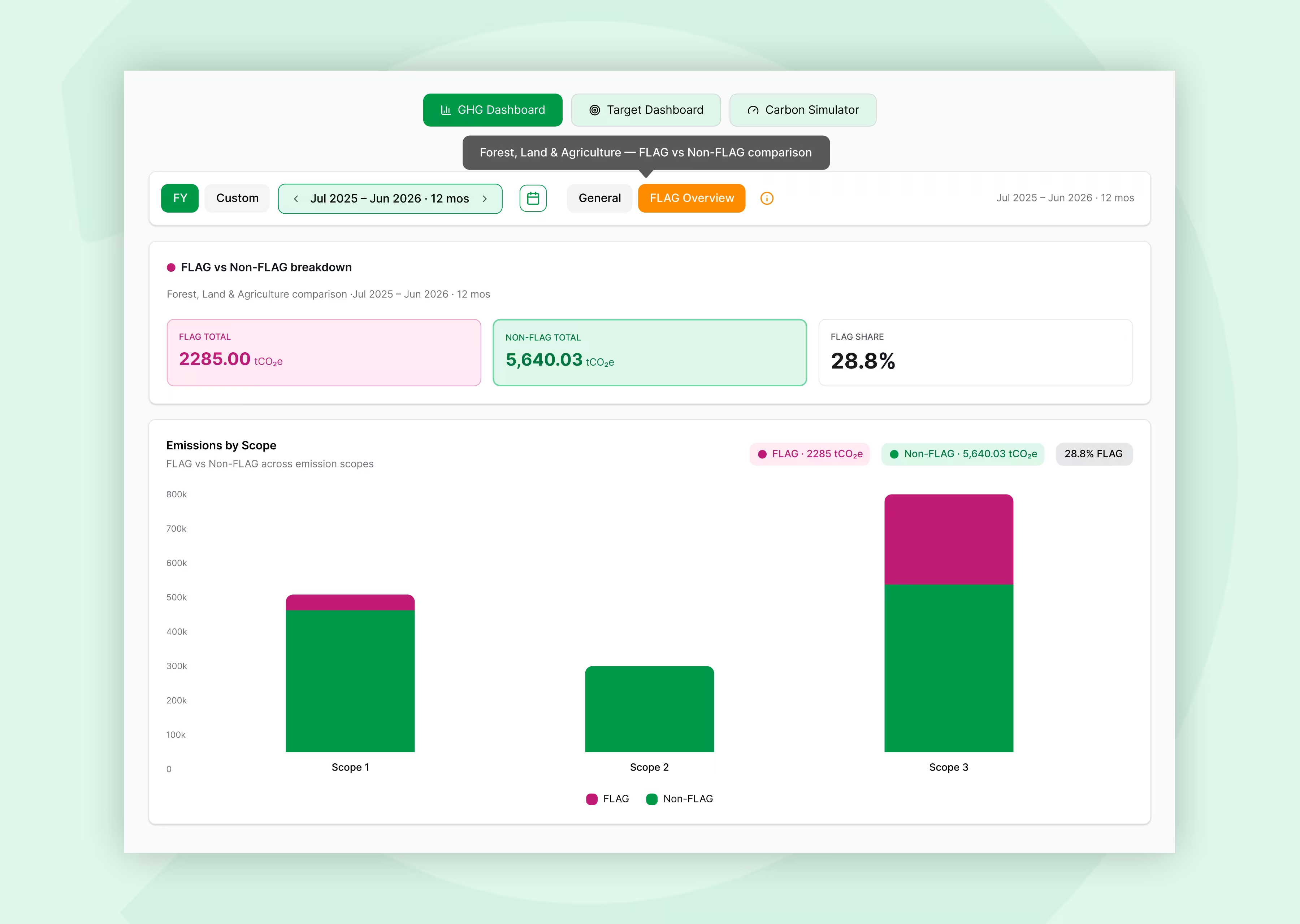
It lines up directly with the steps above. For Step 2, KarbonWise prepares audit-ready emissions data structured to your existing reporting setup, so your FLAG inventory does not need to be rebuilt from scratch outside your core accounting. For Step 3, the platform runs sector-specific scenario modelling so you can compare the sector and commodity approaches against your own activity data before locking in a pathway. For Step 5, KarbonWise's team provides end-to-end support through submission, meaning your inventory and documentation get reviewed before they reach SBTi, not after a rejection comes back.
None of this replaces the judgment calls FLAG still requires. Cutoff date exceptions and target-date decisions still need a sustainability lead's sign-off. What it removes is the operational drag of pulling that judgment together from five disconnected sources.
Talk to KarbonWise about your FLAG submission →
{{cta}}
{{accordion}}
{{sources}}

Continue Reading
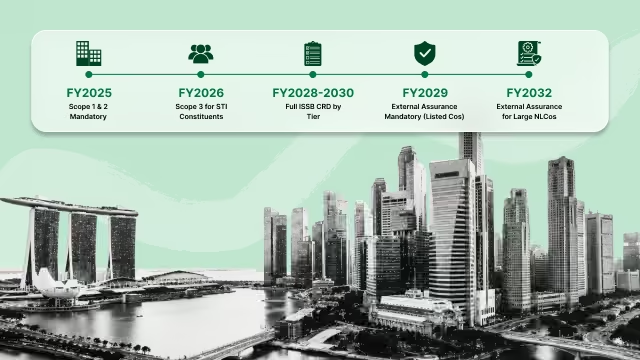
ACRA's 3-Tier Climate Reporting Rules: Deadlines, Disclosures, and What to Do No
Singapore's framework is climate-first by design. Under ACRA's proposed Sustainability Disclosure Standards, SFRS S2 (climate disclosures) would be mandatory. SFRS S1 (broader sustainability disclosures covering biodiversity, human capital, and social impact) would remain voluntary for now. This narrows the immediate reporting scope while keeping GHG emissions data mandatory

The EU Just Cut CSRD Reporting Requirements by 60%. Here Is What Actually Changed.
The EU has significantly changed CSRD reporting requirements. Explore the revised ESRS, what changed, who remains in scope, and what businesses need to do next.

How to conduct a double materiality assessment: A practical step-by-step guide (2026)
Learn how to conduct a Double Materiality Assessment with this practical step-by-step guide covering impact and financial materiality, IROs, stakeholder engagement, scoring, materiality matrices, and ESG reporting.


.avif)








.svg)
.svg)