Netflix, Binge-Watching & the Hidden Carbon Footprint of Streaming Culture
Streaming feels effortless, but every Netflix session relies on data centres, networks, and devices that consume energy continuously. Discover the hidden carbon footprint of streaming culture and learn simple ways to reduce your digital impact.


.svg)
Table of Contents


Everybody talks about the rise of OTT platforms and how streaming has transformed entertainment, but very little attention is paid to the environmental system operating underneath it all. A Netflix session feels effortless and almost invisible from a sustainability perspective, yet every time someone presses play, data centres, networks, home Wi-Fi, and devices begin consuming energy continuously in the background. So rather than looking at this only through numbers and infrastructure, I thought it would be more interesting to walk through a fairly ordinary Netflix evening from switching on the TV after work to letting autoplay quietly run for hours and use that journey to understand the hidden sustainability impact of streaming culture.
The moment I switch Netflix on
Most evenings, I come home around 7pm, throw my bag somewhere near the couch, switch on the TV, and open Netflix almost without thinking about it. Usually, I spend the first few minutes scrolling endlessly before finally settling on something, and before I know it, one episode becomes three because autoplay quietly takes over. It all feels completely harmless and honestly pretty passive, but the interesting thing is that the moment I open Netflix, a massive digital machinery quietly activates behind the screen - my TV begins drawing electricity continuously, the Wi-Fi router starts handling a steady stream of data, and Netflix’s servers and content networks begin routing video in real time just to keep everything seamless.
A Netflix evening, and what it adds up to
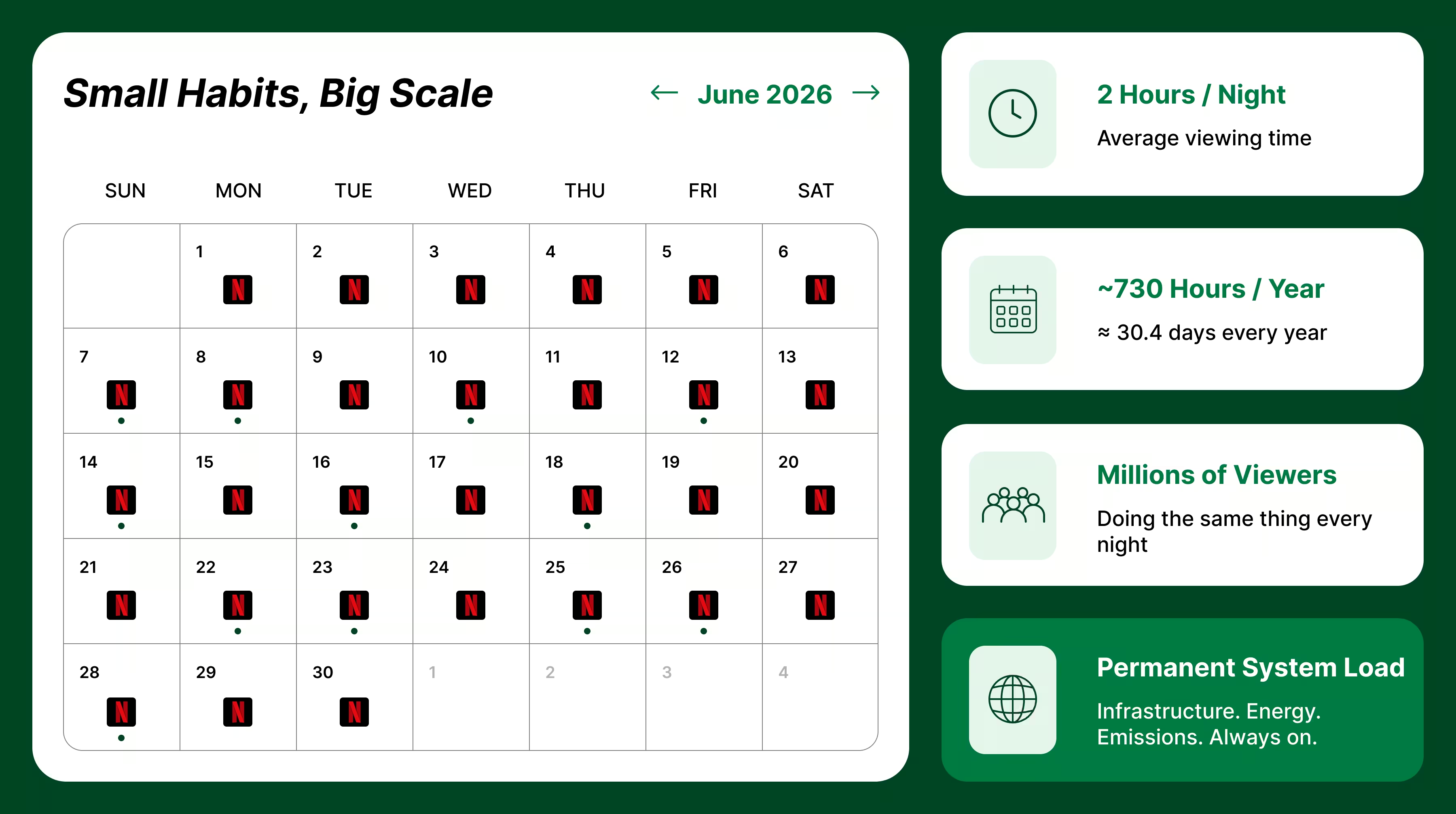
A Netflix evening never feels like something you are consuming. It feels like a pause that just stretches longer than planned. One episode becomes another, and before anything feels like it has changed, the evening is already gone and if you zoom out, this is not occasional anymore. It is routine. A couple of hours every night quietly turns into close to 730 hours in a year. That is not binge-watching. That is just a Tuesday.
The easier way to understand that is not through infrastructure, but through something more familiar. A single hour of streaming is roughly like leaving a few LED bulbs running for several hours - nothing dramatic in isolation. But it stops being small when it repeats every evening for a year, across hundreds of millions of people doing exactly the same thing. According to IEA analysis, streaming one hour of video typically consumes around 0.077 kWh of electricity, with the television accounting for the bulk of it. The number that felt harmless starts looking quite different at that scale.
Why it feels like nothing is being used
This is the part that makes streaming genuinely unusual. There is no noise, no heat, nothing that signals consumption is happening. You press play and everything just appears. That smoothness is deliberate - and it removes every physical clue of the energy grid tethered to your living room. Data centres do not start when you open Netflix. They are already on, all the time, the way a busy airport never actually shuts down between flights. Networks stay live the way roads stay open even when no car is on them. It is infrastructure that exists in a permanent state of readiness, whether you are watching or not.
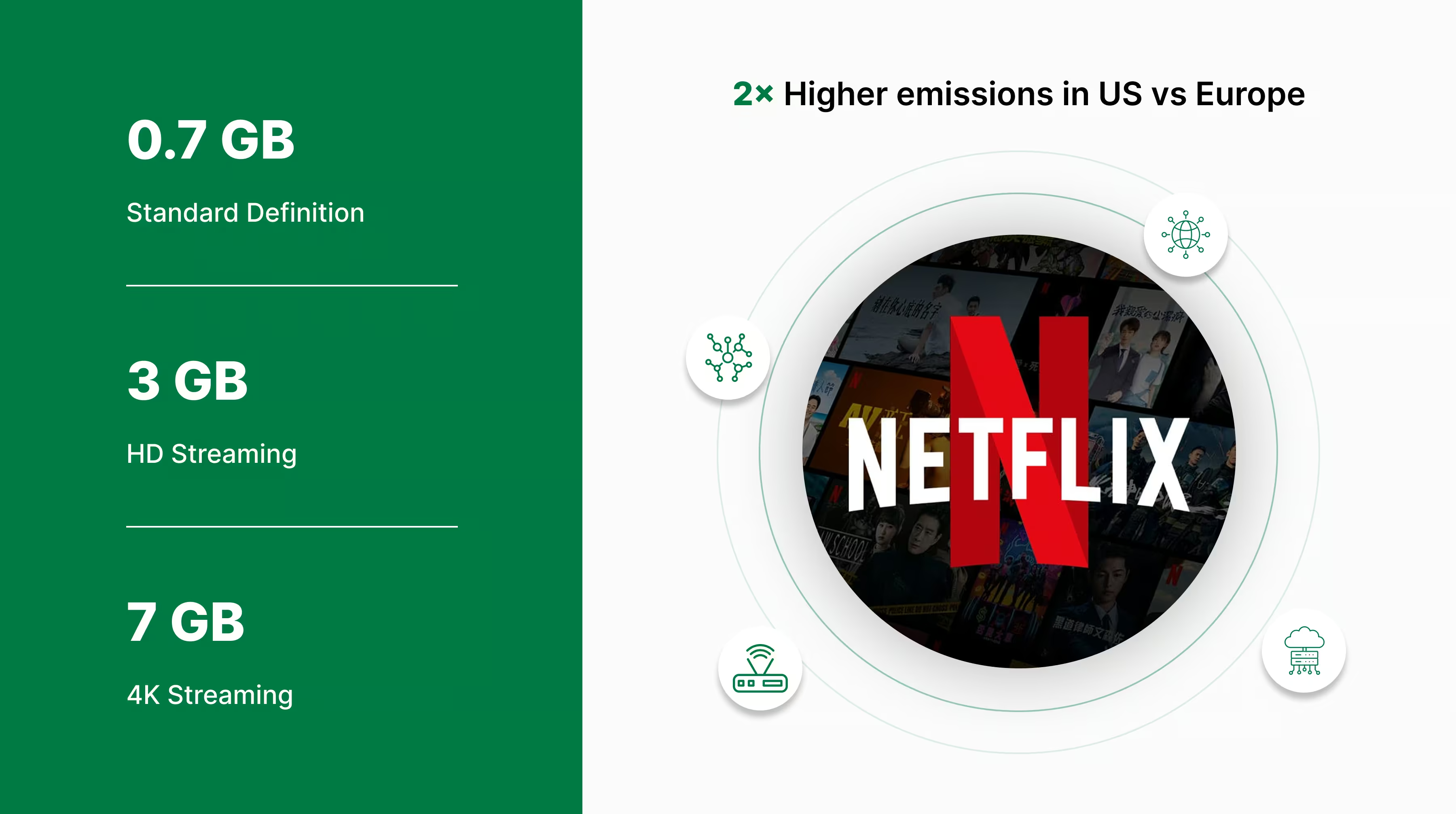
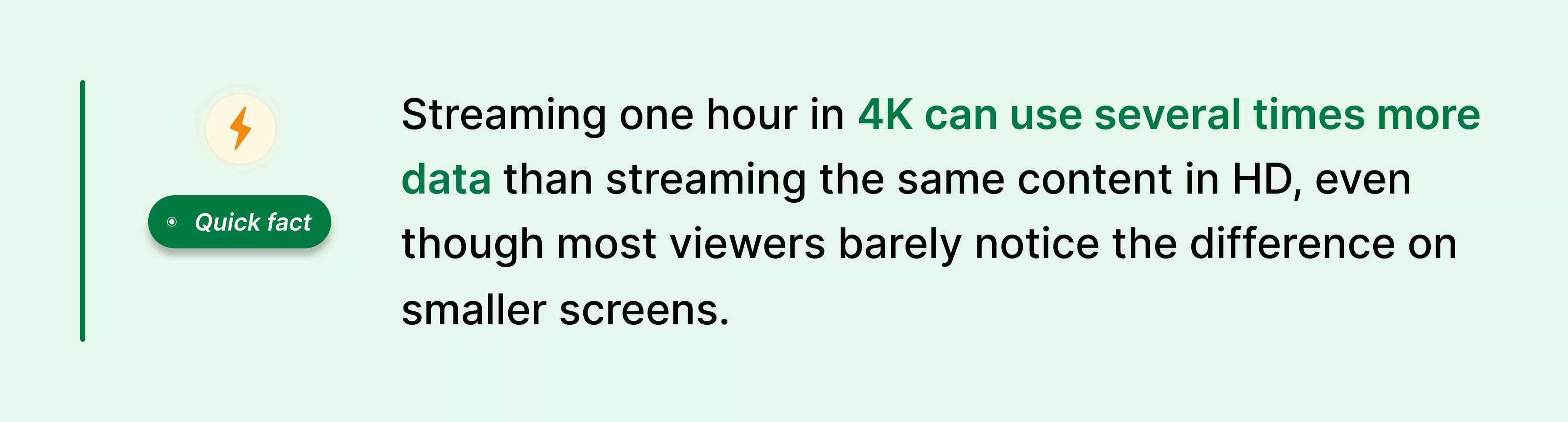
Video quality adds another layer to this. Standard definition uses around 0.7 GB per hour, HD around 3 GB, 4K around 7 GB. The experience of watching looks identical. The load on the system behind it does not. And the carbon footprint of that same hour also depends heavily on where in the world you are watching from. A viewer in the US generates roughly twice the emissions per hour of streaming compared to someone in Europe - purely because of differences in how each grid generates electricity. Same content, same screen, very different footprint.
The part that is not really about Netflix anymore
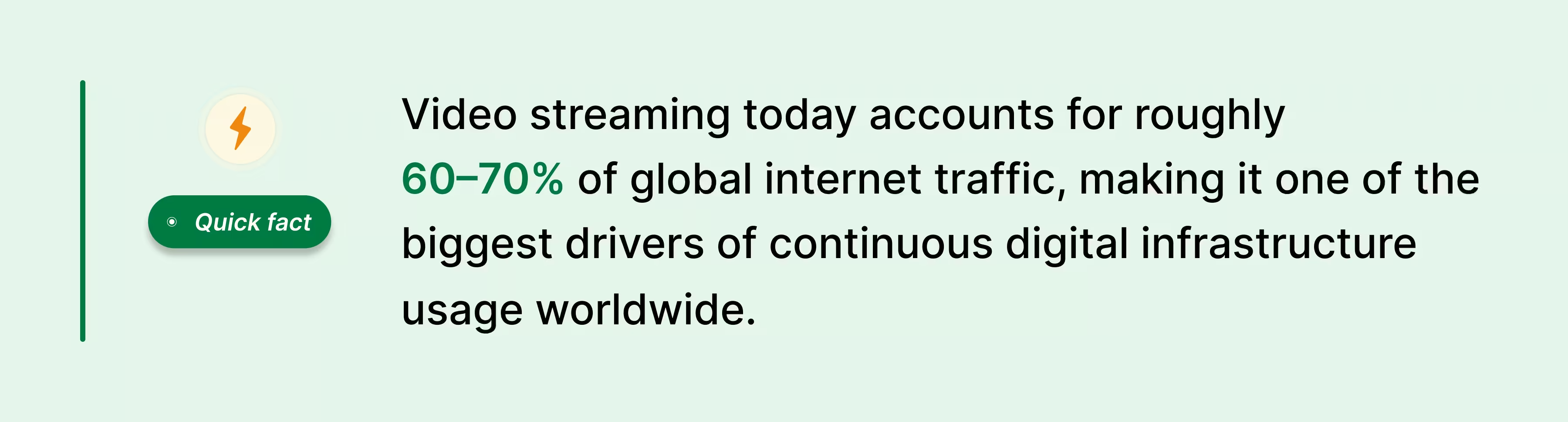
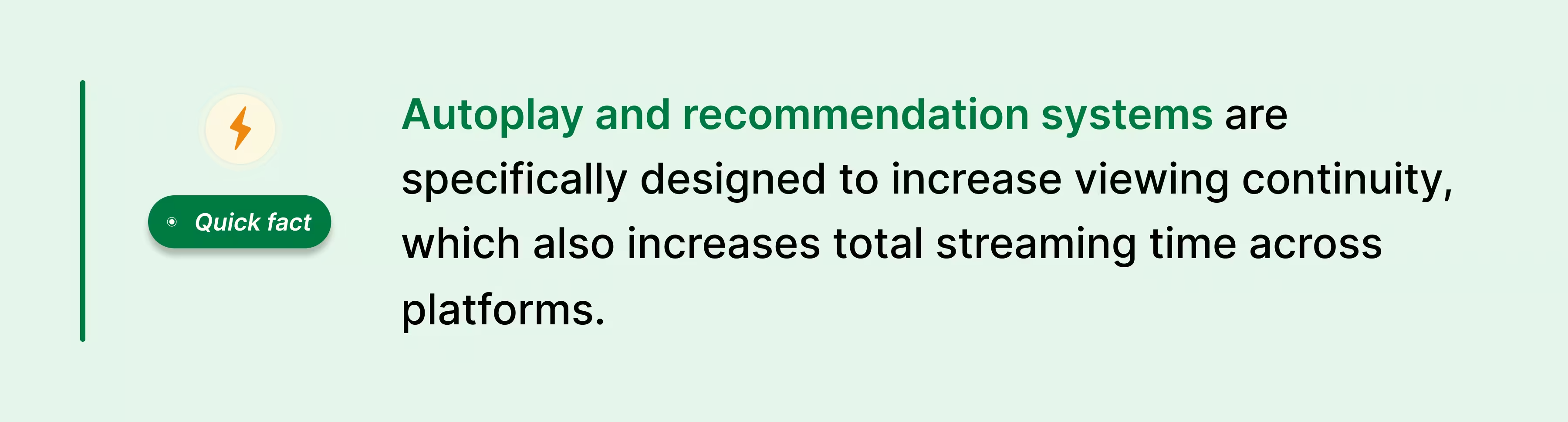
Here is where it gets interesting. Netflix is just the most visible version of something that now defines almost every digital habit. Every major platform - video, music, social, gaming -is built to keep the experience going. Autoplay, recommendations, instant loading: none of these are accidents. They are features designed specifically to remove the moments where you might stop.Which means the footprint of streaming is not just about the technology. It is about how the technology is designed to be used - and how much longer that design keeps you inside it than you intended.
And that is why connecting digital behaviour to environmental impact is so hard. There is no signal. No receipt. It feels like background life, not a choice being made. But when that pattern plays out across hundreds of millions of people every single day, it stops being individual behaviour and becomes a permanent, global system load that never really pauses.
What you can actually do
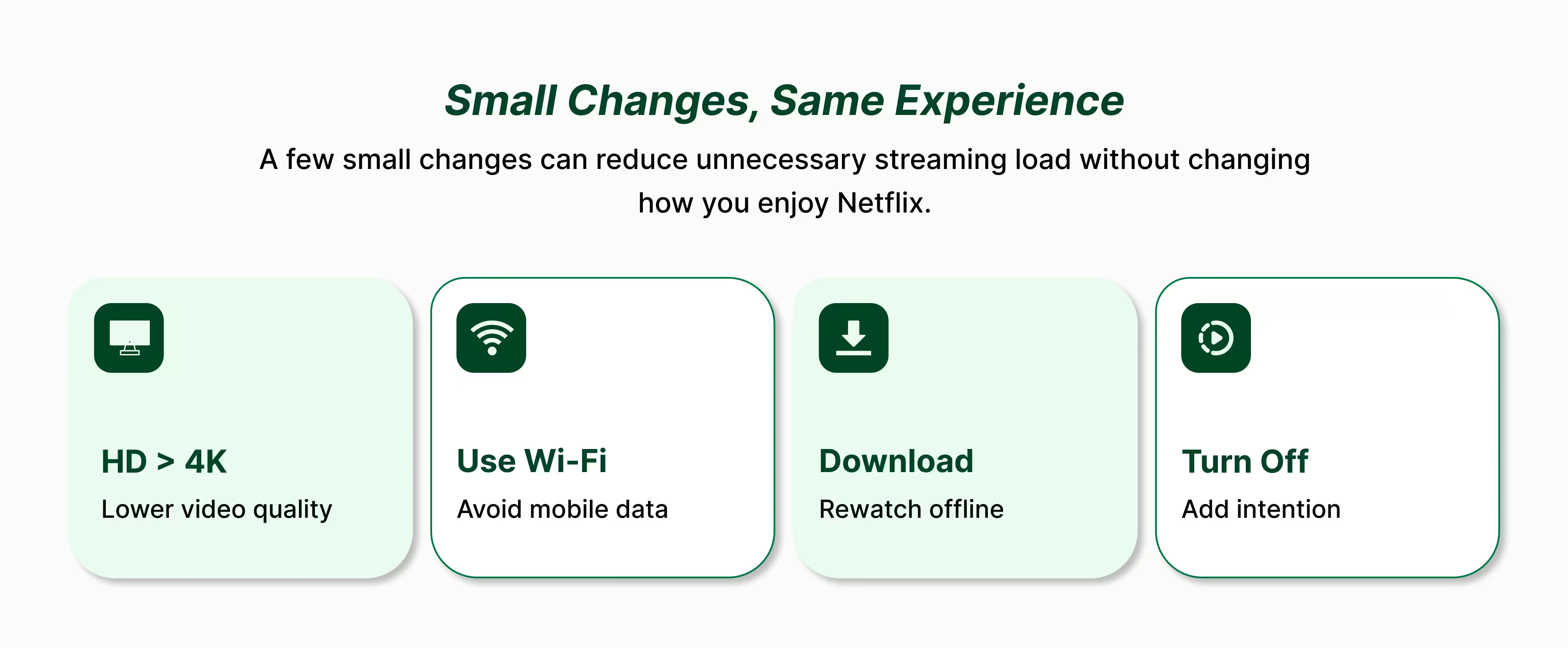
None of this is an argument for watching less Netflix. But once the system behind streaming becomes visible, a few small decisions start making more sense - not as sacrifice, but as things worth knowing.
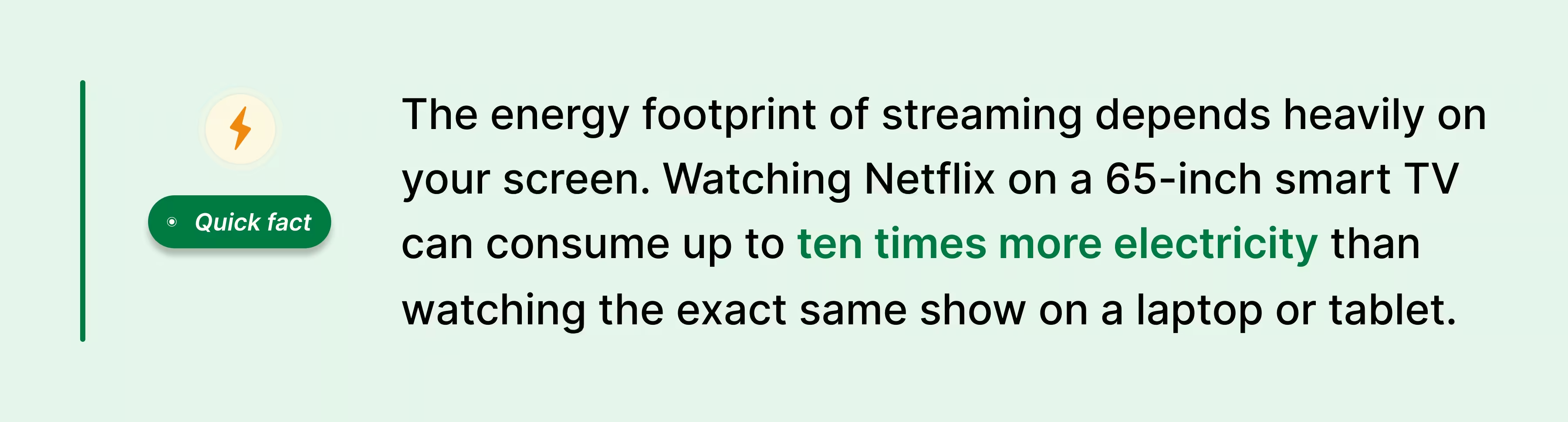
Lower the video quality on smaller screens. On a laptop or phone, the difference between HD and 4K is genuinely undetectable to most people. The difference to data load is not. Watch on Wi-Fi rather than mobile data where possible - mobile networks use significantly more energy to transmit the same stream. Download content you know you will rewatch rather than streaming it fresh each time. Turn off autoplay: Do this not just for environmental reasons, but to reintroduce intentionality. Forcing a manual click between episodes breaks the friction-free loop that keeps you on the couch longer than you planned.
Where KarbonWise fits into this
This invisibility problem isn't unique to our living rooms. It is the exact same blind spot that modern organizations run into when they try to manage their own environmental footprint. Just as a viewer cannot see the data centers or grid mix behind a single click of the "Play" button, a company often cannot see the true impact sitting across its cloud infrastructure, logistics network, or global supply chains. The challenge usually isn’t a lack of data; it’s that the data is deeply fragmented. Most organizations already possess the raw metrics, but they sit in isolated silos - across cloud infrastructure, logistics logs, and vendor invoices - that were never built to talk to each other. It is enough to file a compliance report, but not enough to actually drive business decisions.
Think of a company trying to manage its Scope 3 emissions. Without clear visibility, they just see a massive, static number on a spreadsheet. They cannot tell which specific supplier category is driving 40% of the load, or which product line holds the real lever for reduction. Like our Netflix habits, it becomes a vague background cost rather than a series of distinct, intentional choices.
That is the gap KarbonWise is built to close. By connecting Scope 1, 2, and 3 emissions directly with product-level analysis - Life Cycle Assessments (LCA) it makes the invisible parts of an enterprise visible. The goal isn't just to accumulate more data, but to map that data so clearly across specific processes, products, and choices that it finally points to a decision.
See where you actually stand
Once the system becomes visible, the natural next question is - where do I actually stand? KarbonWise's Personal Footprint Calculator lets you map how your everyday choices, including digital activity and streaming, translate into real emissions benchmarked against others in your country. Start with where you are, add what your day looks like, and get a snapshot that is specific to you rather than a global average.
{{cta}}
Streaming will always feel effortless. That is exactly why it became part of everyday life so fast. But once you see what sits behind that effortlessness - the infrastructure, the design decisions, the grid behind the screen - the experience shifts slightly. Not enough to ruin a Tuesday evening. But enough that you cannot quite unsee it.
Convenience was never weightless. It just had very good UX.
{{accordion}}
{{sources}}

Continue Reading

Primary vs Secondary Emissions Data: Key Differences and When to Use Each
Learn the key differences between primary and secondary emissions data, when to use each, and how better data quality supports more accurate carbon accounting and Scope 3 reporting.



.avif)








.svg)
.svg)