ACRA's 3-Tier Climate Reporting Rules: Deadlines, Disclosures, and What to Do No
Singapore's climate reporting requirements are already here. Understand the 3-tier structure, SFRS S2 disclosures, reporting deadlines, and how to prepare for the FY2029 assurance requirement.

.svg)
Table of Contents


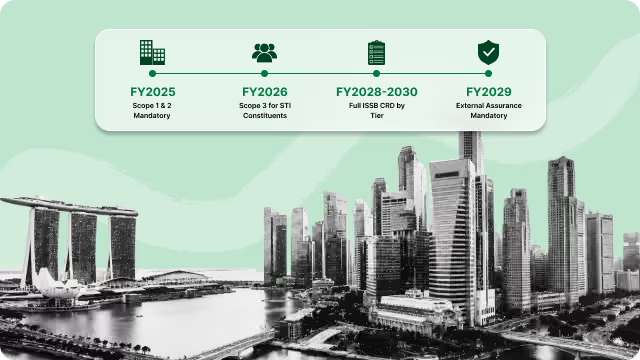
Singapore's climate reporting deadlines have arrived. From FY2025, every SGX-listed company in Singapore must report Scope 1 and Scope 2 greenhouse gas emissions. STI constituents are already required toreport Scope 3 this year. And from FY2029, external assurance over emissions data becomes mandatory across all listed tiers. If your company has not started building the systems to support these requirements, the time to start is now.
Singapore's Climate Reporting Roadmap: What Changed in August 2025
Singapore's climate disclosure framework was developed jointly by ACRA and SGX RegCo, aligned with the International Sustainability Standards Board (ISSB) and its flagship standard, IFRS S2. Singapore has adapted this into SFRS S2.
Singapore's framework is climate-first by design. SFRS S2 (climate disclosures) is mandatory. SFRS S1 (broader sustainability disclosures covering biodiversity, human capital, and social impact) remains voluntary for now. This narrows the immediate reporting scope while keeping GHG emissions data mandatory.
In August 2025, ACRA and SGX RegCo extended timelines for several company categories to allow more time for capability building. Those revised deadlines are what apply today. If you were tracking an earlier version of the roadmap, check your tier again, because the dates have changed.
One filing requirement finance teams frequently miss: climate reports must be filed at the same time as annual financial statements. The exception is for companies that have conducted external assurance on their sustainability report, in which case filing can happen no later than five months after the financial year end. For everyone else, ESG teams are now operating on financial audit timelines rather than the extended schedules sustainability reporting has historically allowed.
Who Needs to Report? The 3-Tier Structure
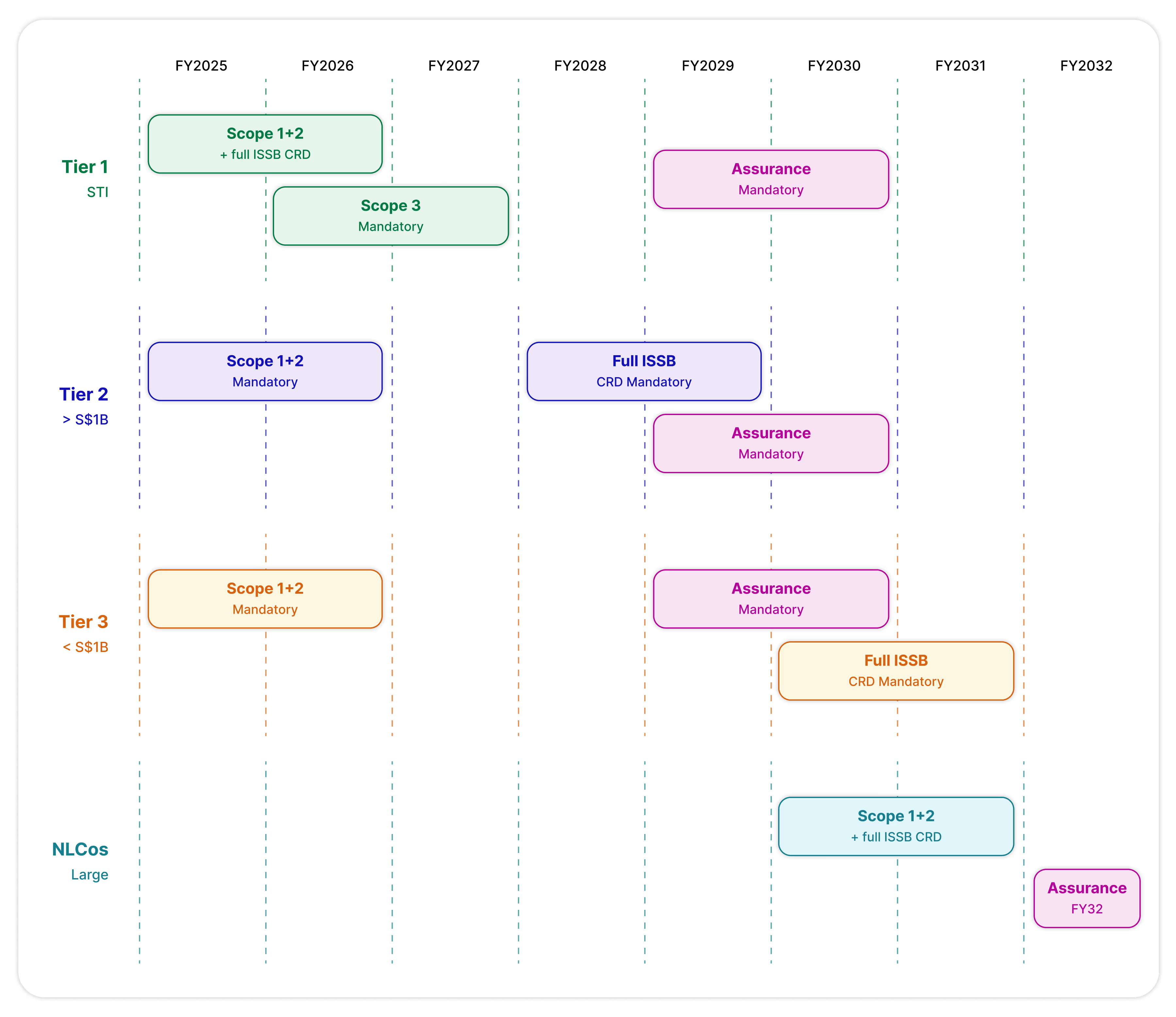
Singapore's framework divides companies into three listed tiers based on market capitalisation, plus a separate category for large non-listed companies (NLCos).
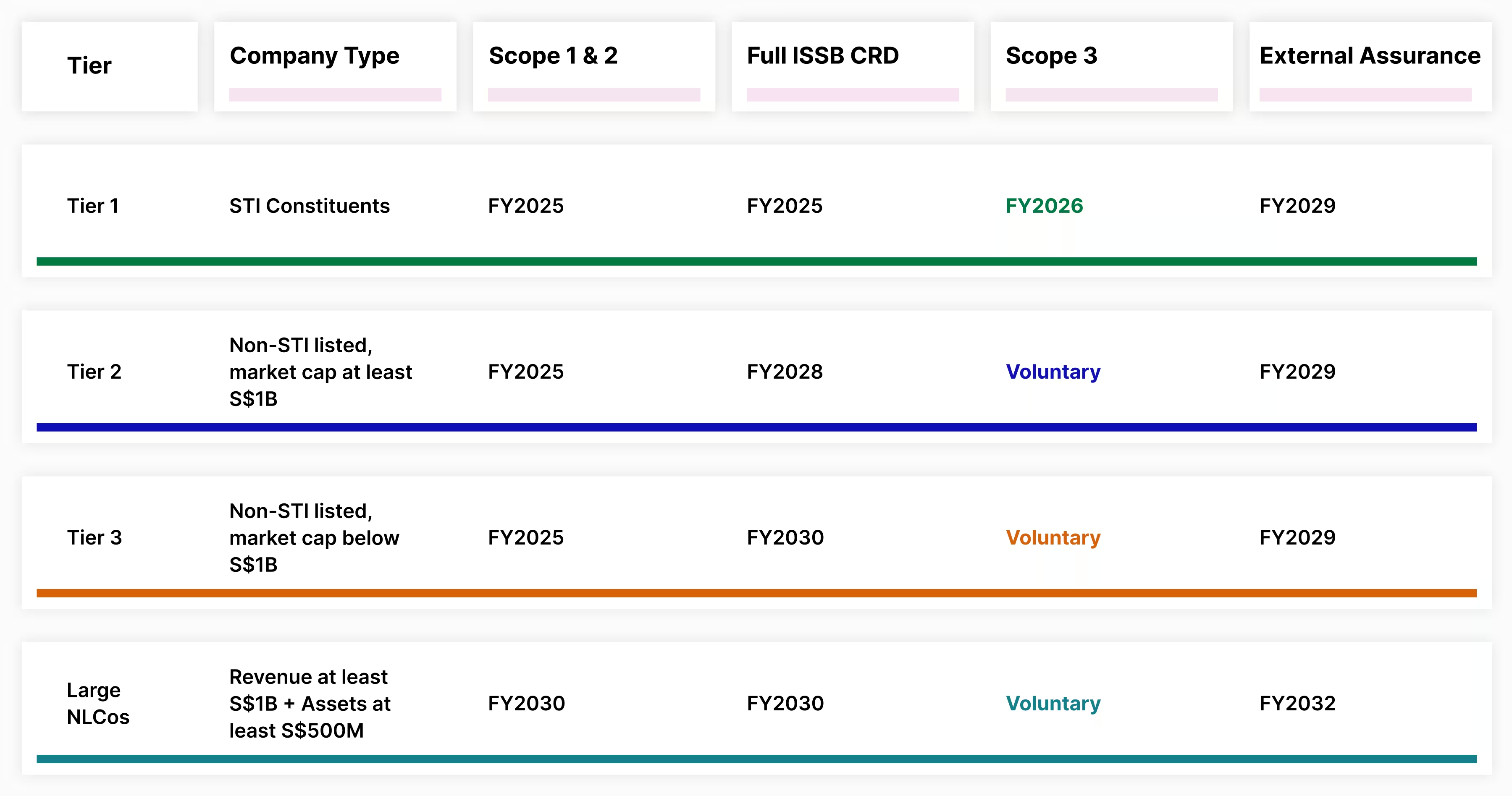
A few points from this table are worth flagging.
Scope 1 and 2 reporting is already live for all listed companies. There is no grace period remaining regardless of tier or market cap.
STI constituents face the tightest deadlines. Full ISSB CRD disclosures and Scope 3 both apply from FY2025 and FY2026 respectively, leaving very little room for incremental preparation.
The supply chain pressure is already arriving. STI companies reporting Scope 3 from FY2026 will need verified emissions data from their suppliers. If you supply a Tier 1 company, that request is likely already on its way.
Large non-listed companies should verify whether both thresholds apply: annual revenue of at least S$1 billion and total assets of at least S$500 million. Both conditions must be met for the NLCo requirements to apply.
SFRS S2 Disclosure Requirements: The Four Pillars Explained
The standard organises disclosures across four pillars, aligned with the ISSB's IFRS S2 framework:
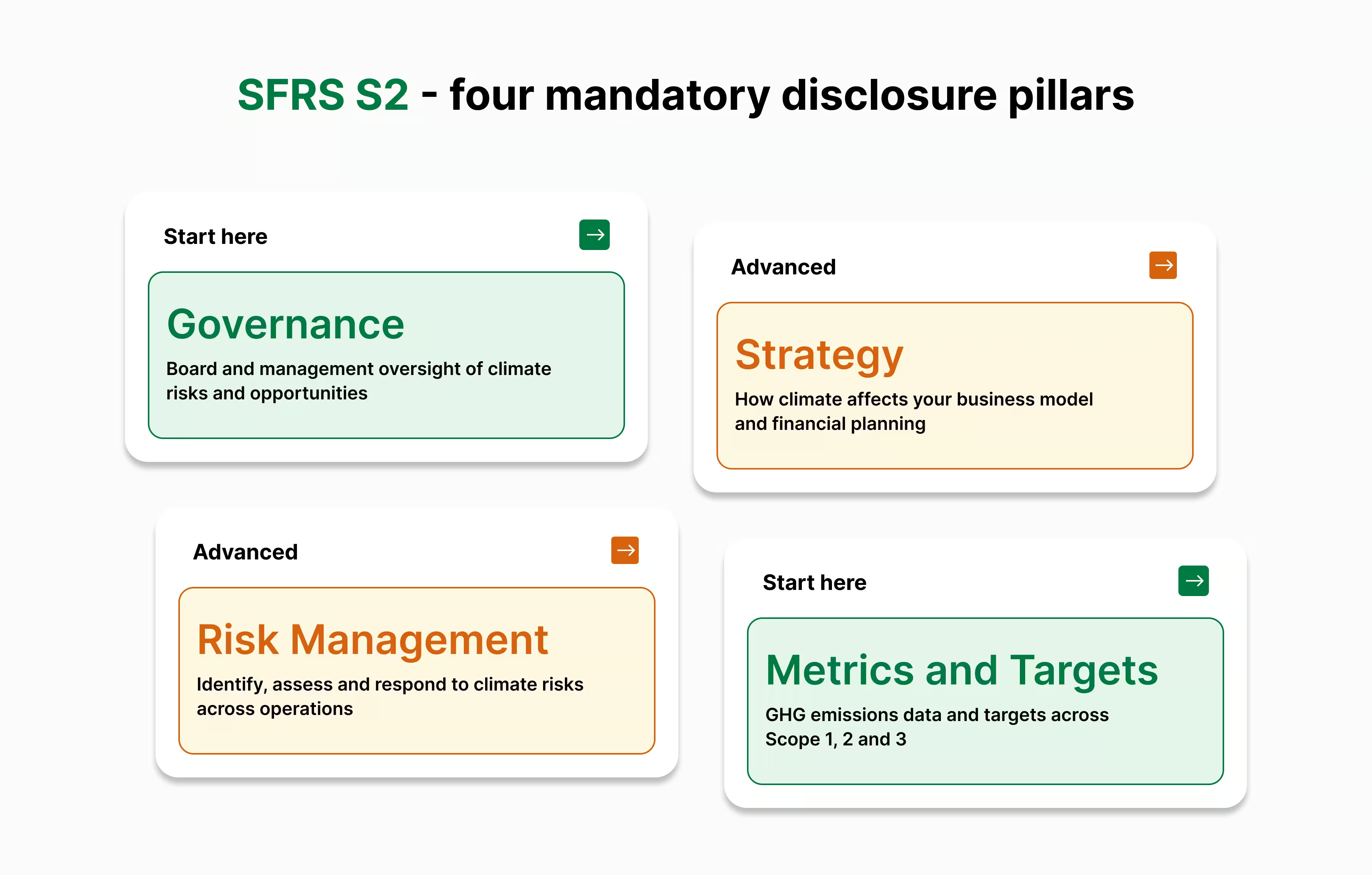
Governance covers how your board and senior management oversee climate-related risks and opportunities, including accountability structures and decision-making processes.
Strategy covers how climate risks and opportunities affect your business model, financial planning, and long-term operations, including scenario analysis against recognised warming pathways.
Risk Management covers how your company identifies, assesses, prioritises, and responds to climate-related risks across your operations and value chain.
Metrics and Targets covers your GHG emissions data and the targets you have set against them.
Governance and Metrics and Targets map most directly to existing board structures and emissions data, making them the practical starting point. Strategy and Risk Management require scenario analysis across a five-to-thirty-year horizon and will take longer to build out.
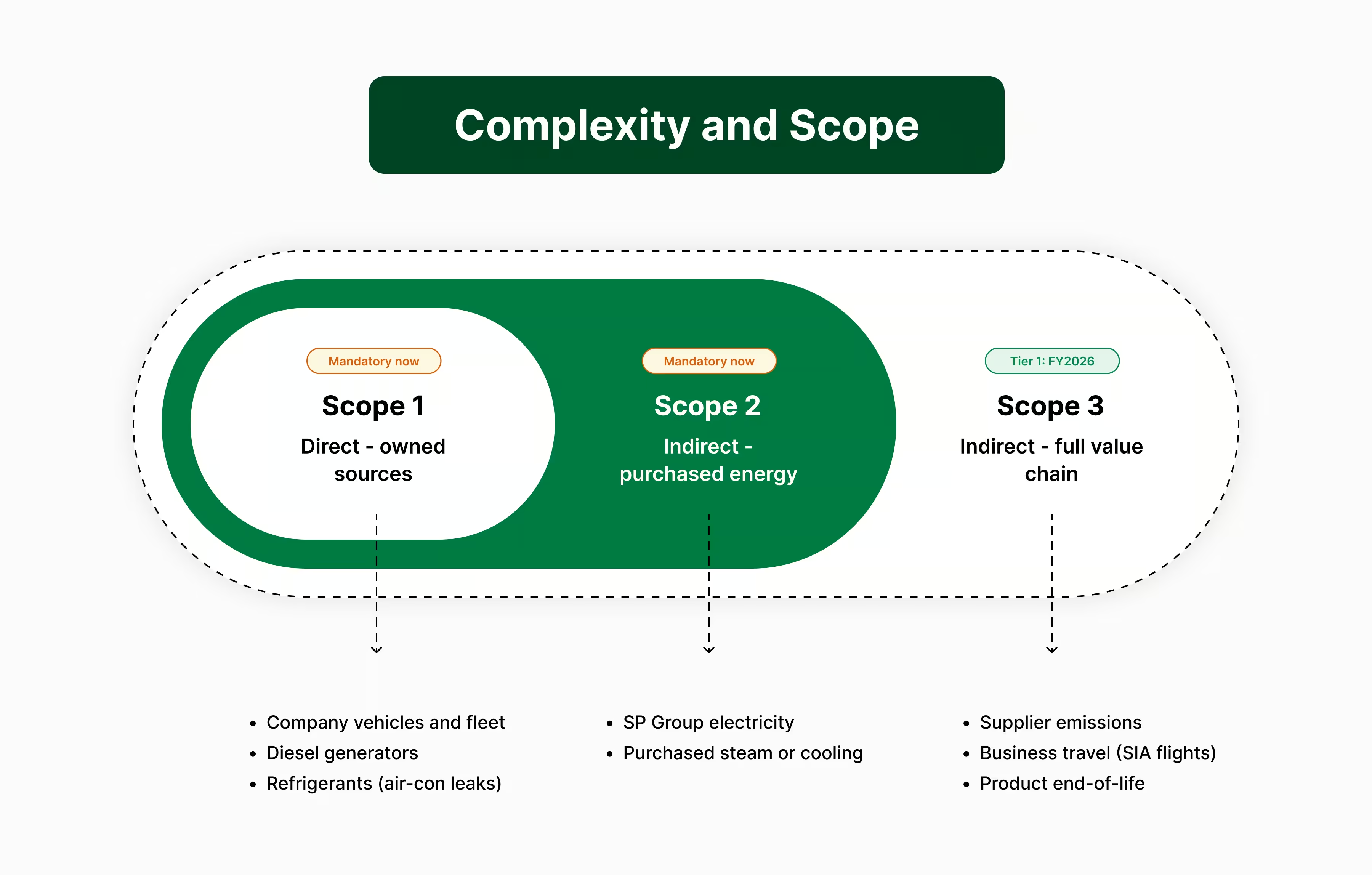
On Scope 1, 2 and 3 emissions: Scope 1 covers direct emissions from sources your company owns or controls, such as fuel combustion and company vehicles. Scope 2 covers indirect emissions from purchasedelectricity or heat. Scope 3 covers all other indirect emissions across your value chain, including supplier activities, logistics, business travel, and product end-of-life.
The 2029 Assurance Deadline: Why Preparation Needs to Start Now
The 2029 assurance deadline is attracting far less attention than the reporting deadlines that precede it.
From FY2029, all listed companies must have their Scope 1 and 2 emissions data independently verified by an external party, either an ACRA-registered audit firm or an SAC-accredited third-party verification body. Large NLCos follow in FY2032.
What does external assurance actually require?
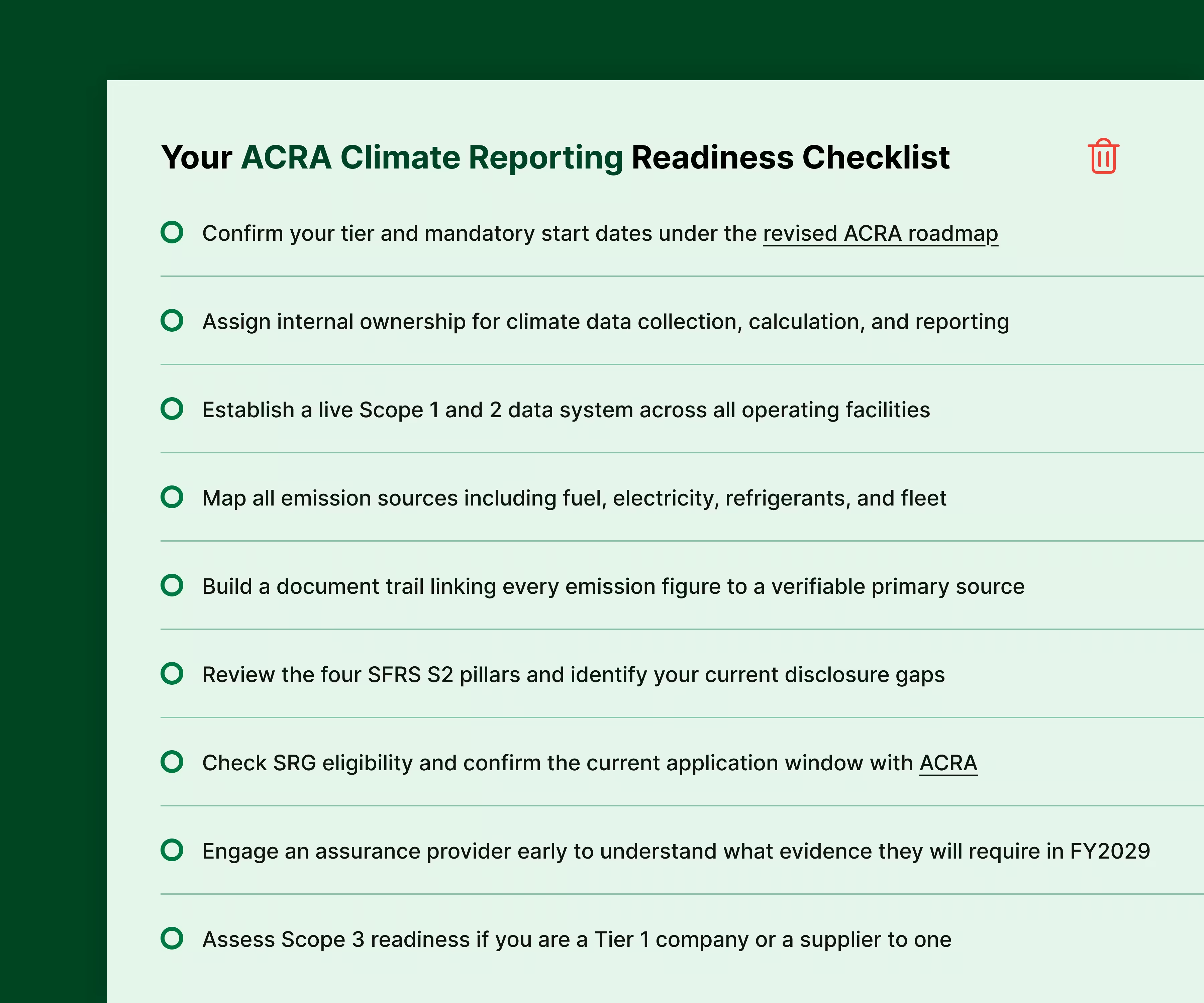
Assurance providers will need evidence showing where your emissions data came from: a utility bill, a fuel purchase record, a meter reading, or a certified emission factor. Spreadsheet formulas without supporting documentation, unsupported estimates, and manually consolidated PDFs will not satisfy an assurance provider.
The assurance process requires traceable primary source documentation for every material disclosure. Building that infrastructure takes longer than most teams anticipate. Companies that wait until 2027 to start will find the assurance process significantly more expensive and disruptive than those building the infrastructure now.
5 Common Mistakes Singapore Companies Are Making Right Now
Treating Scope 1 and 2 as a one-time annual exercise.
Emissions data needs live collection systems running throughout the year, not a rushed consolidation before filing. Year-end data gathering produces unreliable figures that will not withstand assurance scrutiny.
Underestimating how long assurance readiness takes.
Designing data collection processes, training internal teams, selecting an assurance provider, and running a dry-run exercise all take longer than most teams expect.
Waiting for your full ISSB CRD deadline to act.
Scope 1 and 2 reporting is mandatory now for all listed companies. Tier 2 and Tier 3 companies waiting for FY2028 or FY2030 to take this seriously are already out of compliance on emissions reporting.
Treating supplier data requests as someone else's problem.
If you supply a Tier 1 company, being ready to respond with verified, structured emissions data is a competitive advantage. Companies that cannot provide it will find themselves deprioritised in procurement decisions.
Not applying for the Sustainability Reporting Grant.
Singapore's SRG covers up to 30% of qualifying costs for your first ISSB-compliant sustainability report, capped at S$150,000. Check whether your company is eligible before the current application window closes.
How KarbonWise Helps Singapore Companies Get Audit-Ready
Building audit-ready carbon accounting data across Scope 1, 2 and 3 is operationally demanding, especially for companies doing it for the first time on a financial reporting timeline.
KarbonWise collects and calculates emissions data aligned to the GHG Protocol and ISSB requirements, with an emission factor library that includes Singapore-specific factors such as EMA grid emission factors. Every data point is tagged to its primary source at the point of entry, which means your ESG report arrives pre-documented for assurance rather than requiring a separate evidence-gathering exercise afterward.
For companies reporting Scope 3, KarbonWise's supplier engagement tools simplify the collection of verified value chain data, which is particularly relevant for Tier 1 companies facing their FY2026 Scope 3 obligations.
Companies that handle 2029 assurance well will have started building data systems, assigning ownership, and cleaning up their emission factor trails two or three years earlier. KarbonWise can show you exactly where your current gaps are.
{{cta}}
{{accordion}}
{{sources}}

Continue Reading

The EU Just Cut CSRD Reporting Requirements by 60%. Here Is What Actually Changed.
The EU has significantly changed CSRD reporting requirements. Explore the revised ESRS, what changed, who remains in scope, and what businesses need to do next.




.avif)








.svg)
.svg)