LEED v5, Embodied Carbon, and the Whole-Lifecycle Mandate: What Project Developers and Asset Owners Need to Know
LEED v5 introduces a whole-life carbon approach to building certification, making embodied carbon assessment a key requirement for project developers, asset owners, designers, and investors.


.svg)
Table of Contents


Green building certification has a new centre of gravity, and it is not where most project teams are looking. For much of the past decade, major frameworks focused primarily on operational performance: energy efficiency, water use, indoor environmental quality, and kilowatt-hours. LEED v5 marks a fundamental change in that logic, expanding what certification measures and, more importantly, when in the project lifecycle it expects teams to have answers. The question is no longer only how efficiently a building will run. It is also about how much carbon was committed before anyone switched on a light. Project teams that have built carbon thinking into their concept design briefs are finding LEED v5, green finance conversations, and planning requirements considerably more navigable than those treating embodied carbon as a documentation task to be handled at technical design or later.
The carbon problem the industry chose not to measure
Green building certification in its previous form was built almost entirely around what happens after a building comes online. These were real priorities and the work delivered genuine results, with operational efficiency improving and buildings becoming meaningfully less carbon-intensive to run.
But the carbon embedded in construction sat in the background throughout. The carbon associated with making concrete, rolling steel, extruding aluminium, and fabricating MEP equipment was captured loosely under material transparency credits, never benchmarked with the rigour applied to kilowatt-hours. Under LEED v4 and v4.1, no whole-building lifecycle assessment was required, and a strong LEED score was achievable without ever quantifying embodied carbon.
The result was a structural mismatch. As buildings became more energy efficient and electricity grids decarbonised, operational emissions per square metre dropped. Embodied emissions did not. According to the World Green Building Council's "Bringing Embodied Carbon Upfront" report, upfront carbon will be responsible for roughly half of the entire carbon footprint of new construction between now and 2050. In terms of a building's lifetime emissions profile, embodied carbon typically represents around 30 percent against 70 percent from operations, though this ratio shifts as grids decarbonise and operational emissions fall. RMI analysis* further confirms that at the asset level, embodied carbon can account for up to 50 percent of a new building's total lifecycle carbon footprint, with the share rising further for energy-efficient or zero-energy buildings. Critically, embodied carbon cannot be retrofitted out or offset away in operations. The only moment it is reducible is before the material decision is made, and that is the core finding reshaping green building certification today.
RMI (Rocky Mountain Institute) is an independent nonprofit research organisation focused on the global energy transition. The figures cited draw from their analysis of embodied carbon in the built environment, examining lifecycle emissions across building typologies at the asset level.
The regulatory, financial, and data shifts that forced the change
Several converging pressures have made the previous approach increasingly difficult to sustain. These are documented regulatory, financial, and institutional developments.
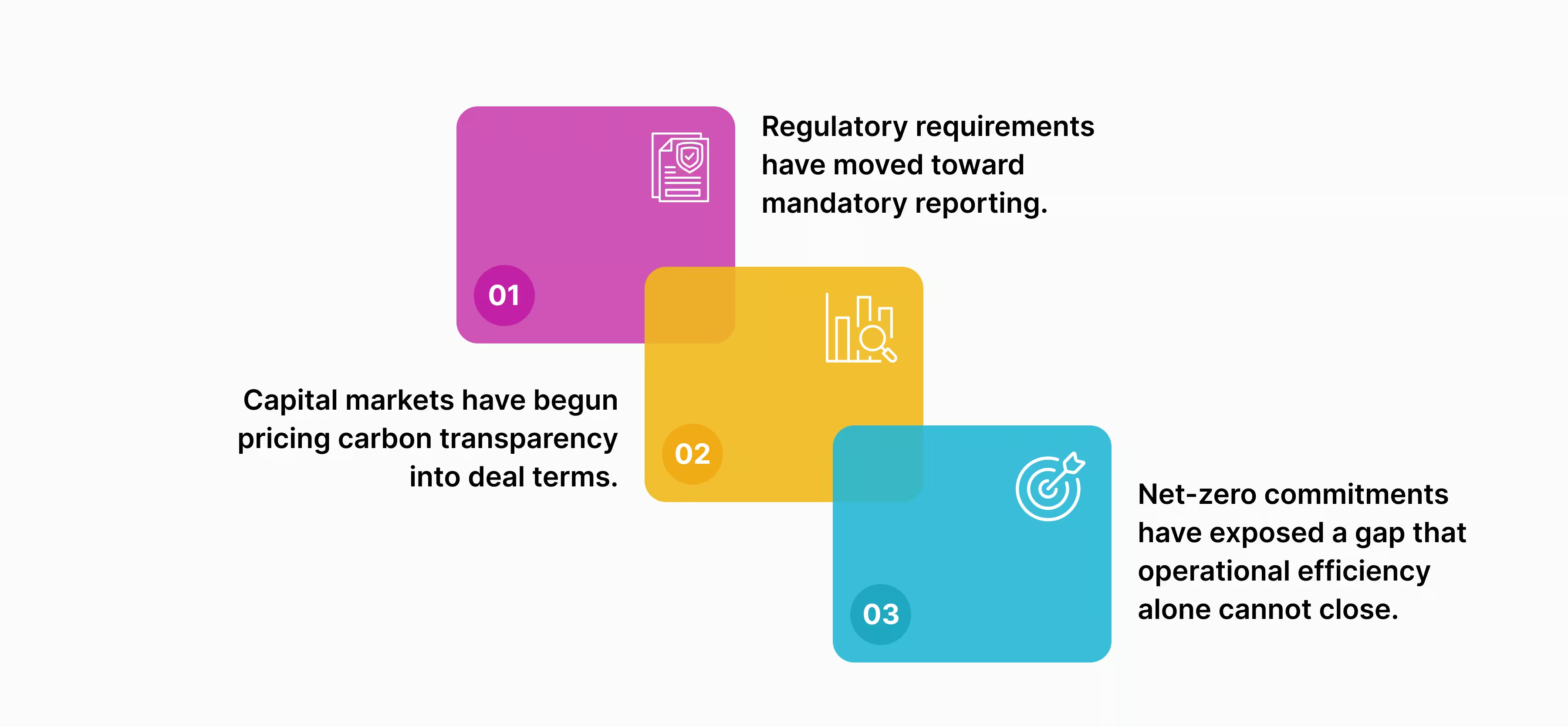
Regulatory requirements have moved toward mandatory reporting. In London, the Greater London Authority introduced Whole Life Carbon assessment requirements as part of the 2021 London Plan. WLC assessments are now required for all major developments referable to the Mayor of London, submitted at pre-application, detailed design, and post-construction stages. There are currently no nationally mandated hard per-square-metre carbon limits in England, and a proposed Part Z regulation to establish them has not yet been adopted, though industry support remains active. For developers operating across multiple markets, the question has shifted from whether reporting requirements will arrive to when and at what threshold.
Capital markets have begun pricing carbon transparency into deal terms. GRESB ratings and the EU's Sustainable Finance Disclosure Regulation now require measurable sustainability disclosures from real estate fund managers within their scope, and the direction of travel in other major markets is consistent. Because embodied carbon can account for up to 50 percent of a new building's total lifecycle carbon footprint, it is increasingly material to investment screening, cost of capital assessment, and portfolio-level Scope 3 disclosure for institutional owners. These are underwriting and disclosure requirements, not voluntary sustainability preferences, and they are tightening across the markets where most institutional capital is deployed.
Net-zero commitments have exposed a gap that operational efficiency alone cannot close. Operational decarbonisation is largely addressable through efficiency measures and renewable energy procurement. Scope 3 emissions from construction materials are not. As institutional investors and corporate occupiers work toward net-zero targets, embodied carbon in construction pipelines represents an unaddressed gap that cannot be resolved through operational improvements and can only be reduced at the design and procurement stage, before it is fixed into the structure.
Alongside these pressures, the data infrastructure to measure embodied carbon at scale has finally become practical. Environmental Product Declarations, lifecycle assessment platforms, and BIM-integrated carbon tools have made material-level carbon quantifiable at a granularity that was not feasible a decade ago, removing a significant practical barrier to regulation and disclosure.
What LEED v5 actually changed, and why it matters
The structural change in LEED v5 matters more than any individual credit within it.
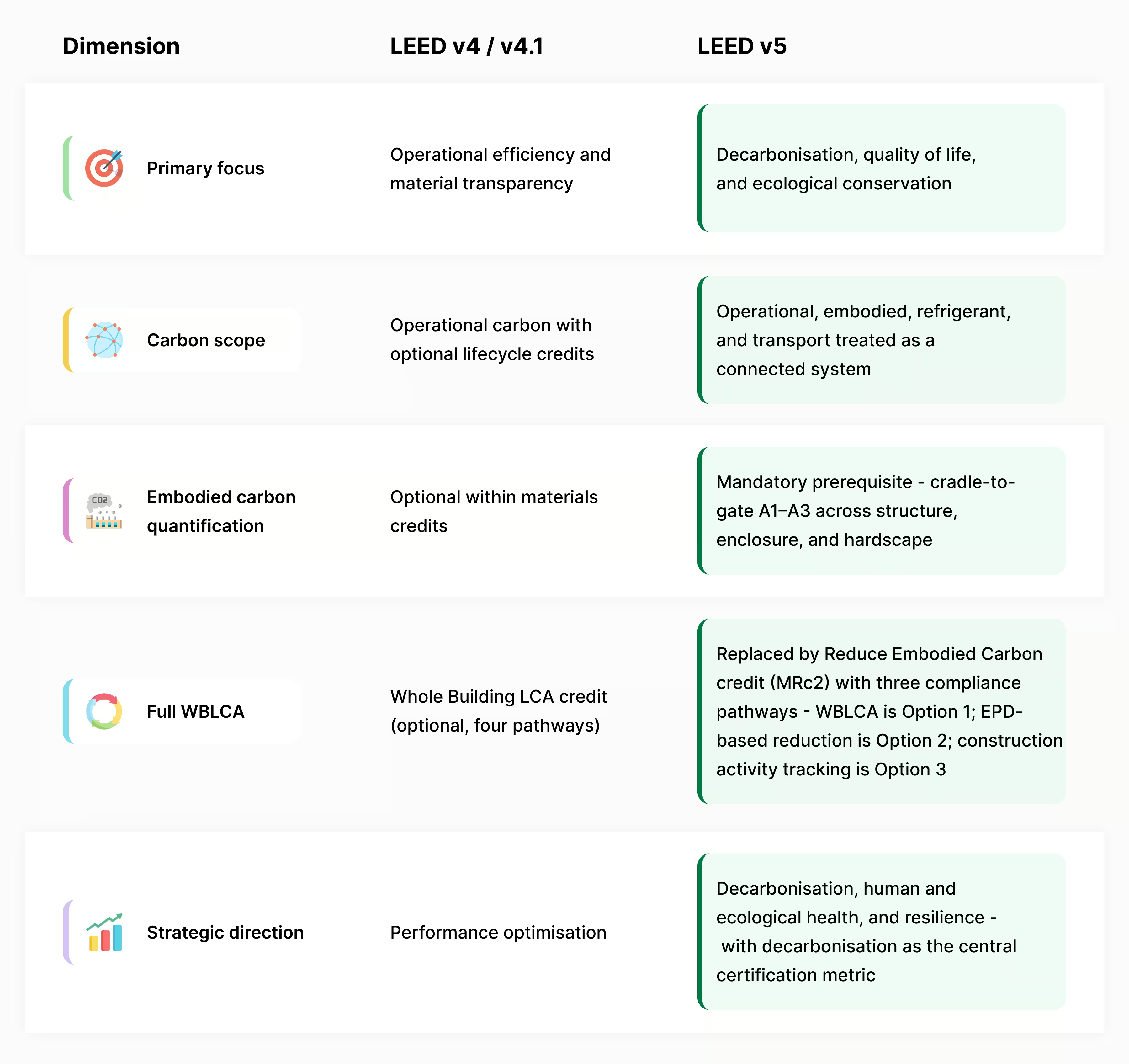
Under v4 and v4.1, lifecycle assessment was an optional pathway inside materials credits and a strong LEED score was achievable without it. LEED v5 changes this in two meaningful ways. First, per USGBC documentation, quantifying and assessing embodied carbon is now a prerequisite for all projects, requiring teams to calculate cradle-to-gate A1 to A3 emissions across structure, enclosure, and hardscape materials, and to identify the top three sources of embodied carbon on the project. Second, the Whole-Building Life Cycle Assessment credit carried over from v4 has been restructured in v5 as the Reduce Embodied Carbon credit (MRc2), which introduces three distinct compliance pathways: a full WBLCA, an EPD-based reduction route, and a construction activity carbon tracking option - giving teams flexibility in how they pursue points while raising the ceiling on what is achievable. Across both tiers, operational carbon, embodied carbon, refrigerant impacts, and transportation emissions are treated as a connected system. USGBC now aligns nearly 50 percent of certification points with decarbonization outcomes, making carbon performance a much more significant factor in certification than in previous LEED versions. Embodied carbon is no longer only a sustainability metric. It is a capital decision.
What a Whole-Building Life Cycle Assessment actually covers
WBLCA, aligned with EN 15978, quantifies environmental impacts across every stage of a building's life.
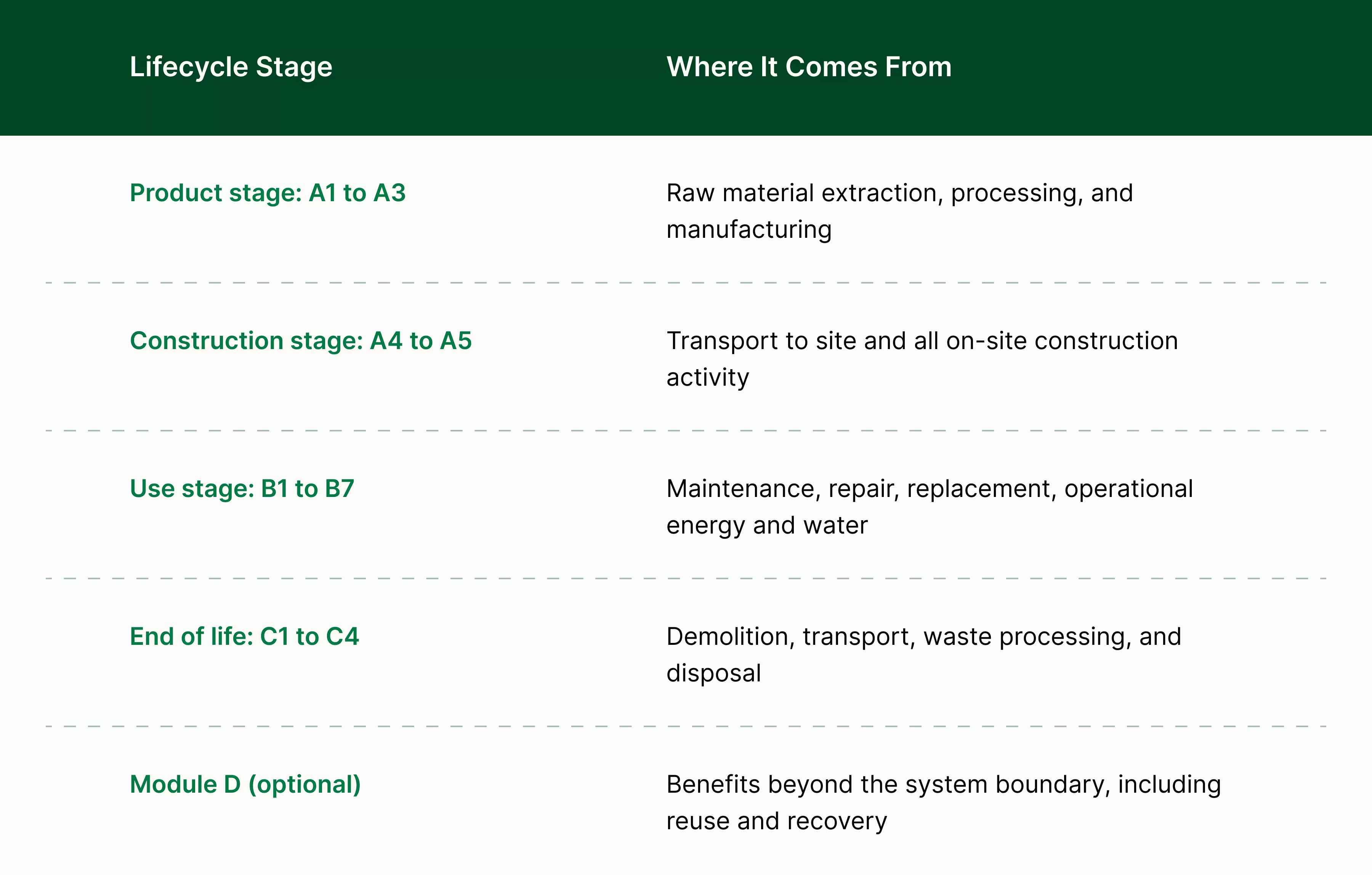
The A1 to A3 product stage carries the most weight in embodied carbon terms because this is where structural materials commit the bulk of their carbon. Cement production, steel manufacturing, and aluminium extrusion are high-upfront-emission processes fixed at the point of material selection, months before construction begins. WBLCA gives project teams the ability to compare structural systems, facade options, and material specifications on verified carbon data while those decisions are still open, converting embodied carbon from a reporting concept into a live design variable. A reporting concept gets handled at the end. A design variable changes what gets specified, and that distinction is where the real leverage sits.
Every major framework is pointing the same direction
LEED is not the only framework moving in this direction. For teams managing multi-jurisdictional portfolios, the trajectory is consistent across major regional frameworks, though the depth of lifecycle carbon integration varies between them.
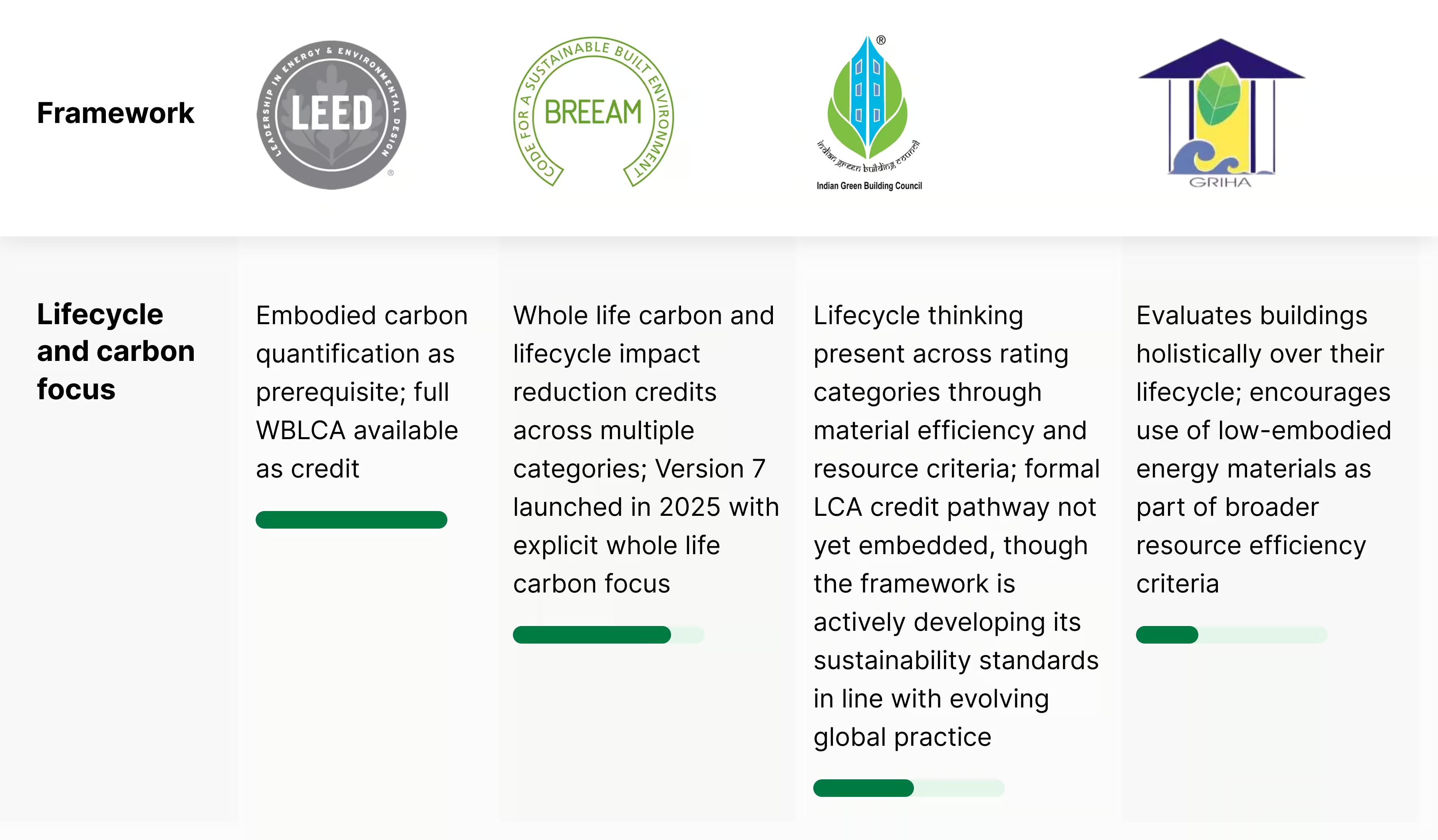
The data infrastructure required to satisfy one framework increasingly serves the others. Portfolio operators who build this capability once can deploy it across geographies without rebuilding assessments from scratch for each certification submission, which materially changes the economics of building the capability in the first place.
The decisions that actually move the number
Once embodied carbon is understood as a design-stage commitment rather than a post-construction calculation, three strategies consistently produce measurable results, all of which depend on decisions made before design is set.
{{blurb}}
Carbon at scale is a data problem, not just a design problem
The biggest practical challenge LEED v5 creates is a data problem. Carbon management requires tracking detailed material information across an entire project, in real time, while design decisions are still being made. A single building involves thousands of materials, each with its own carbon figures that can change depending on the supplier or where the product was made. Every design change shifts the building's overall carbon profile. Procurement teams must weigh up cost, delivery, structural performance, and carbon impact at the same time. And the same material data must feed several different reporting requirements at once - LEED, BREEAM, GRESB, SFDR, and a company's own internal carbon targets.
Spreadsheet-based tracking is not adequate at this scale. It cannot surface optimisation opportunities in time to influence early-stage decisions, which is precisely the window in which embodied carbon is most reducible. By the time a manually maintained carbon model reflects the current design, the design has moved on. Organisations building carbon data systems capable of handling this complexity, through automated retrieval and mapping of EPD carbon data to project materials, real-time carbon modelling as design options change, scenario comparison across structural systems, and certification-ready reporting across multiple frameworks, are positioned to treat carbon as a design optimisation variable comparable in discipline to cost and programme. Those that do not will face progressively harder tradeoffs as regulatory thresholds tighten and capital markets sharpen their approach to carbon transparency.
What this means for each stakeholder
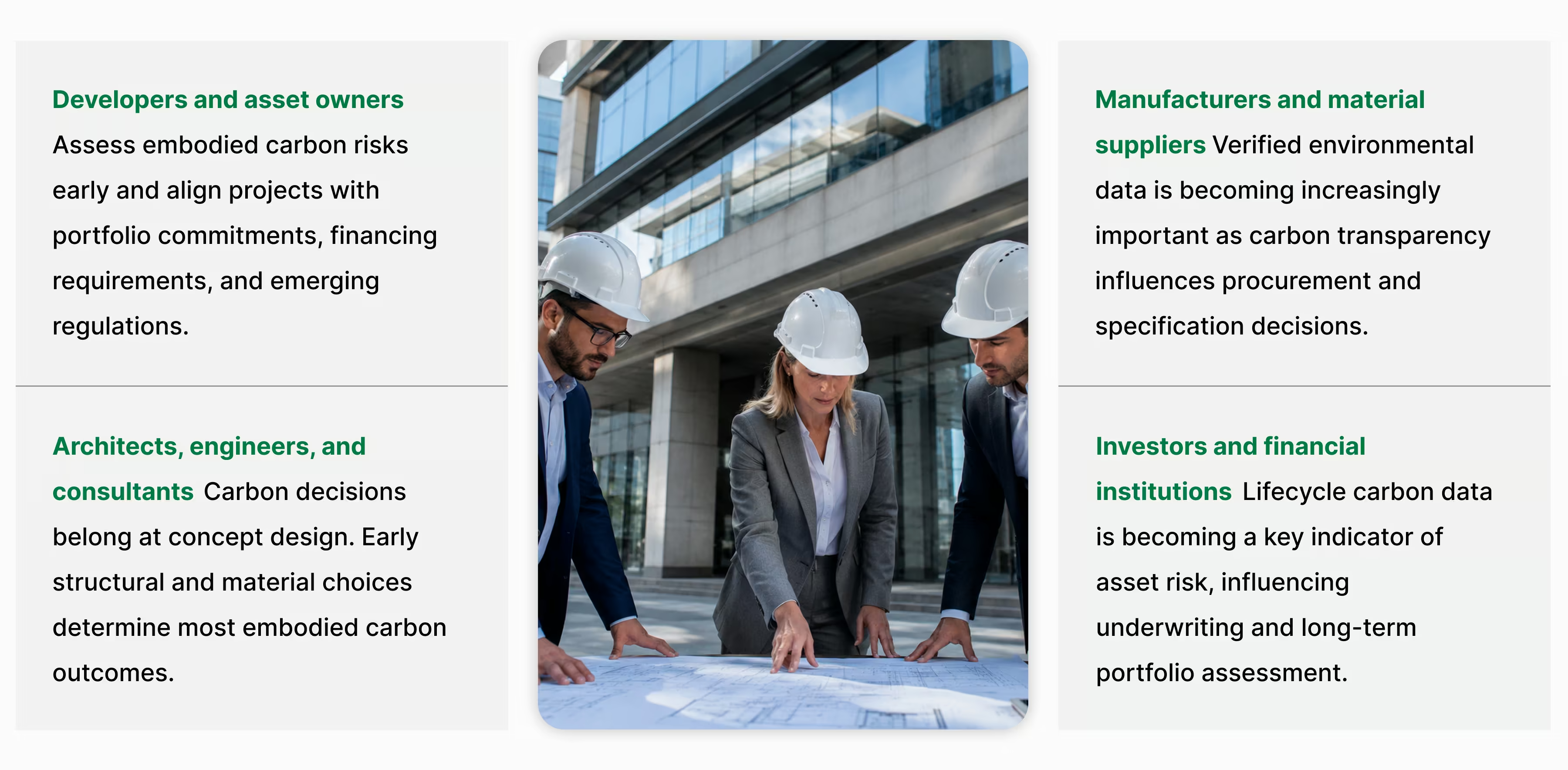
Developers and asset owners now face three questions that are becoming standard at investment committee and project initiation stages. What is the embodied carbon profile of this asset against portfolio commitments and emerging jurisdictional requirements? Which material and structural decisions deliver the highest carbon reduction per unit of cost, and were they evaluated at concept stage? What data infrastructure exists to track these decisions from design through procurement and operation? The answers are beginning to shape which projects get financed, on what terms, and what they are worth at exit. Companies that build robust embodied carbon reporting practices now will be better positioned to attract sustainability-oriented capital and reduce regulatory exposure as disclosure mandates develop. Those that do not are carrying a risk that is becoming progressively harder to price away.
Architects, engineers, and consultants face a critical change in timing. Carbon decisions belong at concept design, not technical design. Once the structural system is selected and the facade specified, the major embodied carbon outcomes are already fixed. Teams that treat carbon as a concept-stage design variable find LEED v5 compliance significantly more manageable than those treating it as documentation to be assembled later, and the gap between those two approaches widens as regulatory requirements develop and capital market scrutiny increases.
Manufacturers and material suppliers should pay close attention to the growing demand for verified environmental data. As embodied carbon assessment becomes more common across certification frameworks, procurement processes, and investor reporting requirements, transparency is increasingly influencing product evaluation and specification decisions. Manufacturers that can provide credible environmental performance data are likely to be better positioned as market expectations continue to evolve.
Investors and financial institutions should treat lifecycle carbon as a long-term asset risk signal, not a supplementary sustainability disclosure. Assets with limited or unstructured lifecycle carbon data carry uncertainty that is increasingly relevant to underwriting and portfolio risk assessment.
Conclusion
LEED v5 is not a certification update. It is a signal that the industry's understanding of what a green building is has fundamentally shifted. Carbon committed before construction begins now carries the same weight as carbon consumed during operations, and the frameworks, capital markets, and regulatory environments that project teams operate within are all moving in the same direction.
The practical implication is straightforward. Embodied carbon is no longer manageable as a documentation exercise. It is a design-stage decision with financial, regulatory, and portfolio consequences that compound the longer it goes unaddressed. The window in which it is reducible is narrow - it closes when the structural system is confirmed, when the facade is specified, when the concrete mix goes to procurement. After that, the number is fixed.
How KarbonWise supports this
What acting in that window requires is carbon data that is structured, verified, and available at the moment design decisions are being made - not assembled after them. Most project teams do not have that capability in place, and spreadsheets cannot provide it at the speed or granularity that early-stage carbon decisions demand.
KarbonWise is built for this workflow. The platform covers every lifecycle stage from A1 through Module D, draws on over 200,000 verified emission factors from globally recognised databases, and allows teams to model structural alternatives and material scenarios in real time as design options are still open. Built-in circularity modelling captures Module D credits for reuse and recycling pathways automatically, so the carbon benefit of circular material strategies is documented without separate analytical work. The same assessment data feeds certification submissions across LEED v5, BREEAM, and IGBC, removing the need to run parallel reporting processes for each framework.
Not sure where your project stands? Use the KarbonWise LEED v5 Building LCA Calculator to estimate your A1–A3 embodied carbon and see how your design performs against LEED v5 MRp2 and MRc2 requirements. Try the LEED v5 Building LCA →
{{cta}}
{{accordion}}
{{sources}}




Continue Reading
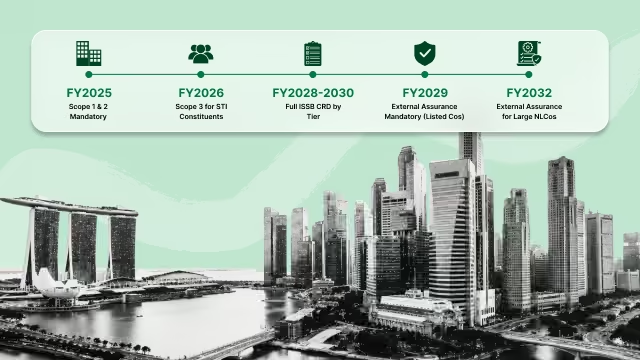
ACRA's 3-Tier Climate Reporting Rules: Deadlines, Disclosures, and What to Do No
Singapore's framework is climate-first by design. Under ACRA's proposed Sustainability Disclosure Standards, SFRS S2 (climate disclosures) would be mandatory. SFRS S1 (broader sustainability disclosures covering biodiversity, human capital, and social impact) would remain voluntary for now. This narrows the immediate reporting scope while keeping GHG emissions data mandatory

.avif)


.avif)








.svg)
.svg)