Why Data Is Critical for Carbon Footprint Reduction
Accurate data enables businesses to measure emissions precisely, identify key hotspots, and implement targeted actions that drive real and measurable carbon reduction.


.svg)
Table of Contents


Reducing carbon footprint is not primarily a question of intent. It is a question of precision. Without reliable data, emissions reduction efforts rely on assumptions, averages, and best guesses, which often lead businesses to focus on the wrong activities or underestimate their real impact. Data turns carbon reduction from a broad ambition into a measurable, manageable process.
From Estimates to Measurable Emission Reduction
Many organisations begin their sustainability journey using high-level estimates, industry averages, or proxy data to understand emissions. While this can offer an initial direction, it quickly reaches its limits. Estimates mask variability between sites, processes, suppliers, and operating conditions. As a result, businesses struggle to explain why emissions change over time or which actions genuinely deliver reductions.
Using real operational data shifts carbon management from estimation to measurement. Actual energy consumption, fuel use, production volumes, logistics activity, and procurement data reveal where emissions truly originate. This level of detail allows organisations to move beyond headline totals and understand emissions at the activity level, which is essential for identifying practical reduction opportunities and tracking the impact of interventions with confidence.
Linking Data to Sustainability and Cost Savings
Carbon data does more than support environmental goals. It also highlights inefficiencies that carry financial implications. Detailed energy data can reveal equipment underperformance, unnecessary consumption, or opportunities for demand reduction. Waste and logistics data can expose avoidable material loss, inefficient routing, or supplier-related emissions that increase both cost and carbon exposure.
By analysing emissions alongside operational and financial data, businesses can prioritise actions that reduce carbon and improve efficiency simultaneously. This alignment is what makes data-driven sustainability durable. Emissions reduction stops being a standalone initiative and becomes part of ongoing operational optimisation, supported by evidence rather than assumptions.
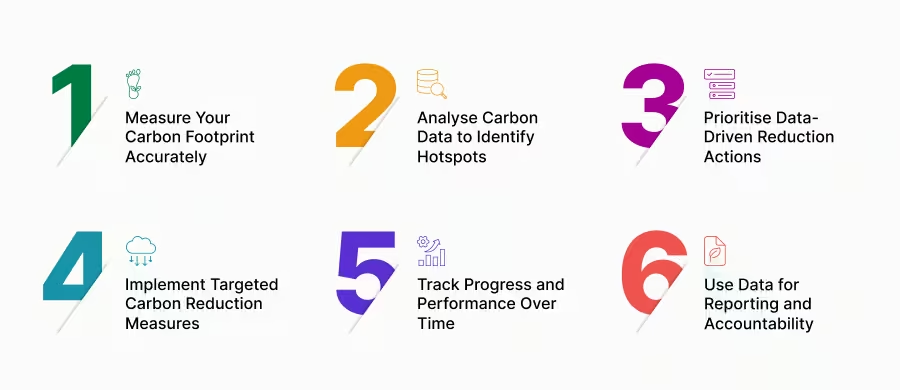
Step 1 – Measure Your Carbon Footprint Accurately
Accurate measurement is the foundation of any data-driven carbon reduction effort. Without a clear view of where emissions originate and how they are calculated, businesses risk acting on incomplete or misleading information. This first step is about building a reliable baseline that reflects real operational activity, not assumptions.
Identify emission sources across Scope 1, 2, and 3
A complete carbon footprint includes direct emissions from owned or controlled sources, indirect emissions from purchased energy, and value-chain emissions linked to suppliers, logistics, and product use. Mapping these sources upfront ensures that no material emissions are overlooked and that reduction efforts focus on areas with the greatest impact.
Collect reliable, activity-based emissions data
High-quality measurement depends on data drawn from real operations, including energy consumption, fuel use, procurement records, and supplier information. Using primary data wherever possible improves accuracy and makes it easier to track changes over time, compare performance across sites, and support credible reporting.
Step 2 – Analyse Carbon Data to Identify Hotspots
Once emissions are measured, the next step is understanding what the data is actually telling you. Raw emissions figures on their own offer limited value. Analysis is what turns measurement into insight, helping businesses pinpoint where emissions are concentrated and which activities drive the largest share of impact.
Identify carbon hotspots across operations and the value chain
Carbon hotspot analysis focuses on isolating high-emission activities, processes, or suppliers that contribute disproportionately to the overall footprint. This may include energy-intensive equipment, transport routes, materials with high embedded emissions, or suppliers with carbon-intensive production methods. By narrowing attention to these hotspots, businesses avoid spreading effort thinly across low-impact areas.
Use historical trends and benchmarks to contextualise performance
Comparing emissions data year on year reveals whether performance is improving, stagnating, or worsening, and helps distinguish structural change from short-term fluctuation. Industry benchmarks and internal baselines add further context, allowing organisations to assess whether hotspots reflect inherent operational characteristics or addressable inefficiencies.
Step 3 – Prioritise Data-Driven Reduction Actions
Not all emissions reduction opportunities are equal. Data allows businesses to move away from generic sustainability actions and focus instead on interventions that deliver measurable impact. Prioritisation is where insight turns into execution.
Focus first on high-impact, low-effort opportunities
Carbon data often reveals efficiency gains that can be achieved with limited disruption, such as optimising energy use, improving equipment scheduling, or reducing unnecessary fuel consumption. These actions typically sit within existing operational control and deliver immediate emissions reductions alongside cost savings, making them strong early priorities.
Use data to guide strategic reduction initiatives
Larger, long-term actions such as renewable energy adoption or supply-chain engagement require investment and coordination. Emissions data helps justify these decisions by showing where reductions will be most significant. When priorities are grounded in quantified impact rather than ambition alone, businesses can allocate resources more effectively and build credible reduction roadmaps.
Step 4 – Implement Targeted Carbon Reduction Measures
Once carbon hotspots are identified, the focus shifts from analysis to action. Data enables businesses to prioritise reduction measures based on measurable impact rather than intuition, ensuring effort and investment are directed where they matter most.
Target high-impact, low-effort opportunities first
Emissions data often highlights efficiency improvements that can be implemented quickly, such as optimising energy use, improving equipment performance, or refining operational processes. These actions typically sit within existing control, deliver fast emissions reductions, and often generate immediate cost savings.
Plan strategic reduction initiatives using quantified impact
Larger initiatives, including renewable energy adoption or supply-chain engagement, require longer timelines and greater coordination. Data helps assess where these interventions will deliver the greatest emissions reduction, supporting informed investment decisions and a structured, evidence-based reduction roadmap.
Step 5 – Track Progress and Performance Over Time
Reducing emissions is not a one-off exercise. Continuous tracking is essential to understand whether actions are delivering results and to ensure progress remains aligned with longer-term climate goals.
Set data-backed reduction targets
Using measured emissions data allows businesses to define realistic reduction targets grounded in actual performance. Targets aligned with science-based pathways and net-zero ambitions provide clear direction while remaining achievable, helping organisations track progress with credibility rather than relying on aspirational commitments.
Monitor KPIs and emissions trends continuously
Tracking emissions KPIs over time reveals whether reductions are sustained and where performance deviates from expectations. Dashboards and real-time insights make it easier to spot emerging issues, adjust actions early, and maintain momentum as operations, suppliers, and external conditions change.
Step 6 – Use Data for Reporting and Accountability
Data-driven carbon reduction only becomes credible when it is consistently reported and clearly communicated. Reporting is not just a compliance exercise. It is how businesses demonstrate accountability and build trust around their sustainability performance.
Support accurate, audit-ready ESG and sustainability reporting
Using structured emissions data improves the accuracy and consistency of sustainability disclosures. Clear data trails, defined methodologies, and repeatable calculations make it easier to meet reporting requirements, respond to audits, and reduce the risk of misstatement as expectations around assurance increase.
Communicate progress clearly to stakeholders
Investors, customers, and regulators increasingly expect evidence-backed updates on emissions reduction progress. Data allows businesses to move beyond high-level claims and show measurable change over time, helping stakeholders understand performance, risks, and long-term direction with confidence.
Common Challenges in Data-Driven Carbon Reduction
While data enables more effective emissions reduction, many organisations face practical barriers that limit its usefulness. These challenges are less about technology alone and more about data availability, consistency, and organisational execution.
{{flipcards}}
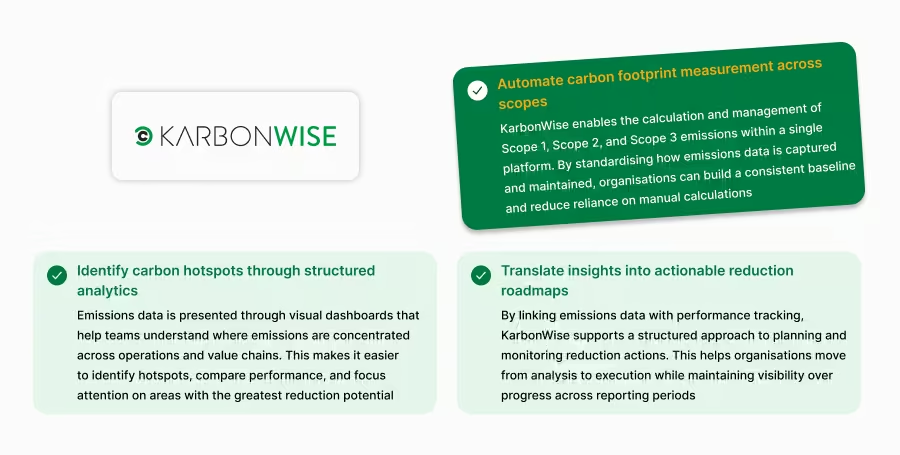
How KarbonWise Enables Data-Driven Carbon Reduction
KarbonWise supports businesses in moving from carbon measurement to meaningful action by structuring emissions data in a way that enables analysis, prioritisation, and ongoing tracking.
Conclusion
Data Is the Foundation of Effective Carbon Reduction
Reducing a carbon footprint sustainably requires more than isolated actions or one-time calculations. Data provides the structure that turns emissions reduction into a continuous process. When emissions are measured accurately, analysed systematically, and tracked over time, businesses gain the clarity needed to focus effort where it delivers real impact. This data-led approach ensures that carbon reduction is measurable, defensible, and aligned with both operational realities and long-term climate goals.
Getting Started With Data-Driven Carbon Reduction
The path forward begins with establishing a reliable emissions baseline using real operational data. From there, businesses can analyse carbon hotspots, prioritise reduction actions based on quantified impact, and track progress consistently. Over time, using data to support reporting and accountability strengthens credibility with stakeholders and embeds emissions reduction into everyday decision-making.
For organisations aiming to achieve lasting change, data is not an optional input. It is the engine that makes carbon reduction achievable and scalable.
{{cta}}
{{accordion}}
{{sources}}




Continue Reading

How to Get a Job in Sustainability in 2026: Careers, Salaries, Skills & Certifications
A complete guide to sustainability careers in 2026, covering career paths, salaries, essential skills, certifications, and leading learning programmes for aspiring sustainability professionals.

.avif)


.avif)








.svg)
.svg)