How to Get a Job in Sustainability in 2026: Careers, Salaries, Skills & Certifications
A complete guide to sustainability careers in 2026, covering career paths, salaries, essential skills, certifications, and leading learning programmes for aspiring sustainability professionals.

.svg)
Table of Contents


Quick Answer
The fastest way into a sustainability job is to match your existing skills to the right role - ESG analyst if you're data-driven, supply chain sustainability if you're in procurement, consulting if you prefer varied work - then pair one targeted certification with a small, applied project inside your current role. Most green hires in 2026 don't have "sustainability" in their current job title. The skills gap, not the title gap, is what's holding most candidates back.
Sustainability Career Paths at a Glance
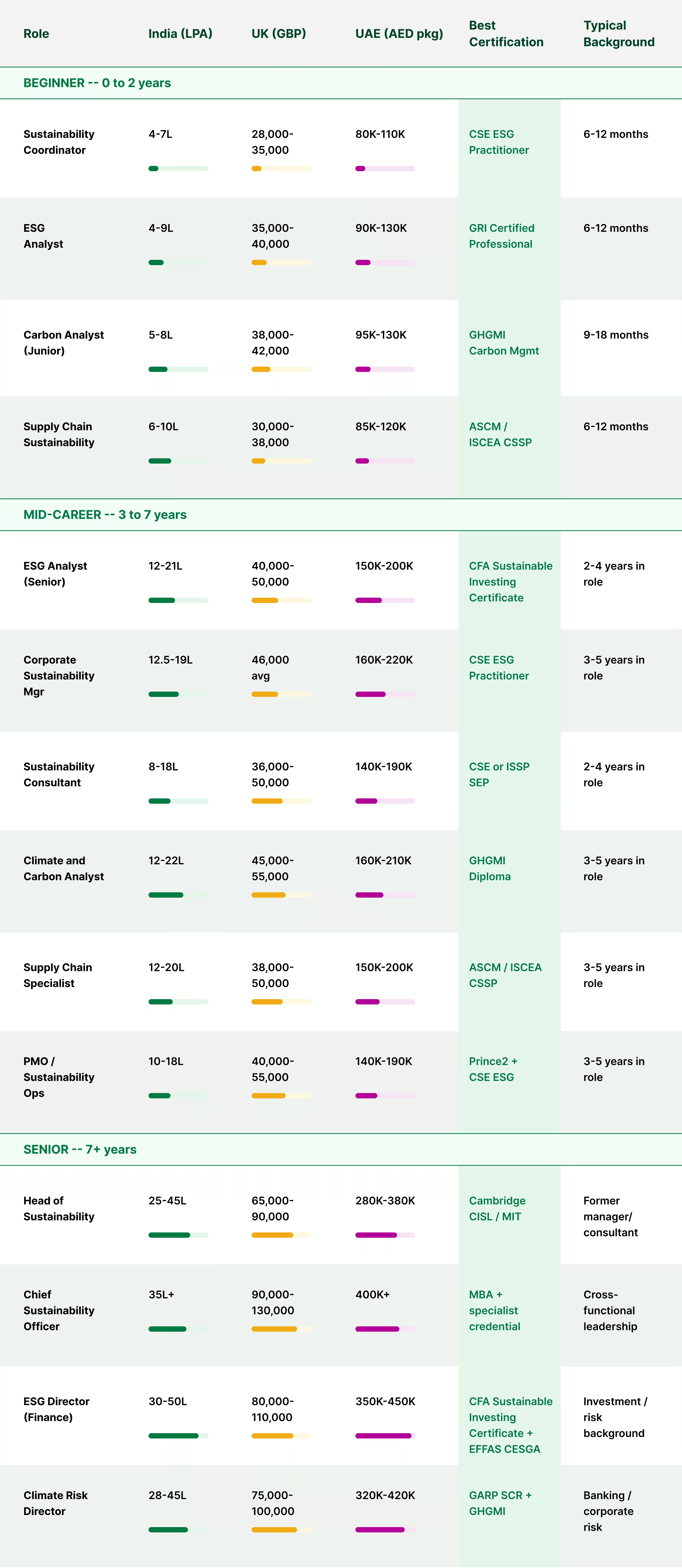
Salary data: ERI SalaryExpert, Glassdoor, PayScale. UAE figures are gross package ranges. Tax-free status means net take-home is higher than equivalent nominal salaries in India or the UK. UAE packages also typically include housing allowance, transport, and end-of-service gratuity, which are not reflected in the gross figure. LPA = Lakhs Per Annum. Time-to-enter assumes transition from an adjacent field.
Why most sustainability career advice is incomplete
Search "how to get a sustainability job" and you'll find the same three suggestions: get a green degree, collect certifications, apply for roles with "sustainability" in the title. None of that is wrong - it's just no longer enough.
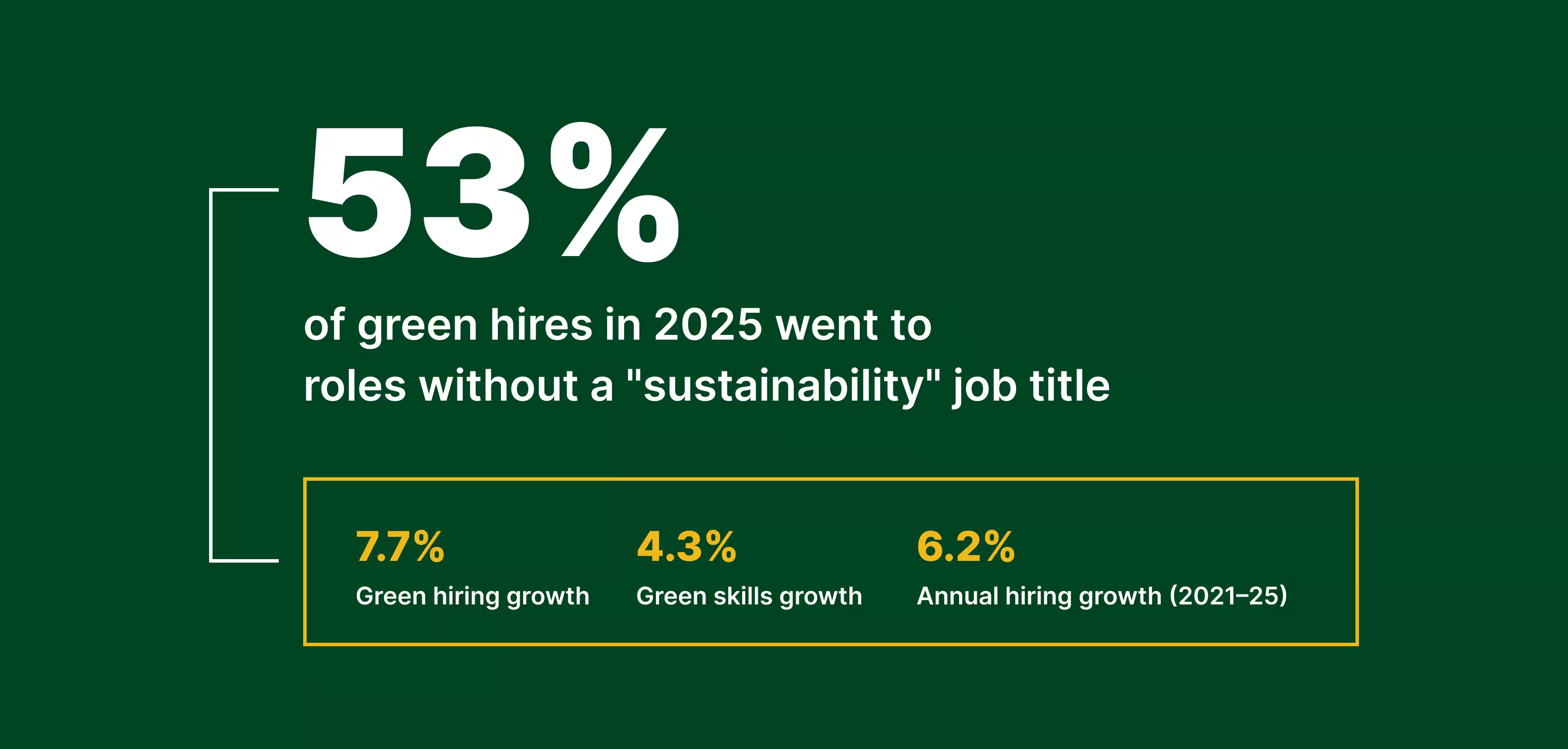
According to LinkedIn's 2025 Green Skills Report, green hiring grew 6.2% annually between 2021 and 2025 - and accelerated to 7.7% in the most recent year, nearly double the 4.3% rate at which workers picked up green skills. More importantly, for the first time in 2025, the majority (53%) of green hires went to roles with no sustainability title. They are finance professionals, procurement leads, and supply chain managers who understood carbon accounting well enough to be hired.
The bottleneck isn't job titles. It's whether you can do the technical work - regulatory reporting, emissions data, ESG framework alignment - well enough that a team in finance,
Three things that slow people down before they start
"I need an environmental science degree."
Helpful, not required. Finance professionals already understand audit trails and materiality. Engineers are comfortable with technical standards and measurement. Supply chain managers already work with the suppliers whose Scope 3 data you'll eventually need to collect. Starting from one of these backgrounds doesn't put you behind - it puts you ahead on half the job description.
"More certifications means more hireable."
Not necessarily. A GRI certification backed by one real disclosure project is worth more in a hiring conversation than four credentials with no applied work behind them.
"I should wait until I feel ready."
This is the assumption that costs the most time. Regulation doesn't pause for readiness. Contributing to a carbon footprint exercise or supplier questionnaire while still building your knowledge teaches more than another month of self-study.
What's driving sustainability hiring in 2026
Three forces are reinforcing each other and understanding them shows you where the next wave of hiring is coming from.
Regulation made disclosure non-optional.
CSRD, CBAM, BRSR, and ISSB's IFRS S1/S2 each carry their own data requirements, verification standards, and enforcement timelines. Every new mandatory standard is a hiring need, because someone has to produce the disclosure - not just acknowledge it.
Capital is following the rules.
Global ESG-linked assets under management are estimated at $30–35 trillion and projected to surpass USD 40 trillion by 2030, with institutional investors under SFDR, ISSB, and TCFD expecting assurance-ready disclosures from portfolio companies. Hays' 2026 Salary and Recruitment Trends Guide
84% of UK employers raised salaries last year (across all sectors) - and sustainability specifically saw 94% of employers increase pay, with not a single employer citing a decrease
The work outgrew the talent pool.
World Economic Forum's Future of Jobs analysis projected sustainability specialist and environmental protection roles growing 33% and 34% respectively - roughly a million additional jobs. More recent WEF work on green and energy-transition roles points the same direction. These aren't forecasts to take on faith. They're visible in current job board volume.
Sustainability career paths: which one fits you
The junior-to-senior breakdown below does not list tasks by level because the same tasks appear across levels, particularly in smaller organisations, startups, and consultancies where one person owns the entire sustainability function.
What actually changes as you progress is not what you do but how you do it: the autonomy you exercise, the accountability you carry, the external exposure you handle, and your ability to defend your methodology and outputs under scrutiny. A junior professional in a startup and a junior analyst at a large corporate may do identical work on paper. The difference is that the large corporate junior has a manager signing off on everything. The startup junior is accountable from day one. Both are valid starting points.
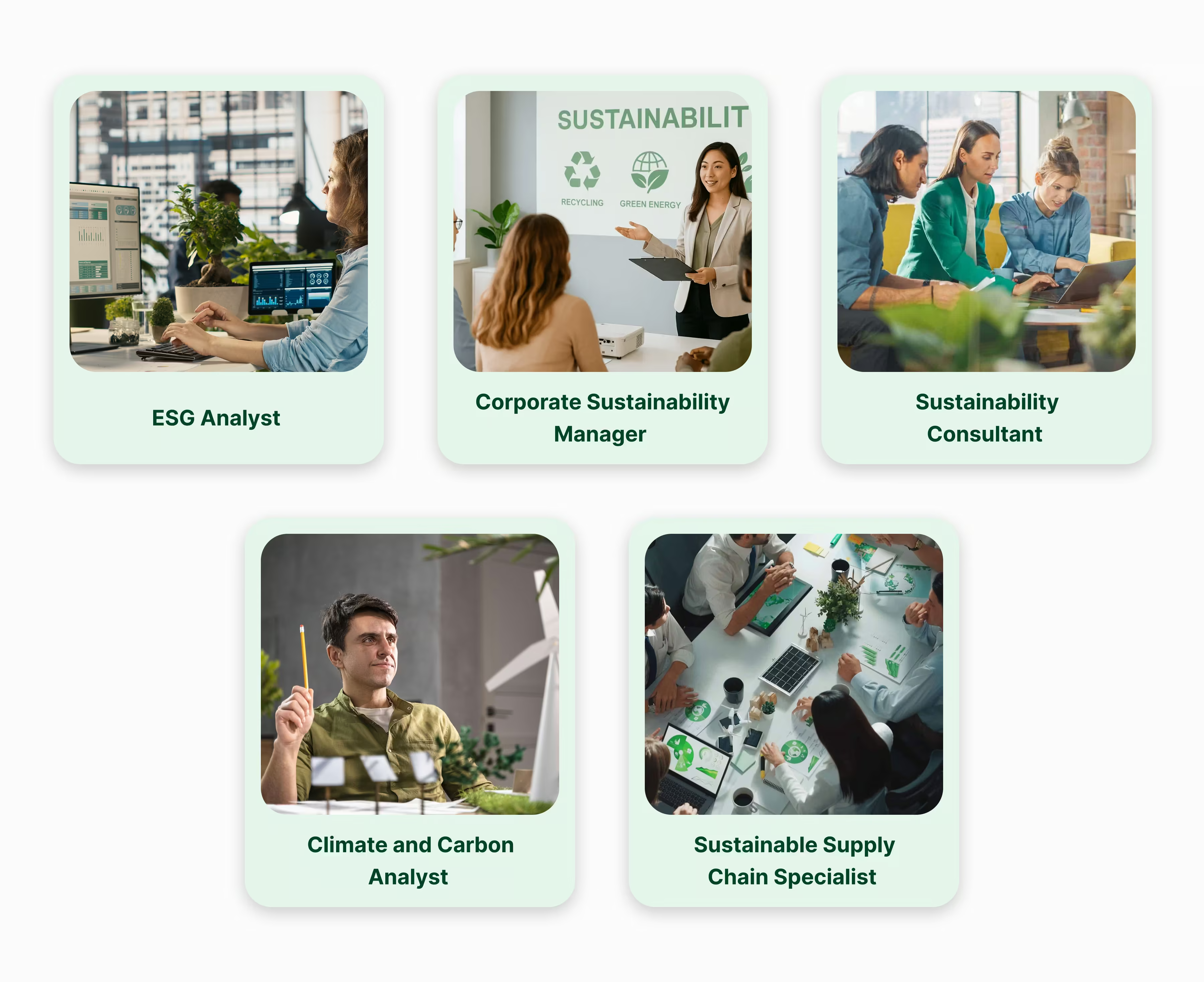
ESG Analyst
Entry level: doing the work under supervision, with outputs reviewed before submission. Mid-level: owning the disclosure cycle independently, managing data collection from multiple internal stakeholders, handling investor queries. Senior: accountable to the board and external assurance providers, making framework decisions, defending methodology under scrutiny.
What moves someone from the bottom to the top of the salary range: fluency across multiple frameworks including GRI, ISSB, SASB, and CDP; experience managing an external assurance cycle end to end; and the ability to present ESG risk in board language rather than just populating templates.
Corporate Sustainability Manager
Entry level (Coordinator): working inside an established function, supporting reporting cycles, managing data collection across internal teams. Mid-level (Manager): setting targets, coordinating between procurement, legal, and finance on disclosure data, owning external stakeholder communications. Senior (Director/CSO): board-level accountability for sustainability strategy, overseeing external assurance, representing the organisation to regulators and investors.
This role rewards people who can translate between technical emissions data and boardroom language without losing either audience. The Chief Sustainability Officer is increasingly a board-level appointment. Junior-to-senior typically takes 7 to 12 years, faster for those who gain cross-functional visibility early.
Sustainability Consultant
Entry level: supporting engagements under a senior lead, drafting gap analyses, running stakeholder surveys, contributing to materiality assessments. Mid-level: leading client engagements independently, owning CSRD assessments, Scope 3 programme design, and LCA projects. Senior: managing director-level client relationships, building practice areas, advising on multi-framework disclosure strategy across markets.
The consultants who advance fastest are not necessarily the deepest specialists. They are the ones who move comfortably between carbon accounting, LCA, reporting standards, and client dynamics within the same engagement. CBAM compliance is an active niche for those looking to specialise early. Independent consulting is a realistic long-term path once you have built deep specialism in one area.
Climate and Carbon Analyst
Entry level: supporting GHG inventory builds, processing activity data, working under a lead analyst. Mid-level: managing full Scope 1, 2, and 3 inventories, building reduction pathway models, running TCFD and TNFD climate risk assessments. Senior: owning net-zero strategy, leading external verification processes, accountable for methodology decisions.
What separates mid-level from senior in this role is less about technical depth and more about the ability to defend methodology choices under external assurance.
Sustainable Supply Chain Specialist
Entry level: collecting supplier data, mapping Scope 3 categories to existing supplier relationships, maintaining questionnaires. Mid-level: running supplier engagement programmes, designing Scope 3 reduction initiatives, owning CBAM data governance. Senior: accountable for end-to-end value chain decarbonisation strategy, supplier audit governance, board-level Scope 3 reporting.
Scope 3 emissions account for 70 to 90% of most companies' total carbon footprint, per the Carbon Trust. If you already understand how global sourcing works, the carbon accounting side is the smaller part of the transition. CBAM compliance is creating immediate demand for supply chain professionals who understand EU import carbon pricing, particularly in manufacturing, retail, and financial services.
Top sustainability skills employers want in 2026
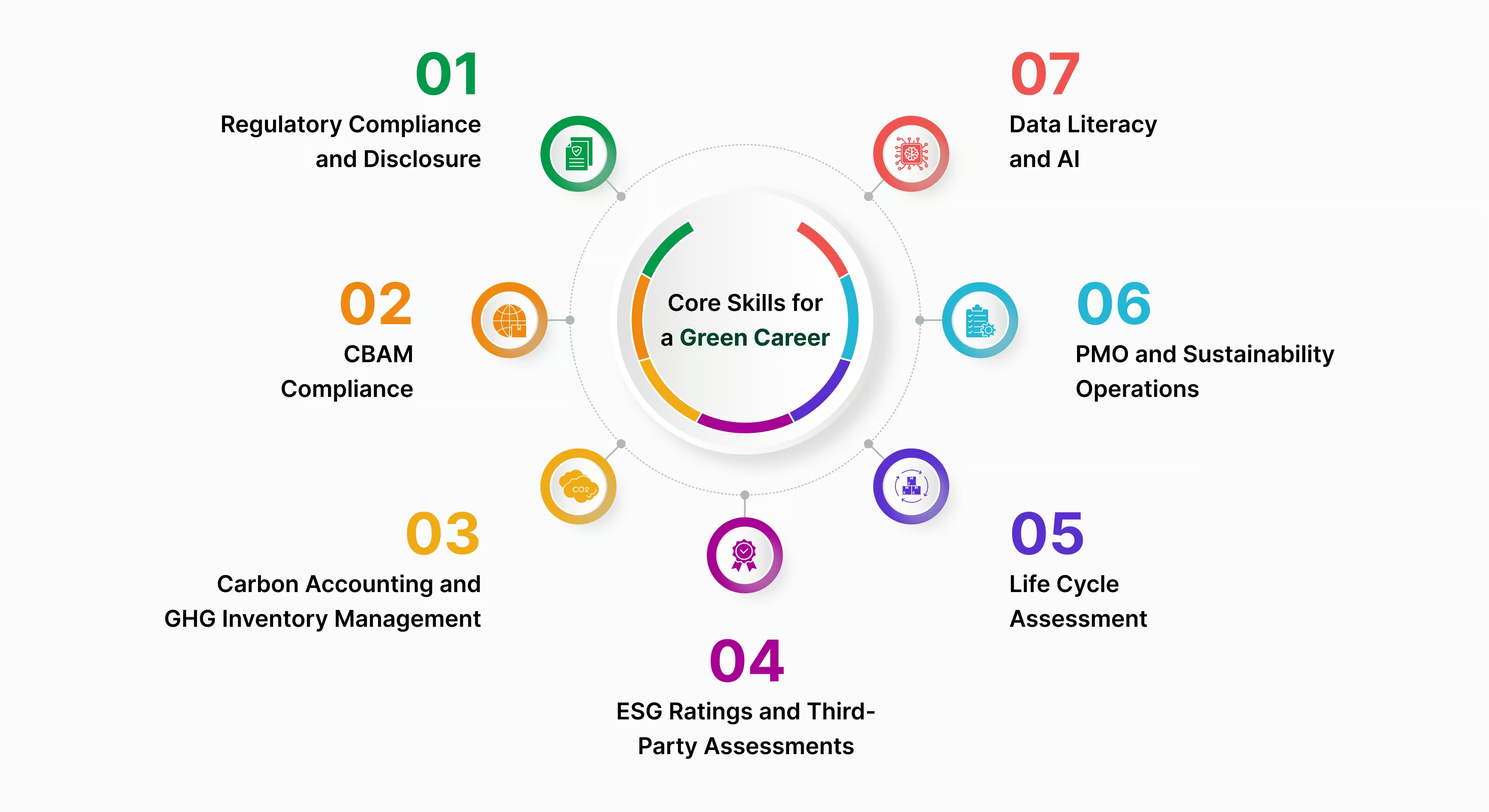
01. Regulatory compliance and disclosure: CSRD, ISSB's IFRS S1/S2, TCFD, and BRSR Core are the frameworks showing up most consistently in job descriptions right now. The skill employers are actually hiring for is not familiarity with the acronyms but the ability to operationalise them: collecting the right data, structuring disclosures that hold up under external assurance, and keeping pace as requirements tighten. In India, BRSR Core is the single biggest driver of ESG analyst hiring domestically.
02. CBAM compliance: a fast-growing, standalone skill gap on both sides of the EU border. Companies exporting carbon-intensive goods into the EU need to calculate and report embedded emissions; EU-based importers need to manage certificate purchases, declarant obligations, and supplier data under the same regulation. Demand is rising fastest among manufacturers, consultancies, and supply chain teams with EU trade exposure.
03. Carbon accounting and GHG inventory management: building credible Scope 1, 2, and 3 inventories under the GHG Protocol is the technical foundation most sustainability roles now assume. Scope 3 remains the persistent gap. Professionals who can measure it, engage suppliers on it, and produce data that survives assurance are consistently the hardest to hire for.
04. ESG ratings and third-party assessments: buyers, investors, and lenders use EcoVadis, MSCI ESG Ratings, and S&P Global ESG Scores to assess sustainability performance before signing contracts or deploying capital. Knowing how these ratings are structured, what data they draw on, and how to improve an organisation's score is a practical skill that shows up in procurement, investor relations, and supply chain roles. EcoVadis is the most widely used supplier assessment platform globally.
05. Life Cycle Assessment: increasingly expected in manufacturing, built environment, and product design roles as organisations move toward product-level carbon footprinting.
06. PMO and sustainability operations: as ESG workstreams multiply, programme management skills applied to sustainability delivery are filling a gap that pure sustainability specialists often cannot. Running reporting cycles, maintaining data governance frameworks, and keeping cross-functional teams accountable are undervalued entry points.
07. Data literacy and AI: the professionals advancing fastest combine green knowledge with the ability to work with messy datasets, build dashboards, and structure reporting that survives scrutiny. AI literacy on top of that is still rare enough to stand out in hiring conversations, and the window where that is true has not closed yet.
Best sustainability certifications for beginners
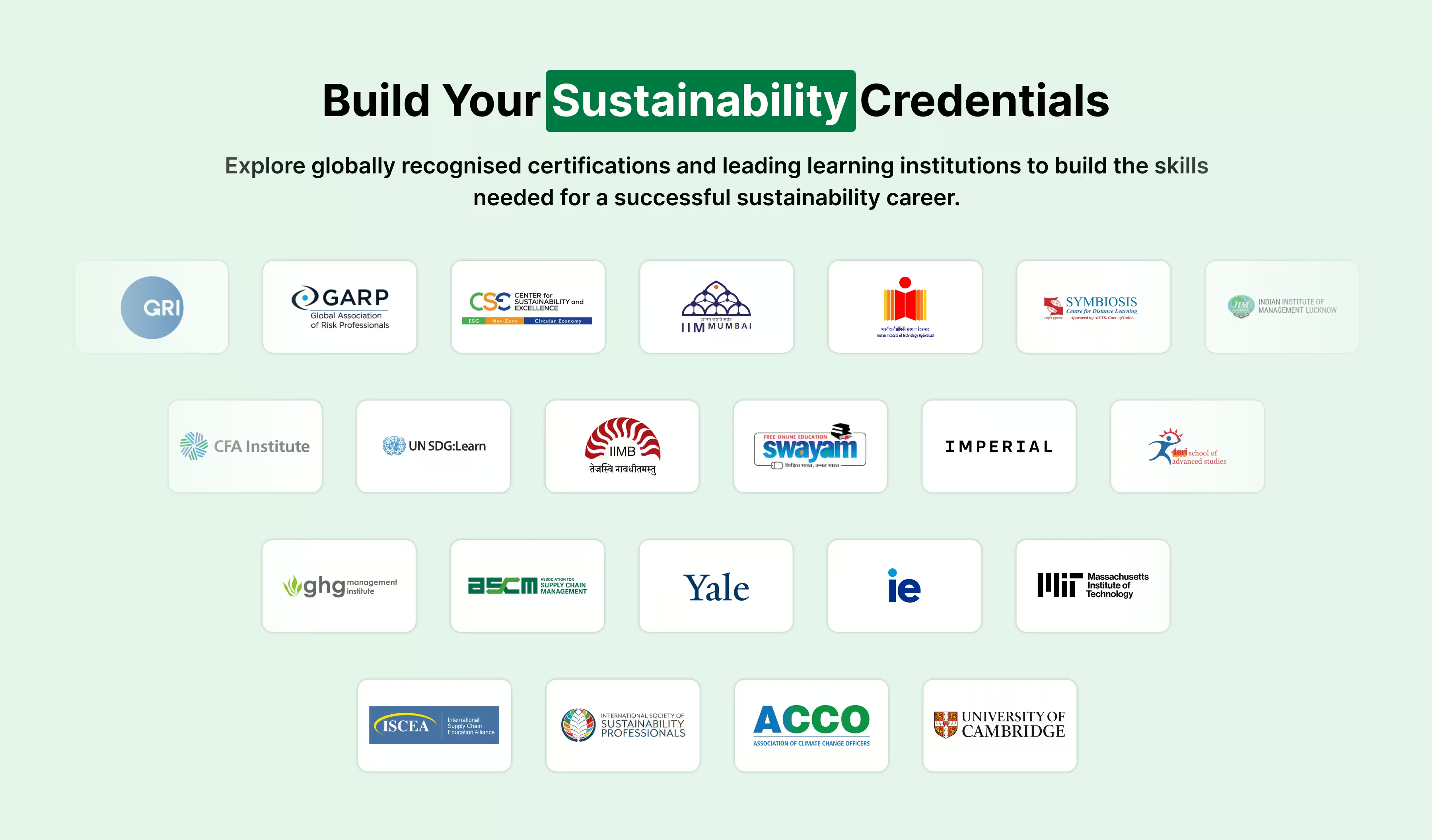
If you're starting out and don't know which credential to prioritise first, these are the most accessible entry points with the broadest employer recognition.
- GRI Certified Sustainability Professional - the most universally relevant starting credential, because GRI standards underpin disclosure work across every sector and market. Available online, self-paced, globally accessible.
- CSE Certified Sustainability ESG Practitioner - broadly recognised across markets, aligns with both GRI and IFRS S2, and doesn't require prior sustainability experience to start. A strong first credential if you're transitioning from finance, engineering, or operations.
- GARP Sustainability and Climate Risk Certificate (SCR) - the right starting point if you're coming from banking, risk, or financial services and want to position toward ESG risk or investment roles.
For career changers with no sustainability background at all, starting with IIM Bangalore's free Swayam ESG MOOC (India) or the UN SDG:Learn free climate modules is a low-commitment way to build foundational vocabulary before investing in a paid credential.
Certifications for mid-career and specialist roles
Finance and investment: CFA Sustainable Investing Certificate (formerly Certificate in ESG Investing, renamed April 2025) is the standard reference in investment management. EFFAS CESGA is valued specifically in European and Gulf investment contexts.
Carbon specialists: GHG Management Institute's Diploma in Carbon Management well-regarded for the technical rigour it requires, which is what carbon analyst roles are screening for.
Supply chain roles: ASCM Supply Chain Resilience Certificate and ISCEA Certified Sustainable Supply Chain Professional both apply directly to Scope 3 and supplier engagement work.
Situational: ISSP's Sustainability Excellence Professional and ACCO's Certified Climate Change Professional are credible but tend to matter most in specific sectors or regions. Don't collect these while still building foundational credibility.
Cambridge Institute for Sustainability Leadership (CISL)
CISL runs the most credible sustainability leadership programmes available online from a UK university, covering everything from short courses to a full Masters. Entry points include the Business Sustainability Management, Sustainable Supply Chain Management, Sustainable Finance, and Business and Climate Change: Towards Net Zero Emissions (all 8 weeks online). For those further along, the Sustainability Leadership Executive Programme (27 weeks) is the flagship mid-to-senior pathway, with the Postgraduate Certificate in Sustainable Business and MSt in Sustainability Leadership for those pursuing a qualification. Verify current dates and fees at cisl.cam.ac.uk before registering. Senior pathways also include the MIT Professional Certificate in Sustainability and Mastersprogrammes at Imperial College London, Yale School of the Environment, and IE University.
India-specific programmes worth knowing about
IIT Hyderabad's M.Tech in Climate Change, IIM Bangalore's free ESG and Sustainability MOOC on Swayam, executive programmes at IIM Mumbai and IIM Lucknow, TERI School of Advanced Studies' MBA in Sustainability Management, and Symbiosis Centre for Distance Learning's BRSR-focused certificate are the most frequently cited routes for India-based professionals. Programme names, formats, and durations change regularly in executive education - confirm current details directly with each institution before committing.
Courses will only take you so far
Every certification above will get you to the door. What gets you through it is proof that you have applied the knowledge somewhere real. The professionals advancing fastest are not the ones with the longest credential list but the ones who can point to something they actually built: a GHG inventory, a supplier questionnaire they redesigned, a CSRD gap analysis they ran for their team. The fastest way to get that proof is from the inside: joining a sustainability-focused company early, even in a junior or support capacity, gives you exposure no course replicates.
Internships and structured exposure worth considering
Paid internships are growing but still concentrated in larger corporates and consultancies. The more accessible route is structured exposure inside your current organisation: volunteering to support a reporting cycle, contributing to a Scope 3 exercise, or shadowing a compliance function working through CSRD alignment.
For dedicated programmes:
- IUCN, UNEP, and GIZ run sustainability internship programmes across South Asia and the Gulf, some paid, some stipend-based. Check current listings directly as programme availability changes annually.
- Several Indian corporates including Tata, Mahindra, Infosys, Wipro, and Larsen and Toubro run structured sustainability internship cycles, typically announced through campus placement channels and LinkedIn.
- In the UK, the Chartered Institution of Water and Environmental Management (CIWEM) and Green Alliance run graduate and early-career programmes with structured sustainability exposure.
- Platforms including Shortlist (India-focused), Idealist, and LinkedIn with an ESG or sustainability filter applied are the most practical starting points for current availability
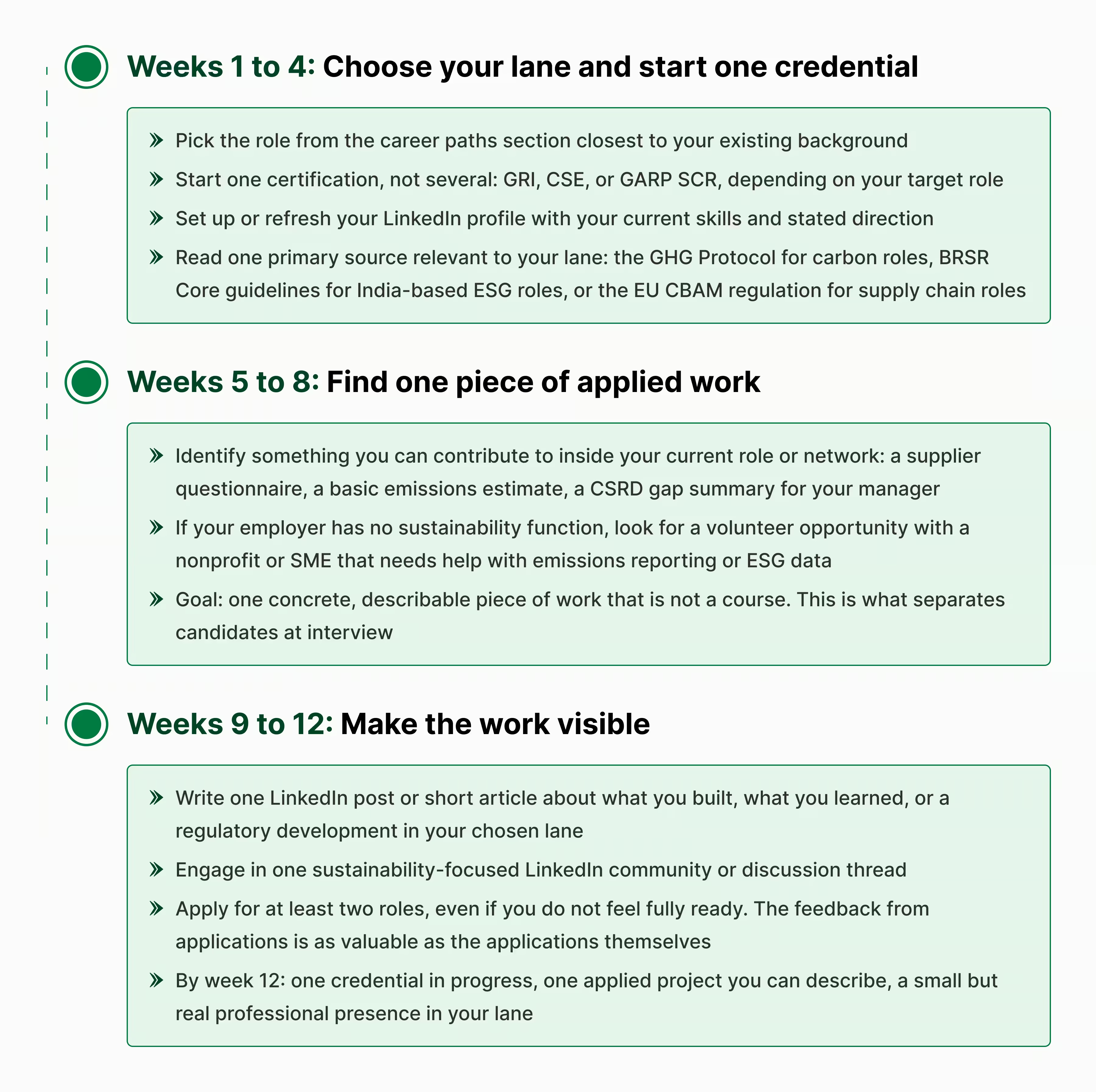
A realistic first 12 weeks
Where the field is heading
{{blurb}}
The infrastructure problem nobody warns you about
No certification fully prepares you for this: a lot of sustainability work in practice is built on data that isn't good enough. Carbon inventories from rough estimates. Scope 3 figures chased manually across supplier networks. Disclosures that haven't been stress-tested against what an external assurance provider will actually ask.
If you work somewhere still doing this manually, a meaningful share of your time will go to fixing data before you can analyse it. Platforms like KarbonWise - bringing automated carbon accounting, LCA, Scope 3 supplier engagement, and multi-framework ESG reportinginto one connected environment - exist because the gap between "we have a strategy" and "we have data that survives an audit" is where most teams get stuck.
Request a demo to see what that looks like for teams working across CBAM, GHG, ESG, and CSRD.
{{cta}}
{{accordion}}






.avif)







.svg)
.svg)